Tampilkan postingan dengan label FARA. Tampilkan semua postingan

Jumat, 15 Februari 2013

Fifth General Meeting of the Coalition for African Rice Development (CARD)

5-6 February 2012. Dakar. The Fifth General Meeting of the Coalition for African Rice Development (CARD) was held  to review progress in a 10 year initiative to double Sub-Sahara Africa’s rice production.

The conference reviewed the progress and challenges of the rice sector development in Sub-Sahara Africa during the past five years and discussed the key activities of the next five years.

Background:
The CARD initiative was launched during the 2008 Fourth Tokyo International Conference on African Development (TICAD IV) jointly by the Japan International Cooperation Agency (JICA) and the Alliance for a Green Revolution in Africa (AGRA) to help strengthen overall African agricultural development.

Other CARD members are the Japan International Research Center for Agricultural Sciences (JIRCAS), the Forum for Agriculture Research in Africa (FARA), the Africa Rice center, the New Partnership for Africa's Development (NEPAD), the International Fund for Agricultural Development (IFAD), the World Bank, the African Development Bank (AfDB), the International Rice Research Institute (IRRI) and the UN’s Food and Agricultural Organization (FAO).

 The initiative aims to double Sub-Sahara Africa’s rice production to 28 million tons by 2018, through coordination of all the stakeholders including governments, donors, NGOs and private enterprises.

Sabtu, 02 Februari 2013

The Economist. Feed the world debate

30 January 2013. Amsterdam. Hilton Hotel. The Economist. Feeding the world. A high-level audience gathered in Amsterdam to discuss how to accelerate progress in coordinating efforts to tackle the planet’s food security crisis.

Industry leaders, Government ministers, donors, aid agencies and representatives of the research community explored opportunities to collaborate in delivering improved nutrition and sustainable agricultural markets.

In the afternoon there were three expert working groups on the subject of:
  1. Nutrition – what are the best ways to address the nutritional double burden of obesity and malnutrition?
  2. Finance and risk management – what is the potential for microfinance and microinsurance to strengthen food security?
  3. Science and technology – what is the effectiveness and potential of a number of approaches to boosting yield and productivity?
Workshop C: The enabling role of science and technology
Science and technology have a major role to play in meeting the global food security challenge. We debate the effectiveness and potential of a number of approaches to boosting yield and productivity through breeding and the use of biotechnology.
Dennis Rangi, Executive Director for International DevelopmentCABI
Monty Jones, Executive DirectorFARA
Amit Roy, President and Chief Executive OfficerIFDC
Erez Vigodman, President and Chief Executive Officer, Makhteshim Agan Industries
Jagresh K. Rana, Commercial Lead Row Crops East EuropeMonsanto
A selection of photos from this year's Feeding the World conference in Amsterdam.
13 / 30

Senin, 28 Januari 2013

Global Forum for Food and Agriculture - GFFA 2013


17 - 19 January 2013. Berlin. At the 5th Agriculture Ministers' Summit in Berlin, ministers from 80 countries worldwide committed themselves to a resolute fight against hunger and called for investments in the agri-food sector to be significantly increased, particularly in developing countries.  The GFFA is an international event that focuses on central issues regarding the future of the global agri-food industry. Since 2009, it has been held annually in Berlin during International Green Week (IGW).

For the first time, the BMELV invited the World Food Organisation (FAO) and the Organisation for Economic Co-operation and Development (OECD) to hold public working meetings whose outcome was incorporated into the subsequent 5th Berlin Agriculture Ministers' Summit, the International GFFA Panel Discussion and the International Business Panel. the conference was also attended by FARA: Dr. Emmanuel Tambi (Director of Advocacy and Policy); Dr. Yemi Akinbamijo (in-coming FARA ED).


Apart from the summit itself, numerous other events gave representatives from politics, industry, the scientific community and civil society a forum for interaction, discussion and political agreement.

Panels of experts arranged by various organisers publicly discussed the current state of progress and compared specific experiences.

Fasil Tsegaye
Steve Bawa
The expert panel around "Development partnerships between state and industry – an engine for sustainable agricultural investments" presented a.o.the G8 Africa initiative. The African panelists were Fasil Tsegaye, CEO; Oral Agro Industry Plc, Ethiopia and Steve Bawa Director, Fruits & Veggies Global Ltd., Nigeria.

The panelists discussed the experiences and lessons learned from the initiatives that they manage. The initiatives include (i) the German Initiative for agribusiness and food security in emerging and developing economies (GIAF) which aims at fostering cooperation between German private sector and public sector institutions such as GIZ to promote sustainable growth in agricultural and food production in emerging and developing countries; (ii) the BMZ Minds for Change – Enhancing Opportunities, an initiative that supports projects in Kenya, Burkina Faso and Afghanistan; (iii) the Fruits and Vegetables production in Nigeria; and (iv) the animal feeds production company in Ethiopia.

In the panel on Food Security – How does research contribute, Dr. Cornel Adler, of the Julius Kuhn Institute looked at new approaches in stored products protection to reduce post-harvest losses. Dr. Cornel Adler is the European partner of the PAEPARD supported consortium in Ghana:  Improving food security and income for smallholder farmers through improved post harvest technology

In the panel on Environment for investment in rural farming in Africa four panel members discussed the pre-requisites and frame conditions for investments in agriculture in Africa and how to make investments sustainable.

  1. Hon. Ally Malima, Deputy Minister of Agriculture of Tanzania shared the experience of Tanzania and invited potential investors to take advantage of the investment opportunities available in the country. 
  2. Ms Esther Mururi of Equity Bank, Kenya shared the Kenyan experience of private sector delivery of financial services to smallholder farmers while 
  3. Mr. Daniel Gad, General Manager of Omega Farms, Ethiopia shared his experience with private sector investments in the Ethiopian grain and horticulture sector. He shared information on investment opportunities in these sectors and called on potential investors to invest in Ethiopia. 
  4. Mr. Jervis Zimba, President ‘Zambia National Farmers Union’ and Vice President, 'World Farmers Organisation’ (WFO) shared the experience of smallholder farmers in Zambia.

The panel on The role of farmers organizations for inclusive business
Small and medium-sized enterprises as well as international corporations in the agriculture and food industries are increasingly committed to doing business with smallholder farmers in African countries – as consumers of agricultural inputs and machinery, users of services (e.g. financial or advisory services) or as suppliers of agricultural commodities. This creates new business opportunities but also new challenges for all participants along the value chain.

Jervis Zimba
The panelists were Mr. Carter Coleman, Founder and CEO of Agrica Limited: Presentation of an example of cooperation with smallholder farmers in Tanzania; Mr. Adam Ally Malima, Deputy Minister of Agriculture, Food Security and Cooperatives, Tanzania; Ms. Jane Karuku, President, ‘Alliance for a Green Revolution in Africa’ (AGRA); and Mr. Jervis Zimba, President ‘Zambia National Farmers Union’, and Vice President, 'World Farmers Organisation’ (WFO).


Senin, 03 Desember 2012

Food Security in Africa: Bridging Research and Practice

29-30 November 2012. Sydney. This event included a high-level Forum (leadership dialogue) for officials from Africa and Australia, together with international experts on global food security. The main purpose of the Forum was to officially launch the Australian International Food Security Centre (AIFSC) and strengthen its collaborative partnerships.

The Forum brought together a selection of notable high-level Africans, Australians and internationals from government, research and development, and private enterprise to:
  • launch the AIFSC strategy and acknowledge the range of national and international partnerships
  • enable discussion to inform the AIFSC strategy outcomes for improving food security across Africa
  • showcase Australia's expertise in research for development and policy development for improved global food security
  • showcase Australia's quality agriculture through a short social program.
The Hon Bob Carr, Minister for Foreign 
Affairs, announcing the new fund 
at the opening of the forum. 
Photo M Gyles ACIAR
The conference provided an opportunity for:
  • networking with key African and international decision makers
  • fostering new connections with Australian researchers and the AIFSC
  • contributing ideas that will be streamed/recorded for wider distribution
  • improving your personal knowledge on key issues and players involved in food security
  • connecting with a large number of international representatives at one event, away from everyday distractions and time zone issues
  • being part of conference legacies to be generated by distribution of conference records to multiple organisations
  • side meetings for one-on-one business with a special focus
  • witnessing firsthand some of Australia’s finest agricultural research capabilities
  • enjoying the dramatic beauty of Sydney and its surrounds, including a showcase of Australian agriculture.

Selasa, 06 November 2012

Innovations for Better Livelihoods


30/10/2012. Breakout session GCARD II, P3.1 Innovations for Better Livelihoods

Unlocking innovation represents a major challenge. |A diversity of approaches grounded on participatory action research have been developed including notably the concept of Integrated Agricultural Research for Development (IAR4D).

Despite the conceptual agreement around these approaches and the promise they hold, there are also concerns, not only regarding how these approaches can have impact, but also how they can they do so at scale. Participatory approaches to agricultural research have often been judged to be slow and costly “boutique solutions” confined to the sites where they work directly. As a result their impact on poverty
is considered by some to be marginal when compared with commodity research targeting many millions of people.

This Session explored these issues by considering how investment in agricultural research can be
strengthened to increase its contribution to poverty reduction and improve the lives of those that more conventional approaches have failed to reach. In doing so the panelists considered the specific issues of partnerships and the role that they play in strengthening the quality of our work and the ultimate scale of the impacts.
What is needed for implementing innovation partnerships and producing the evidence and understanding required for impact in global, regional and national programs?
Stakeholders’ approach to AR4D
Putting the approach into practice: Establishing effective livelihood research partnerships for impact at scale
Working with national innovation pilot learning sites and inter-regional innovation platforms
3 p. Download document of the Breakout session GCARD II, P3.1

    Rabu, 24 Oktober 2012

    GCARD: Using Innovation to Boost Farming

    18 October 2012. VOA radio broadcast. Innovation will be the theme at the upcoming Global Conference on Agricultural Research for Development. It gets under way later this month in Uruguay. The conference, known as GCARD II, will consider the challenges that farmers may face in 20 to 30 years, and try to come up with solutions now.

    Listen to De Capua report on GCARD II

    Professor Monty Jones, winner of the 2004 World Food Prize, will chair the conference. He says it will differ from the first GCARD meeting in Montpellier, France in 2010.
    “This time it’s not just scientists talking to themselves; it’s scientists talking to the other players that matter very much, particularly this farmers, the farmer’s group, the NGO group, all these other players. Their voices are now being heard in agricultural research for development,” he said.
    Jones is head of the Forum for Agricultural Research in Africa. He said GCARD has published a road map to “transform agricultural research” so it can have a major impact on development. It’s called “foresight thinking.”
    “The tendency for most of us is to look at problems that occur today, and then try to solve those problems. This particular program on foresight thinking is trying to make [a] projection into the future, particularly in a world of climate change and associated problems, like drought and floods, and aggravated problems of disease and insect pests,” he said.
    The GCARD Roadmap recommends a “collective focus on priorities” that has been determined by society and science; an effective partnership between researchers and farmers; increased investment; and greater awareness of innovation’s effect on development. GCARD II will be held in Punta del Este, Uruguay from October 29th through November 1st.

    Senin, 15 Oktober 2012

    Integrating Tools for Assessing National Agricultural Innovation Systems

    8th – 9th October 2012. Orientation Workshop for National AIS Focal Persons. FARA assesses the functionality of national agricultural innovation systems (NAIS) in selected countries in sub-Sahara Africa. This is to enable identification of priority areas, mechanisms and actionable recommendations for support and interventions by FARA, regional and global partners, and national actors toward strengthening specific aspects of the NAIS.

    The workshop at FARA was an initial engagement with national focal persons on the methodology and conduct of the national agricultural innovation systems (NAIS) assessment exercise. It will also involve integrating the tools for assessing the national agricultural innovation systems (NAIS)  with FARA’s e-Capacities facility, as a platform for survey data management. The focal persons will in turn train enumerators drawn from targeted organizations of the national agricultural innovation systems (NAIS)  on specific methodological and reporting guidelines.

    The pilot countries were selected on a sub-regional basis as well as the stage of CAADP country processes. Strengthened NAIS are an imperative for effective implementation of the CAADP country investment plans and stimulating agriculture-led development of African countries.

    Country focal persons from the pilot countries of Kenya, Rwanda, Madagascar, Uganda, Burkina Faso, Benin, Gambia, Ghana, Senegal, Botswana, Lesotho, Zambia, and Malawi; representatives of the three SROs, ANAFE and RUFORUM; and local Ghanaian pilot organizations for beta-testing of the e-Capacities facility attended the workshop.

    The methodology for the NAIS exercise, modalities for data collection and reporting, and the e-Capacities facility were discussed on the first day of the workshop. On the second day, the participants visited University of Ghana’s Faculty of Agriculture, the Ministry of Food and Agriculture, and the Council for Scientific and Industrial Research (CSIR) to witness onsite installation and demonstration of the e-Capacities platform.

    The workshop served as a training of trainers forum, whereby the focal persons were required to train respective country enumerators upon their return home on how to undertake the NAIS exercise.

    Background on the e-Capacities facility:
    In keeping with its continental oversight and observatory roles, FARA has developed an electronic capacities (e-Capacities) mapping facility that will integrate the features of an online marketplace and a knowledge hub. The facility will:
    • enable remote and real-time update of organizational capacity status 
    • overlay the supply and demand sides of organizational capacity in order to identify gaps and surpluses track career progression of targeted scientists and professionals
    Kamis, 11 Oktober 2012

    Learning and Innovation Platforms for Agricultural Knowledge and Technologies in Africa


    1-5 October, 2012. Mwanza, Tanzania, Sixty five professionals and experts on knowledge sharing and technology dissemination gathered in Mwanza.They were focal points for RAILS and DONATA platforms currently funded by the AfDB/PSTAD project through FARA’s leadership with SROs’ (ASARECA, CORAF/WECARD and CCARDESA) coordinating support. IITA, CIP and ICRA are providing technical backstopping and NRI on M&E process. 

    Participants shared experiences in managing knowledge exchange and innovation platforms. They learnt about evolution on the use of the value chain approach along the upward (inputs) and downward (commodity) chain. Most of the learning and innovation platforms led by research start with the seed upward chain. Stakeholders then get more engaged through greater interactions and understanding of issues and opportunities. This triggers interventions towards the downward chain such as processing and marketing of products.
    Participants engaged in co-learning 

    of the value chain approach


    A field day allowed interaction with farmers, processors, traders of orange-fleshed-sweet potato in the Mwanza district. The learning and innovation platforms in Mwanza have evolved over the past 4 years of their operation, with greater ownership by the local governments and cooperatives managing processing plants. The platforms were facilitated by LZARDI, ASARECA, CIP and FARA.

    The workshop highlighted the importance of shared understanding on the value chain approach and variations in actual practice of establishing learning and innovation platforms based on culture, environment and available resources. There are some platforms with formal and some with informal institutional structures. Their form and operation depend on transactions made among members i.e. financial resources shared or technical advice. The basic and initial objective is food security linked to development perspective.

    As the learning and innovation platforms evolve, the commercial or business perspectives increases. Throughout the process, documentation and effective monitoring and evaluation mechanisms becomes critical for enhanced learning and accountability.

    1st October - 5 October 2012. Mwanza. Representatives from 24 African countries meet to reflect on achievements and challenges of implementing the dissemination of new agricultural technologies in Africa (Donata) project.

    According to Dr Lydia Kimenya, the up-scaling programme manager from the Association for Strengthening Agricultural Research in Eastern and Central Africa (Asareca), the conference aims at looking at achievements and draw lessons from current efforts to spread quality protein maize and orange fleshed sweet potatoes (Ofsps) in Africa.
    “The conference, it is hoped, will further boost dissemination and adoption of improved agricultural technologies and innovations through innovation platforms,” she said.
    According to her, the project on dissemination of new agricultural technologies in Africa is part of the promoting science and technology for agricultural development initiative funded by the African Development Bank (AfDB) through the Forum for Agricultural Research in Africa (Fara).

    Through Asareca, the project manages and coordinates the implementation of Donata in Eastern and Central Africa.

    “It works together with the national agricultural research institutes of Tanzania, Uganda, Kenya, the Democratic Republic of Congo (DRC), Rwanda, and while, Ethiopia, which joined later started implementing the project in 2008,” she explained.
    Dr Kimenye explained that through the knowledge management and the up-scaling programme, Asareca had been working with the five East African counties to promote the transfer and dissemination of technologies in sweet potatoes and transfer and dissemination of technologies in quality protein maize.
    “The technologies include improved varieties, crop management practices and post-harvest management and processing to produce value added products for human consumption and for livestock feeds,” she added. According to her, the two crops’ technologies are being promoted through an approach known as Innovation Platforms for Technology Adoption (Iptas).
    “This approach engages and brings together researchers, field extension workers, farmers, policy makers, non-governmental organisations, Microfinance Institutions (MFIs), seed companies, input suppliers and processors to share information, knowledge and skills on proven technologies in order to widely disseminate them,” she added.


    First Meeting of Agricultural Chief Scientists (MACS) of G20 countries


    24th to 27th September 2012. Guadalajara. Mexico. This meeting wa convened by the Mexican government as part of their role heading the Group of Twenty (G-20) this year.

    The objectives of the first MACS were to:

    • inform stakeholders of existing global resources, programs and collaborative efforts for agricultural research that can help address food security challenges; 
    • identify, strengthen and compliment research priority areas for collective action in coherence with existing initiatives to sustainably intensify agricultural production, in order to meet increased and changing demand for healthy, safe and nutritious food whilst mitigating and adapting to climate change; 
    • identify avenues to better coordinate resources and existing initiatives in support of these priorities; 
    • establish baselines and track progress toward collective commitments and priorities; and 
    • Dr. Catherine Woteki, USDA Chief Scientist 
      and Under Secretary for Research, 
      Education, and Economics
    • facilitate new partnerships on collaborative research in agriculture and food security
    Prof. Jones (FARA) and Dr.Catherine Woteki (U.S. Department of Agriculture’s (USDA) delivered the key scene-setting presentations on establishing global agricultural research and development (AR&D) priorities. 

    The meeting deliberated on establishing MACS Global Research Collaboration Platforms (GRCPs) to promote global collective action involving national agricultural research for development strategies and capacities of the G20 countries. Four initial GRCPs were presented, including: 
    1. Access to scholarly publications and other technical documentation; 
    2. Access to germplasm collections and related information, as per international treaties to which countries are members, and in accordance with national legislation; 
    3. Access to genetic and genomic data, and establishment of public databases for agricultural research and development projects; and 
    4. Improving agricultural innovation (extension service and technology transfer) and agricultural statistics systems (information communication technology and market data).

    The Tropical Agriculture Platform (TAP), a G20 commitment in 2011, was formally launched by FAO. This platform aims to achieve greater coherence of capacity development and knowledge sharing for agriculture innovation to improve production and productivity in the tropics, with a particular focus on smallholders, under a multilateral and multi-sectorial approach.

    The meeting reviewed the status and progress of Global Research Initiatives endorsed by the G20 and ongoing collaborative mechanisms including the CGIAR Research Programmes (CRPs) on Wheat, Maize, Rice and Livestock and Fish, as well as the Global Research Alliance on Agricultural Greenhouse Gases. The Global Access to Technology for Development Foundation, the Syngenta Foundation for Sustainable Agriculture, and the Bill and Melinda Gates Foundation presented programs for Public-Private Partnerships, across the entire value chain of agricultural products, as mechanisms to accelerate global agricultural innovation. 

    The next meeting will be scheduled by the next President of the G20 (Russia).

    Related blog post:
    23/06/2012. G20 Mexico 2012 launched an innovative Fund to Boost Food Security and Farmer Livelihoods


    Rabu, 12 September 2012

    Expert consultations on Knowledge Management

    10-14 September 2012, CTA, Wageningen, The Netherlands. The medium-term outcome of this process was to provide ACP institutions with a framework for Information, Communication and Knowledge (ICK) management, in the process of their becoming learning organisations with the capacity to adapt to changing environments.

    Objectives:
    • Review and improve understanding of KM in the context of regional organisations and communities 
    • Describe the current landscape of successful KM interventions in ARD 
    • Assess the need for, capacity to implement and requirements for integral Knowledge management practices particularly in the context of regional organisations and communities 
    • Provide advice to the CTA on the types of support it should provide to regional organisations and communities 
    • Discuss scenarios for interventions and make recommendations on the elaboration of a roadmap (e.g. starting points for those activities and approaches to assess KM situation; identify/develop suitable checklists/approaches for improving KM in regional ARD groups 
    This meeting comprised following Regional Organisations & Networks and KM Experts.

    FARA - Forum for Agricultural Research in Africa ASARECA SADC / CCARDESA PAEPARD Project Eastern Africa Farmers Federation (EAFF) SACAU FTA - Farming & Technology for Africa Land Resources Division - SPC, Secretariat of the Pacific Community CAFAN - Caribbean Farmers Network FAO (Regional Office Africa) National Agricultural Research Organisation (NARO) (ASARECA rep) African Forum for Agricultural Advisory Services (AFAAS) Land Resources Division - SPC, Secretariat of the Pacific Community Global Development Network, Egypt (GDNet) International Fund for Agricultural Development (IFAD) Faculty of Economics & Business Administration - VU University Amsterdam ECDPM IKM - Emergen Project UNECA University of Wageningen

    Africa: Continent Advised to Increase Agriculture Spending

    Agriculture Minister Dr. Agnes Kalibata (L) chats with 
    the Executive Director of Forum for Agricultural Research
     in Africa Prof. Monty P. Jones 
    7 SEPTEMBER 2012. The Forum for Agriculture Research in Africa (FARA) has decried African governments' persistent under-funding of the agricultural sector as the leading cause of slow development on the continent.

    Its Executive Director, Prof. Monty Jones, made the remarks at the opening of a three-day consultative workshop in Kigali that aims at strengthening the capacity for agricultural innovation in post-conflict and prolonged crises countries.

    "In post-conflict situations, provisions of peace depend on robust economic growth. For many post-conflict countries in sub-Saharan Africa and elsewhere, the economies are largely dependent on agriculture and investment in agricultural development is the best bet for stimulating aggregate GDP growth," Prof Monty explained.

    He added that the role of agriculture in evolving development of countries emerging from conflict rests on the fact that on average, GDP growth originating in the agricultural sector is considered at least twice effective as in reducing poverty as GDP derived from other sectors.

    Engaging the agricultural sector facilitates abatement at least in the initial reconstruction stages of the unemployment situations invariably characterising many post-conflict countries.

    Prof Monty believes that as the states re-embark on an industrialisation path, agricultural produce would provide raw materials for local agro-based industries and also serve as export goods, bringing in much-needed foreign exchange for importation of inputs for the non-agro industrial sector.

    Agriculture minister, Dr. Agnes Kalibata, urged African countries, especially those in post-conflict situations, to invest more in agriculture if they are to develop.

    "The surest way to sustainable socio-economic rehabilitation is investing more in agriculture. The rural poor in post conflict situations depend largely on agriculture for livelihood nutrition and food security," she noted.

    According to FARA, circumstances in 22 countries worldwide currently subscribe to the banner of protracted crises, with 80 per cent of such countries in sub-Saharan Africa.

    These include Burundi, Chad, Democratic Republic of Congo, Ethiopia, Eritrea, Kenya, Liberia, Sierra Leone, Somalia, Sudan, South Sudan, and Uganda, among others.

    Selasa, 11 September 2012

    A Pilot Study on Institutional and Organisational Changes in Selected National Agricultural Research and Education Institutes in Sub-Saharan Africa

    This report (September 2012, 80 pages) summarises the results of a pilot study commissioned by the Forum for Agricultural Research in Africa (FARA) to test a methodology for monitoring institutional and organisational change in selected agricultural research and education institutes across sub-Saharan Africa currently implementing the Strengthening Capacity for Agricultural Research and Development in Africa (SCARDA) programme.


    The following Focal Institutes were included in the present analysis:

    1. Botswana College of Agriculture (BCA), Botswana
    2. Department of Agricultural Research (DAR), Botswana
    3. Institut des Sciences Agronomiques du Burundi (ISABU), Burundi
    4. Crops Research Institute – Council for Scientific and Industrial Research (CRI-CSIR), Ghana
    5. Faculty of Agriculture, National University of Lesotho (FA-NUL), Lesotho
    6. Institut d’Economie Rurale (IER), Mali
    7. Natural Resources Development College (NRDC), Zambia
    8. School of Agricultural Sciences, University of Zambia (SoAS-UNZA), Zambia

    An important lesson learned from using the Strengths, Weaknesses, Opportunities and Threats (SWOT) methodology is that the change captured by this survey instrument for the different SWOT factors requires careful interpretation. It is less straightforward than may be originally perceived.

    Rabu, 18 Juli 2012

    Infoday FP7 Cooperation Theme 2: Food, Agriculture and Fisheries and Biotechnologies

    16th July 2012. Info Day and Brokerage Event on Call FP7-KBBE-2013-7. This information day was for everyone interested in taking part in call 2013 of FP7 Cooperation Theme 2: Food, griculture and Fisheries and Biotechnologies.

    The objective of the event was to bring together research stakeholders, from both the public and private sectors from the EU and Third Countries, together with Commission officers and provide information and ground for discussion and networking.

    FARA under the Biocircle project gave the opportunity to two members of PAEPARD supported consortia to participate in this event:
    1. Dr I.Charles Okoli (Tropical Animal Health and Production Research Lab. Department of Animal Science and Technology, Federal University of Technology, Nigeria to discuss the collaboration on the research proposal Nigeria - Low cost and high quality livestock feed production knowledge delivery to Nigerian poultry industry (NIPOFERD)
    2. Dr. Samuel Adjei Nsiah Ghana - Improving food security and income for smallholder farmers through improved post harvest technology
    The event included in the morning a general introduction with presentations of the main features and areas addressed by the 2013 call. (see programme)

    During the afternoon session: parallel sessions were organised with group discussions by thematic areas:
    1. Parallel Session 1: Sustainable production and management of biological resources from land, forest and aquatic environment
    2. Parallel Session 2: Fork to farm: Food (including seafood), health and well being Consumers, nutrition, food processing, food quality and safety, environmental impact and total food chain, European research area 
    3. Parallel Session 3: Life sciences, biotechnology and bio-chemistry for sustainable non-food products and processes
    The official Call was published on the 9th of July 2012.

    Contrary to previous years none of the themes of the Work Programme 2013 - Food, Agriculture and Fisheries, and Biotechnology  is mentioning as mandatory the participation of an ICPC (International Cooperation Partner Country) from Africa. But African countries are free to join any consortium.


    Contrary to previous years none of the themes of the Work Programme 2013 - Food, Agriculture and Fisheries, and Biotechnology (FAFB)  is mentioning as mandatory the participation of an ICPC (International Cooperation Partner Country) from Africa.

    But African countries are free to join any consortium.

    PAEPARD made an public intervention on this issue during the plenary of the FP7 Infoday. See the video sreaming of INFO DAY 2012 - FOOD AGRICULTURE AND FISHERIES AND BIOTECHNOLOGY - CALL 7It starts at 27 minutes. 


    On Tuesday 17th of July, a meeting was organised for the national contact points: 7th Bio-NCP meeting for theme 2.

    On Wednesday 18th of July, Biocircle organised its Third Country BIO-NCPs of the BIOCIRCLE 2 project. The objective of this training was to show options, ways and means to enhance the visibility of Third Country researchers within the European research areas.

    A keynote presentation was made by Daan du Toit, Senior S&T Rep. of South Africa to EU on South Africa’s S&T partnership with the European Union: Visibility and Networking – key for success.

    Two principles: 
    1. Answer calls & Find partners 
    2. Create enabling national environment for researchers to participate: 
    Early identification of : 
    • FP7 topics relevant to SA priorities and strengths SA researchers best placed to respond 
    • Support SA links to leading European groups with best chances of success, bearing in mind: Lead in proposal preparation coming for Europe 
    • Highly competitive – excellence key criteria Networking and visibility essential

    Sabtu, 23 Juni 2012

    G20 Mexico 2012 launched an innovative Fund to Boost Food Security and Farmer Livelihoods

    18th May 2012. Mexico City. An innovative initiative that will enhance global food security and improve the livelihoods of developing country farmers through prizes and other market-based incentives was announced by the G20 Leaders. With a results-driven funding model that rewards innovators for tackling some of the biggest problems in food security and agricultural development,


    AgResults addresses global challenges in food security and agriculture by generating market-oriented solutions. The initiative aims to achieve significant improvements in the wellbeing of the poor and vulnerable in developing countries with a fund of up to $100 million, to be administered by the World Bank. The governments of Australia, Canada, Italy, the United Kingdom, the United States, as well as the Bill & Melinda Gates Foundation, are supporting this effort.

    In the coming years, AgResults will launch a series of pilots that address some of the biggest problems in global food security and agricultural development. The initiative’s portfolio of pilots will represent a diverse mix of agriculture and food security issues, testing different types of pull mechanisms in different regions globally.

    Through October 2011, the World Bank has solicited 38 pull mechanism ideas from 24 experts in four Thematic Groups focused on in the areas of (1) Inputs/Increasing Yields, (2) Outputs/Post-harvest Management, (3) Livestock, and (4) Nutrition. An Expert Advisory Group has recommended a number of those ideas for donor funding.
      The initial set of pilots, focusing on maize production in Sub-Saharan Africa, include:
      • Incentivizing the adoption of on-farm storage technology for smallholder farmers. The on-farm crop storage pilot will focus on Kenya. The pilot will offer prizes for storage capacity sold and technology innovation in two target regions: the Rift Valley and Eastern provinces of Kenya. The pilot is designed to encourage private sector participants to develop innovations in on-farm crop storage technology, while addressing a range of issues faced by smallholders in accessing appropriate storage solutions.In Eastern Province, the pilot will be designed to catalyse innovation specifically for on-farm crop storage solutions that are resistant to the Larger Grain Borer (LGB) pest, as this region was identified as experiencing the greatest incidence of LGB outbreaks owing to its arid climate.
      • Encouraging innovative distribution of a breakthrough technology to reduce aflatoxin contamination. The aflatoxin control pilot will provide incentives for smallholder farmer adoption of a particularly promising aflatoxin control technology called AflasafeTM. This technology has been shown to reduce aflatoxin contamination. of maize grain by between 80 and 99 per cent in field tests in Nigeria, and the pilot will focus on demonstrating a successful model for increasing smallholder adoption of an aflatoxin biocontrol. The pilot will focus on maize in Nigeria, as the country is the largest producer and consumer of maize on the African continent, and is furthest along in registering AflasafeTM as a biocontrol product. The pilot aims to address persistent barriers to the widespread adoption of biocontrol technology by Nigerian smallholders through a premium per-unit payment for maize that is verified to contain a high prevalence of AflasafeTM (a strong predictor of low aflatoxin levels) at designated maize collection points.
      • Building a market for new vitamin A-enhanced varieties of maize.  The biofortification pilot aims to support the rollout of ProVitamin A (PVA) maize in Zambia by stimulating the grain market for the new hybrid varieties of maize through incentives aimed at industrial millers. While the developer of PVA maize, the non-profit organisation HarvestPlus, already has push-financed programs aimed at introducing new seed varieties into the market and supporting smallholder adoption, the AgResults pilot will aim to stimulate longterm demand for new PVA maize products in mainstream secondary markets.
      Additional pilots will be explored in the coming years, potentially including livestock vaccines and fertilizer innovation as well as new ideas related to increasing crop yields, decreasing post-harvest losses, increasing livestock productivity and improving nutrition.

      The  Expert Advisory Group  consisted of
      1. Craig Courtney Independent Consultant 
      2. John Hamilton Dodds Founder, Dodds and Associates 
      3. Michele Veeman Professor of Agricultural and Resource Economics in the Department of Rural Economy at the University of Alberta 
      4. Peter B. R. Hazell Professor, Center for Environment, Development & Policy, School of Oriental and African Studies (SOAS) 
      5. Susan Horton Associate Provost, Graduate Studies, and CIGI Chair in Global Health Economics, Balsillie School of International Affairs, University of Waterloo 
      6. Monty Jones Executive Secretary, Forum for Agricultural Research in Africa (FARA) 
      7. Marília Regini Nutti General Manager, EMBRAPA (The Brazilian Agricultural Research Corporation) 
      8. Lindiwe Majele Sibanda CEO, Food, Agriculture and Natural Resources Policy Analysis Network 
      9. Giancarlo Spagnolo Professor of Economics, University of Rome ‘Tor Vergata’ 
      10. David Spielman Senior Research Fellow, International Food Policy Research Institute (IFPRI) 
      11. Elizabeth Jean Woods Chief Scientific Officer, Department of Employment, Economic Development & Innovation, Queensland
      Related (a):

      Brics' heads of state, from left, Brazil's President Dilma Rousseff, 
      Russia's President Vladimir Putin, India's Prime Minister Manmohan Singh, 
      China's President Hu Jintao and President Jacob Zuma at the G-20 Summit in 
      Los Cabos, Mexico. South Africa is the only African country 
      participating in the meeting of the 20 most powerful leaders.
      Under Mexico’s G20 Presidency, Vice Ministers/Deputies of Agriculture from the countries of the G20, and invited countries (the “G20 Agriculture Group”) met in Mexico City with the aim of articulating goals, focusing efforts and establishing sound commitments to address food security challenges under a global perspective.

      Extract from the Agriculture Vice Ministers / Deputies Meeting REPORT:

      Given the importance of Agricultural Innovation Systems (AIS) and especially R&D activities in each country’s respective production systems, we commit to explore additional ways of enhancing international cooperation for the effective management of R&D activities and agree to: 

      Facilitate the exchange of experiences and policy dialogue on AIS at a high level, and as a follow up of the G20 Conference on Agricultural Research for Development, we support :
      1. The Meeting of the GCARD to take place in Uruguay in October 2012. 
      2. Meetings of G20 Agricultural Chief Scientists (MACS) or highlevel agricultural research officials from G20 member countries, other interested countries, and International Research Organizations such as CGIAR, with the goal of identifying global research priorities and targets, facilitating collaboration between public and private sector organizations in the key areas, most likely to drive sustainable productivity gains, and tracking progress on established goals over time. The first MACS meeting will take place in Mexico in September 2012.9/16
      3. Invite existing mechanisms and platforms to consider ways to facilitate international collaboration and information exchange on sustainable agricultural innovation and growth. 
      4. Focusing agricultural R&D cooperation on helping developing countries, particularly those least developed to enhance capacitybuilding and promote agricultural knowledge sharing and transfer. 
      5. In addition, we emphasize the need to strengthen efforts at the national, regional and global levels to assess, identify, prioritize, monitor and evaluate investments in AIS in order to a) collect and maintain a comprehensive database on expenditures on agricultural innovation; and b) develop tools and methods to assess the performance and impact of innovation systems.
      Related (b):

      8 - 10 June 2012. LIBREVILLE, Gabon. During the build-up to the G20 Summit in Mexico and the Rio+20 Summit in Brazil, over 600 economic, financial and political policymakers met for the first New York Forum AFRICA.


      Throughout 30 hours of debates and taskforce meetings, the participants of the New York Forum AFRICA discussed the key issues facing the African continent: the facts behind the African take-off, the different economic models that can thrive there, regional integration, natural resources, agriculture, innovation and entrepreneurship, human capital, the relations between Africa and the United States and China, the energy equation, foreign investment, safety and governance requirements and the role of the next generation of political and economic policymakers on this continent and the African diaspora.

      DEBATE 4 AGRICULTURE: HOW CAN WE TURN AFRICA’S COMPETITIVE ADVANTAGE INTO A GLOBAL FORCE?
      Africa needs to both increase its food production for domestic consumption and take advantage of the global opportunities provided by its vast arable territory and superb growing conditions. What are the keys for development of agribusiness?
      • Can agriculture be both a force for economic development and an entrée into global markets for Africa?
      • Where are the most interesting innovations occurring? What’s needed to ensure food security?
      JULIEN NKOGHE BEKALE, Minister of Agriculture, Livestock, Fisheries and Rural Development, Gabon
      PIERRE BORDENAVE, Edifice Capital, France
      C.D. GLIN, Associate Director, Rockefeller Foundation, Kenya
      GAGAN GUPTA, Country Head for Gabon, OLAM, Singapore
      MAGATTE WADE, CEO, Tiosann, Senegal
      LEYTH ZNIBER, CEO, Diana Holding, Marocco

      Moderated by ALBERT SASSON, Chairman of the Governing Council, The Norman Borlaug Institute for Global Food Security, Morocco


      Kamis, 21 Juni 2012

      The Africa Finance & Investment Forum (AFIF)

      17 – 19 June 2012. Rabobank Headquarters – Utrecht, Netherlands. The Africa Finance & Investment Forum (AFIF) 2012, was held in the framework of the UN’s "International Year of Cooperatives”, and organised in partnership with Rabobank Foundation, the Dutch international finance service provider operating on the basis of cooperative principles.

      The Africa Finance & Investment Forum is one of EMRC’s showcase events, aimed at strengthening the private sector in Africa, by encouraging partnerships andattracting investments. The Forum is designed for entrepreneurs interested in securing finance for their projects, for private investors looking for projects, as well as for policy makers, financiers and bankers.

      AFIF  featured over 250 decision makers from around the world; African Companies and financing institutions; International and bi-lateral organisations; NGOs and foundations working in Africa. The Rabobank Foundation, Centenary Bank, Global Development Cooperative, the World Bank, GIZ (German International Cooperation Organisation), FARA and the Shell Foundation are just a few of the organisations that attended the AFIF this year. Prof Monty Jones of FARA made a presentation on "Strategic partnerships to enhance investments in Africa’s Agricultural Productivity and Competitiveness" during the Session on: Innovative solutions to address the financial needs of SMEs & Cooperatives.

      Related: EMRC Project Incubator Award Session
      CESACOPA is the winner of 2012 Incubator Award. CESACOPA is a coffee cooperative located in Amboim province, Angola. The main objective of the CESACOPA project is to increase coffee quality standards for export while at the same time making a clear contribution to the community e.g., employment generation and pollution abatement. The coffee is produced without use of chemicals or pesticides and the fertilizer used is organic. It is also noted that the project impacts some 6000 families as direct beneficiaries. 
      This year’s 2012 Incubator Award was sponsored by Hivos, a leading Dutch organisation and Venture Capital for Africa (VC4A), a global platform connecting entrepreneurs and investors throughout Africa. With two leading organisations associated to this year’s award, the winner and nominees will receive increased international recognition and the opportunity to expand their global contacts. This prestigious award will be presided by a panel of international experts and the winner will receive a cash prize of US$15,000.
      The project promoter Anastácio Roque Gonçalves explained, "This project aims to obtain a coffee grader machine and installing a small coffee laboratory to help the export chain and create the proper environment for fair trade and coffee certification". 

      See brief 4: Rural Banking in Africa: The Rabobank Approach by Gerard Van Empel

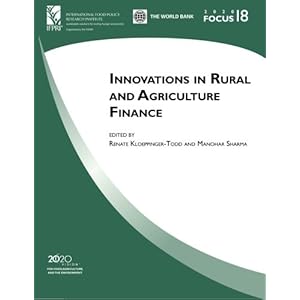
      Rural and agricultural finance innovations have significant potential to improve the livelihoods and food security of the poor. Although microfinance has been widely studied, a large knowledge gap still exists on the nuts and bolts of expanding access to rural and agricultural finance.

      IFPRI’s 2020 Vision Initiative (July 2010) approached the rural finance team of the Agriculture and Rural Development Department of the World Bank to conceptualize and assemble this collection of briefs to narrow the knowledge gap by examining innovations in providing financial services to rural households

      Kamis, 07 Juni 2012

      Establishment of an African Food and Agricultural Policy Platform

      30th – 31st May, 2012. Accra, Ghana. Workshop to Plan the Establishment of an African Food and Agricultural Policy Platform (AFAPP).

      The workshop was organized by the Forum for Agricultural Research in Africa (FARA) in collaboration with the Center for International Food and Agricultural Policy (CIFAP) of the University of Minnesota, USA. Policy research institutions or think tanks support and influence public and private sector decisionmaking by conducting policy research, disseminating the results and engaging in advocacy for its use. They also act as catalysts for new thinking and new solutions to address current, emerging and potential future problems and offer a nursery of ideas on the direction policies should take. With its new role as a weaver of knowledge networks in Africa,

      FARA will provide a continental forum for networking (catalyzing, connecting and communicating) among African policy research institutions. Affiliate members of AFAPP will be drawn from these and other institutions to constitute the research resources by which AFAPP can carry out its mandate. The platform will provide the opportunity for them to catalyze, connect and communicate thus complementing and adding value to the work of each other. The platform will also provide several venues (e.g. workshops, seminars, training, conferences) for “venting” or communicating research outputs to affiliates of AFAPP, policymakers, and the broader community of policy analysts. By providing a platform for promoting the production, dissemination and uptake of policy research outputs, FARA expects to enhance the contribution of policy research institutions to public policy in Africa.

      A small group (15 – 20) of policy experts drawn from policy research and development institutions within and out of Africa with ample knowledge and experience in food, agriculture and natural resources participated in the 2-day workshop. The participants have developed an action plan that shows the objectives, outputs and activities to be implemented. It should also provide a structure and operational mechanism of AFAPP, potential sources of funding and a roadmap on the way forward with identified responsibilities.

      Kamis, 24 Mei 2012

      Rwanda's remarkable progress in almost all FARA’s priority areas

      21-23 May. Kigali, Rwanda. The Executive Board of the Forum for Agricultural Research in Africa (FARA) was to review the programs and plans of FARA over the 18-month period from July 2012 to December 2013. The main reason for choosing Rwanda as venue for the Board meeting is the country’s remarkable progress in almost all FARA’s priority areas of intervention such as advocacy and policy, improved access to knowledge and technologies, strengthened capacities, and partnerships and strategic alliances. The total investment is USD 700,000 per annum for the past 3 years. FARA has also trained seven postgraduate students who have already complemented their courses of study and returned to their assignments with RAB.

      In order to find out first-hand how Rwandan farmers are benefiting through the interventions introduced by FARA and supported by various donors, the Board members visited two key field locations of the Rwanda Agriculture Board (RAB) in Rulindo and Musanze districts.

      In Rulindo, the Board visited the Kotemu Cooperative, where farmers have achieved new prosperity through cultivation of Orange-flesh Sweet Potato (OFSP), which was introduced by the FARA project Dissemination of New Agricultural Technologies in Africa (DONATA).
      The members of the cooperative, most of whom are women, were dressed in bright orange shirts bearing the slogan Turye ibijumba bikungahaye kuri Vitamine A! (Let’s eat sweet potatoes rich in Vitamin A!). The women prepared an array of baked OFSP products. One, which they called ‘DONATA Doughnuts’, so impressed Dr Tiemoko Yo, Chairman of the FARA Board, that he exclaimed ‘This is the best cake I have ever eaten!’

      At the Musanze site in the village of Gataraga, Irish potato farmers were similarly expressive about FARA’s work through the Sub-Saharan Africa Challenge Program (SSA CP). When Professor Monty Jones, Executive Director of FARA, asked the farmers what specific improvements in their lives had come about as a result of the FARA initiatives, he was overwhelmed by the immediate and varied responses of the farmers. One had been able to build a new house that he rents to a tenant. Another had been able to place her children in school, including one in university. Yet another had purchased a motor vehicle for transporting her crop to market. One after another, the farmers demonstrated their enthusiasm and satisfaction with the SSA CP project.


      Related: