Tampilkan postingan dengan label funding. Tampilkan semua postingan

Senin, 18 Februari 2013

Appel à projets : Programme d'appui à la recherche en réseau en Afrique (PARRAF)

Appel à projets : Programme d'appui à la recherche en réseau en Afrique (PARRAF)

Date limite de candidature : 18 Mars 2013


Le ministère français des Affaires étrangères (MAE) développe un « Programme d’Appui à la Recherche en Réseau en Afrique (PARRAF), dont la gestion et la coordination sont assurées par l’Agence Inter-établissements de Recherche pour le Développement (AIRD).

L’enjeu du programme est, d’une part, de favoriser l’émergence de réseaux de recherche autour de projets fédératifs et régionaux et, d’autre part, de renforcer les capacités de recherche des pays africains les moins développés. Pour cela, il soutient la recherche selon des modalités différenciées pour répondre à des besoins contrastés et favoriser les synergies et complémentarités régionales.

Selasa, 12 Februari 2013

Intra-ACP academic mobility scheme

11/02/2013. The third Call for Proposals under the Intra-ACP academic mobility scheme was launched, with a deadline of 10 June 2013.

The intra-ACP academic mobility scheme promotes cooperation between higher education institutions (HEIs) and supports mobility in Africa, the Caribbean and the Pacific (ACP) regions. 

The programme aims to increase access to quality education that will encourage and enable ACP students to undertake postgraduate studies, and to promote student retention in the region along with mobility of staff (academic and administrative), while increasing the competitiveness and attractiveness of the institutions themselves.

Sabtu, 02 Februari 2013

Annual general assembly (AGA) of the Global Donor Platform for Rural Development

30-31st January 2013. The Hague. Over 34 donor organizations met at the annual general assembly (AGA) of the Global Donor Platform for Rural Development. The agenda of the 2013 AGA focused on 'food, farmers and markets'.

The AGA is an opportunity for members to meet, exchange experience and plan and agree on their joint initiatives for the forthcoming year. This year’s AGA focused on Food, Farmers and Markets and provided a forum for Platform members to discuss and plan ahead to address critical questions around food security, smallholder farmers, market access and the role of the private sector and international community.

Drawing participants from among Platform member organizations, partners, academia and the private sector, delegates reviewed challenges and opportunities, strategies and new developments. Specific working groups addressed challenges to finance for smallholder farmers, enhancing nutritional content of food, climate-smart agriculture and commodity markets and trade.

First drafts of the review of the Joint Donor Concept on Rural Development are to be presented in February 2013, after more feedback has been gathered at the Platform's Annual General Assembly.


First keynote Professor Tim Lang
What are the (international, regional, national) policy goals that countries, rich and poor alike, - and the global community - should adopt to strike a balance between food security and equitable economic growth? What are the longer term (sustainable) policy parameters and how can both donors and recipient governments respond?

Prof Lang, said "Resolving world food systems problems is a governance issue, companies are mainly concerned about their supply. Underproduction is not the problem - it is mal-distribution".


Keynote by Sir Gordon Conway
Early lessons from the forthcoming research by Agriculture for Impact and the Overseas Development Institute (ODI) were shared. Based on an in-depth literature review and over 30 case studies, 'Leaping & Learning: Strategies for Taking Agricultural Successes to Scale' shows that there are specific approaches that governments -- including national governments, regional partners, or development donors -- can embed into their work to ensure that smallholder farmers are more effectively connected to markets at scale.

Initial findings from Dr Steve Wiggins and his team at ODI show that there are some positive ways that governments can support smallholders to flourish. For example, they need to create a conducive environment by exploring access to domestic and regional markets (not just export markets), focusing on returns for smallholders, embracing the use of smart subsidies in some circumstances, encouraging smallholder farmer groupings, and ensuring that the private sector is not just included, but has a central role in smallholder agricultural development. A commitment to training and capacity building is also key.

Lamon Rutten, CTA
Findings from the conference on value chains for transforming smallholder agriculture held 6-9 November 2012 in Addis Ababa, Ethiopia (Lamon Rutten, CTA).

Mobilising Aid for Trade to Enhance CAADP implementation
and private sector initiatives - How to strengthen bridging between agriculture, trade and environment? (Sven Walter, Global Mechanism and Francesco Rampa, ECPDM)
Francesco Rampa

Weak coordination between agriculture and trade policymakers and the private sector poses a challenge to boosting intra-African trade and the development of regional agricultural markets. Continuous policy dialogue at the continental, regional and national levels could ensure consistent planning and more integrated action, a new joint Briefing Note by the Global Mechanism (UNCCD) and ECDPM recommends. It points to priority areas to leverage synergies and pool public and private resources channeled through the Aid for Trade initiative, the Comprehensive Africa Agriculture Development Programme and related private sector initiatives.
At the Platform AGA, Dyborn Chibonga, CEO of the National Smallholder Farmers' Association of Malawi (NASFAM), stressed the importance of making African smallholders view farming as a business. Once this change in attitude is accomplished, market integration becomes the next goal.


Related:
More than 100 organisations have announced their support for the 'Enough Food for Everyone IF' campaign certainly hope so. The campaign is focused on getting politicians to tackle global hunger and malnutrition, calling on the G8 leaders to take the lead at the UK-hosted 2013 summit in June. The UK Prime Minister has promised a special event dedicated to food and nutrition security ahead of the G8 Summit, providing a critical opportunity to galvanise political engagement.

Rabu, 30 Januari 2013

Call for proposals launched by Africa-Brazil

The Agricultural Innovation MKTPlace is an international initiative supported by different donors aiming to link brazilian and african and LAC experts and institutions to develop cooperative projects.

The Innovation MKTPlace is composed of three basic pillars:
  1. A policy dialogue between the main authorities from Africa, LAC and Brazil supporting institutions focused on the development of a mutually agreed framework for collaboration
  2. A forum for presentation and discussion of research for development ideas, including proposal selection, that would be competitively supported.
  3. Support and implementation of joint agricultural research for development projects.
The latest call is open up to 28 February 2013. The ceiling of funds is 80,000 USD. The consortium MUST involve a Brazilian research scientist.

Selasa, 29 Januari 2013

Davos and the potential of the multistakeholder partnership model.

23-27 January 2013, Davos, Switzerland. the World Economic Forum Annual Meeting 2013.
and its constituents are hosted 12 sessions related to food security, nutrition and agriculture during Davos.

A new report is titled Achieving the New Vision for Agriculture: New Models for Action, assesses progress to date and recommends action steps to advance progress in the 11 countries.

A second report is titled:
Putting the New Vision for Agriculture into Action: A Transformation Is Happening

The World Economic Forum’s New Vision for Agriculture serves as a platform to build collaboration among stakeholders to achieve a vision of agriculture as a driver of food security, environmental sustainability and economic opportunity.

In the past three years, governments, business, farmers and civil society organizations have embraced and begun to implement this vision at global, regional and country levels.This report outlines the progress to date of partnerships catalysed by the New Vision for Agriculture, and the key challenges and next steps that must be addressed to realize the full potential of the multistakeholder partnership model.

Eight African countries are working with New Vision for Agriculture partners through Grow Africa, a partnership jointly convened by the African Union, New Partnership for Africa’s Development (NEPAD) and the World Economic Forum.

“Smallholder farmers are on the frontline of Africa’s food security,” said Dyborn Chibonga, Chief Executive Officer of the National Smallholder Farmers’ Association of Malawi and one of several farmer leaders participating in Davos sessions. “We need to improve access to markets, finance, technology and information, by working with the private sector and other partners.”


The New Vision partnerships bring together relevant stakeholders at the national level to accelerate progress towards shared goals. Leaders of government, private sector, civil society, donor and farmer associations work together to increase investment, productivity and sustainability in specific crop value chains or regions of the country. For example, in Tanzania stakeholders are developing agriculture value chains and infrastructure along an agricultural growth corridor, and in Vietnam a public-private task force is focusing on five commodities. In Mexico, a partnership comprising more than 40 organizations is focusing on five commodities plus cross-cutting issues such as water management, information access and infrastructure.

In Africa, the African Union and NEPAD joined with the New Vision for Agriculture to create the Grow Africa partnership to support public-private partnership for sustainable agricultural growth in seven countries: Tanzania, Mozambique, Kenya, Ethiopia, Rwanda, Ghana and Burkina Faso. An eighth country, Nigeria, has joined in 2013.

Partnerships supported by the New Vision for Agriculture initiative have established new levels of trust and collaboration between stakeholders who traditionally have not worked together. All partnerships have set specific goals, developed work plans and mobilized activity or substantial investment commitments. However, the partnerships are still in an early stage, having been formed one to two-and-a-half years ago. Work is in an early stage, with tremendous potential for broader impact.

This report highlights specific actions that government, the private sector, civil society and others can take, calling on stakeholders to intensify their efforts to realize the transformational potential of these partnerships. This includes:

  • Refining partnership strategies to strengthen key areas, such as environmental sustainability or innovative financing, and to ensure scalability;

  • Engaging and activating key stakeholders, broadening networks to include perspectives and partnership from important sectors ranging from civil society to logistics experts, while reinforcing global support;

  • Strengthening implementation capacity of partnerships working at national level, to ensure the resources needed to deliver impact are in place, and to monitor, evaluate, learn from and share emerging results.

In Davos, African and global leaders discussed implementation of more than US$ 3 billion in private-sector investment commitments in 2012.

23 January 2013. How are Africa's leaders mitigating investment risk in Africa's economies? This session was developed in partnership with CNBC Africa.

The panel titled “De-risking Africa:How are Africa's leaders mitigating investment risk in Africa's economies?” was attended by African Heads of State President Jacob Zuma of South Africa, President Jonathan Goodluck of Nigeria, President Kagame of Rwanda along with Louise Arbour of the International Crisis Group, Chairman of SABMiller Graham Mackay and Chairman and CEO of Bharti Enterprise Sunil Bharti Mittal.

Rabu, 23 Januari 2013

ERAfrica Joint Call


Call publication date: 15 January 2013
Deadline for the submission of proposals: 15 April 2013

BACKGROUND AND OBJECTIVES

1. The ERA.Net ERAfrica
The ERA-Net scheme is a component of the European Commission’s Seventh Framework Programme providing funding to improve the cooperation and coordination of national research activities and thus strengthen the European Research Area (ERA) with other regions of the world.

Building on mutual interest of Programme Owners in African countries, EU Member States (EU MS) and countries associated to the EU RTD Framework Programme (AC) to implement coordinated joint activities towards a multilateral funding scheme a “Group of Funding Parties” has been established.

This Group of Funding Parties is supported in this process by the consortium of the ERAfrica Project, which is funded by the European Commission as a Coordination and Support Activity under the 7th EU RTD Framework Programme.

2. Objectives of the Joint Call
The goal of the Joint Call is to create long-term research collaboration between EU Member States and/or Associated Countries and Africa. Research collaboration of a high standard between teams from EU Member States and/or Associated Countires and Africa will be supported through open competition.


ERAfrica is going to publish a Joint Call for proposals in the three thematic areas:
  1. Renewable Energies
  2. Interfacing Challenges (e.g. health, food + energy security, telecommunication gap, societal challenges…)
  3. New Ideas (thematically open, with focus on the novelty of the idea/approach).
The tentative period for the evaluation of proposals is May‐August 2013.

Kamis, 06 Desember 2012

Finance for the Farmer around climate change

6 December 2012. Funding is always a prominent topic of discussion, and often a sensitive issue at such international gatherings as the UNFCCC COP18. Commitments made by member countries usually have some financial strings attached, and the question is largely ‘who will pay, how much, and for what?’ At Agriculture, Landscapes, and Livelihoods Day (ALL) the issue surfaced continuously over the course of the day – more money for technology transfer; more for neglected areas of research (climate impacts on pollination, pests, and disease); more for farmers. To manage overlapping objectives related to food security and nutrition, development, environment, and climate, there was undeniable agreement that increased and more efficient funding is necessary.

One Roundtable session at ALL Day honed in specifically on questions related to finance opportunities for smallholder farmers. This panel of private, government, and civil society experts attempted to cover all the bases, while still pulling from concrete case studies. The challenges identified by the panelists were telling about the key criteria for more integrated finance mechanisms.

CARE International Phil Franks (CARE International), in describing a smallholder carbon project in Kenya, noted how the value of the actual carbon revenue to each individual farmer is rather insignificant and the requirements to earn credits don’t allow for the level of flexibility farmers need to adapt. Initially touted as an innovative means to bring climate finance to farmers, smallholder carbon projects do in fact have benefits but largely in terms of soil fertility, water management, and productivity. For smallholder farmers, the dispersed nature of their holdings also makes it difficult to access carbon finance or insurance, due to high transaction costs.

Second from right: Matthew Wyatt (DFID)
Separation of adaptation and mitigation is one of the themes reiterated throughout the day, and a characteristic of the funding mechanisms within the UNFCCC. This split hinders implementing more integrated approaches to climate-smart land management. On the panel, Matthew Wyatt (DFID) noted  ow we need to get beyond this separation, because in agriculture the two go hand-in-hand. And yet funding, too, reflects this separation. Moreover, funding streams for climate change and agriculture and rural development also operate in their respective silos. One attempt to cross this divide, IFAD’s Adaptation for Smallholder Agriculture Programme (ASAP), is trying to blending climate and agriculture ‘know-how’ in financing resilient development for smallholders.

Lou Munden
So what does all this mean when we take a landscape perspective? Panelists were generally of one mind, emphasizing that operating on a landscape scale allows for more carbon storage while also increasing adaptive capacity. Lou Munden (Munden Project), representing the private sector on the panel, argued that “we need to stop thinking about how to make this fit old models and start thinking about new ones.” His company takes this to heart, focusing on investing in a diverse portfolio of activities within the landscape to manage risk.

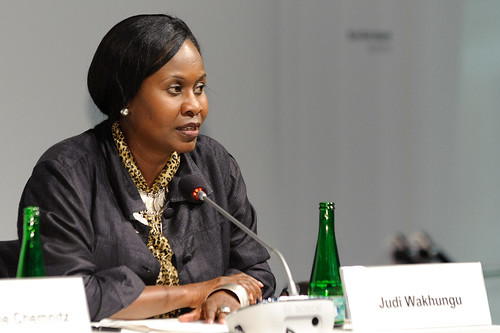
Judi Wakhungu
At the end of the day, though, the institutional structures in place are what will allow for better integration and efficiency for funding climate-smart landscapes. For example, in the opening panel of ALL Day, Judi Wakhungu (African Centre for Technological Studies) noted the restructuring of the Kenyan government and a proposal to integrate agriculture, environment, and climate change in one ministry.

A move such as this may help streamline funding for agricultural development that achieves multiple objectives and benefits to smallholders. As several panelists noted, public sector funding is crucial for covering the high upfront costs and reducing risks, which will in turn entice more private sector funding.

Related:
DOHA, Qatar December 6, 2012/ -- A new report by the African Development Bank, in collaboration with Vivid Economics, makes concrete proposals that will facilitate access by African countries to the Green Climate Fund.

Launched in Doha on the sidelines of the UN climate change conference (COP18), the “Getting Africa Ready for the Green Climate Fund” report makes a series of recommendations for the Green Climate Fund board and African nations that will increase the likelihood that African countries, with the support of the African Development Bank, will be able to access increased flows of climate finance from this source.

Selasa, 20 November 2012

Africa for Norway-video


16 November 2012. Imagine if every person in Africa saw the “Africa for Norway”-video, and this was the only information they ever got about Norway. What would they think about Norway?
The truth is that there are many positive developments in African countries, and we want these to become known. We need to change the simplistic explanations of problems in Africa. We need to educate ourselves on the complex issues and get more focus on how western countries have a negative impact on Africa’s development. If we want to address the problems the world is facing we need to do it based on knowledge and respect.
The video is made by The Norwegian Students’ and Academics’ International Assistance Fund (www.saih.no). With the cooperation of Operation Day’s Work (www.od.no). With funding from The Norwegian Agency for Development Cooperation (Norad) and The Norwegian Children and Youth Council (LNU).
  Related: 19 November. BBC Focus on Africa's Alex Jakana

Senin, 19 November 2012

ARD funding opportunities


A G R I C U L T U R E

The calls, to be launched in January with a budget of €11 million, will offer research funding in areas such as agriculture, health, climate change and energy, grouped under three headings: "Renewable Energy", "Interfacing Challenges" and "Idea driven research". The calls have been developed within the framework of the €2 million, three-year "ERA-Net for Africa" (ERAfrica) project. ERAfrica was set up to facilitate networking of African and European funders of research and innovation and to work towards joint project calls. The agreement concerns ministries and public institutions from 15 countries: Austria, Belgium, Burkina Faso, Ivory Coast, Egypt, Finland, France, Germany, Kenya, the Netherlands, Norway, Portugal, South Africa, Switzerland and Turkey. Together they have agreed to fund research for at least € 11 million, with the five African states contributing nearly €4 million.

The project calls are expected to be published in mid-January 2013, with a deadline for application of around mid-April 2013. Signing of the contracts is foreseen from December 2013 to May 2014.

ACP-EU Cooperation Program in Science and Technology, 2nd Call for Proposals
The EU announces S&T II as its second call for proposals to strengthen science, technology, and innovation in developing countries. Priority thematic areas are energy access and efficiency, as well as agriculture and food security. Grants will range from €300 thousand to €1 million (exceptionally to €3 million) for activities in capacity building, awareness raising, science promotion, and other support for S&T. The program is open to organizations in the developing countries defined by the EDF and DCI funding categories (i.e., most developing countries) -- and to international organizations. A proposal requires three or more partners, at least two of which must be located in ACP (African, Caribbean, and Pacific) member states. The application deadline is 07 February 2013

Africa- Brazil Agricultural Innovation Marketplace.
The next call for pre-proposals is planned to be launched on 02 January 2013The new Marketplace website will be available for registrations starting 01 Dec 2012. You are encouraged to visit and register yourself on the new website after 01 Dec. By registering, you will receive updated information on the initiative and will be able to find partners and submit proposals during the call.

Agricultural Research for Food Security
USAID-Washington announces funding for agricultural research in support of the Feed the Future initiative. USAID will support six research programs with grants ranging from US$500 thousand to US$3 million per year -- not including additional funding anticipated from USAID's field programs (i.e., missions). The program is restricted to eligible U.S. colleges and universities. Funding Opportunity RFA-OAA-12-000036. The closing date is 21 December 2012. Link

Research on Zoonoses and Emerging Livestock Systems
The UK's Biotechnology and Biological Sciences Research Council (BBSRC) collaborates with the UK's other research councils, and with the UK's Department for International Development, for research that will lead to reduced transmission of diseases between livestock and people in developing countries. Applications should be submitted by research partners in the UK and developing countries. BBSRC posts details of the program, as well as an online tool to help find collaboration opportunities. The closing date for applications is 10 January 2013.

Food Security in Madagascar
The European Commission (EC) supports agricultural development in five regions of southern Madagascar through the FRDA (i.e., regional funds for agricultural development). The EC's funding will contribute to and strengthen the FRDA's management of funding and technical assistance. Eligibility for grants extends to nonprofit NGOs in the EU and its candidate countries; the European Economic Area; and the ACP countries (including Madagascar) and other developing countries. Reference EuropeAid/133260/M/ACT/MG. The application deadline is 29 January 2013. Link

Food Security in Burkina Faso
The EC announced two calls for proposals to improve food security in Burkina Faso (EuropeAid/133611/C/ACT/BF, and EuropeAid/133612/C/ACT/BF). Objectives (among others) include support for agricultural production, vegetable growing, and raising small ruminants and poultry. The programs are open to nonprofit NGOs in the EU countries, ACP countries (including Burkina Faso), and OECD/DAC countries -- consult eligibility details in each call. Grants range from €400 thousand to €1 million, varying in each call, and subject to co-financing requirements. The application deadlines are 14 December 2012 for Call 133612, and 17 December for Call 133611. Link 133611 Link133612

Food Security in Burundi
The EC calls for projects in Burundi to increase food security. The aim is to strengthen agricultural producers, and to reinforce value chains in nutrition. Eligibility extends to non-profit organizations in EU member states and candidate countries, OECD countries, developing countries (including Burundi), and international organizations. Proposals need to include partner organizations in Burundi. Grant size is €3.5 million to €5.4 million, subject to co-financing requirements. Reference EuropeAid/132679/M/ACT/BI. The application deadline is 14 December 2012. Link

Agricultural Development in Sierra Leone
The EC's Delegation in Sierra Leone is making grants through "Agriculture 4 Development" to strengthen the country's production and export of cocoa, coffee, and cashews. The themes are improved production; quality control; improved processing; and marketing. The program is open to nonprofit organizations in the EU and the ACP (Africa, Caribbean, and Pacific) countries, working in collaboration with partners in Sierra Leone. Reference EuropeAid/133547/M/ACT/SL. The deadline for proposals is 18 January 2013.

Innocentive -- Storage Container to Protect Seed and Grain
Innocentive is a platform to promote open innovation and crowd sourcing for solutions to important problems. It currently posts a challenge that calls for designs or materials for a storage bag, container, or vessel that protects seeds and grains against rodent infestations. Requirements include durability over several seasons, low cost, and feasibility for use in developing countries. The winning proposal will receive US$20 thousand. Proposals need to be submitted by 21 November 2012.

Grants to Strengthen Farming Communities 2013
The Monsanto Fund makes grants in support of agricultural communities around the world. Grants of US$25 thousand and more are available to tax-exempt charitable organizations for activities and projects that address farmers' education and training; food security; community water and sanitation; and other local needs. Monsanto's international grants are administered at the country level; interested persons should contact the Fund's national liaison. The next application period is 01 January 2013 through 28 February 2013. Link Fund Link Locations

B I O D I V E R S I T Y 

Forest Law Enforcement, Governance and Trade Program
The EU-FAO FLEGT Program 2012-2016 announces its first call for proposals. The program makes grants to organizations in developing countries that have signed a Voluntary Partnership Agreement (VPA) with the European Union, as well as to organizations in selected non-VPA countries. The first call for proposals is for government institutions, civil society organizations, and organizations/federations in the private sectors of non-VPA countries (listed on the website). Grants are up to €100 thousand for actions that support any of the seven themes of the FLEGT program. The deadline for applications (English, French, Spanish) is 12 December 2012. 


C L I M A T E  C H A N G E

Darwin Plus
UK Department for Environment, Food and Rural Affairs (Defra) is collaborating with the UK's Department for International Development (DFID) and its Foreign and Commonwealth Office (FCO) to launch Darwin Plus. This is a new program to fund projects in environment and climate change in the UK's overseas territories. The program is open to governments, NGOs, research institutions, private organizations, and others in all of the UK's overseas territories for projects of two years. The application deadline is 01 April 2013

International Climate Initiative 2013
Germany's BMU (Federal Ministry for the Environment, Nature Conservation, and Nuclear Safety) funds the International Climate Initiative (ICI) to support projects on climate change mitigation and adaptation, and biodiversity projects that have climate relevance. Most projects are led by German and international organizations with partners in developing and emerging countries. Grants are generally over €200 thousand, and sometimes much larger, for projects that are usually two to four years. The closing date for project outlines is 09 January 2013.

The CCAPS fellowships aim to support the next generation of researchers and thought leaders on the topic of climate change and political stability in Africa. CCAPS offers up to three pre-doctoral fellowships in residence at the University of Texas at Austin (Robert S. Strauss Center for International Security and Law) for an academic year, with preference for individuals who have made substantial progress towards the completion of their dissertations. CCAPS encourages applications from women, minorities, and citizens of all countries. The fellowship includes a nine-month stipend of US$24 thousand, and one round-trip airline ticket. The application deadline is 15 February 2013.

D I A S P O R A 

The Common Ground initiative 
This is a £20 million fund supporting African development through UK based small and Diaspora organisations. This initiative is managed by Comic Relief and co-funded by the Department for International Development.

AWARDS, GRANTS, PRIZES 

The Australia Awards program will support 20 eligible candidates in Africa for PhD studies in agricultural research at Australian universities, commencing in 2014. The program is open to nationals from the following countries: Benin, Burkina Faso, Burundi, Cameroon, Chad, Egypt, Ethiopia, Gambia, Ghana, Kenya, Liberia, Malawi, Mali, Mozambique, Niger, Nigeria, Rwanda, Senegal, Sierra Leone, Tanzania, Uganda, and Zambia. The closing date for applications is 31 March 2013.

Grants for Guest Researchers from Africa 2013
The Nordic Africa Institute provides funding to social science researchers from Sub-Saharan Africa for short-term collaborative assignments at the NAI in Uppsala, Sweden. Research areas include one on agrarian change, property, and resources. NAI provides travel, subsistence, an installation allowance, and in-kind support for stays of up to 90 days. The deadline for applications is 01 April 2013

The Fiat Panis Foundation (Germany) makes awards for university thesis and dissertation research in themes of agriculture and natural resources, with a focus on food security in developing countries. The Justus von Liebig Award for World Food is €25 thousand; the Hans Hartwig Ruthenberg Graduate Award is €7.5 thousand. The deadline for both awards is 30 April 2013.

Research Training Fellowships for Scientists in Developing Countries
The Government of India, Department of Science & Technology (DST) announces 20 fellowships for scientists and researchers from developing countries for collaboration with Indian research partners. Thematic areas include agricultural sciences, biological sciences, and several others. The fellowships program is coordinated through the Center for Science and Technology of the Non-Aligned and Other Developing Countries (NAM S&T Center). Fellowships are for six months. Applicants should be below 40 years of age, who possess at least a Master’s Degree in the relevant natural sciences. The closing date for applications is 07 December 2012

Ideas to Contribute to Agriculture and Rural Development in Africa
Through its program Africa Rural Connect, the National Peace Corps Association (U.S.) sponsors a competition of ideas to advance grassroots agriculture and rural development in Sub-Saharan Africa. The "Second Chance" competition allows individuals to take ideas already submitted in previous rounds of the competition and re-mix them by adding new elements. Themes in Africa Rural Connect are water resources, agribusiness, post-harvest losses/storage, transportation and infrastructure, and communication methods. Cash prizes range from US$250 to US$2,000 thousand for the best re-mixes and original ideas. The contest ends 30 November 2012.

Student Video Contest
The "World at 7 Billion" invites short video public service announcements that illustrate the connection between world population at seven billion and one of the following: Food Security; Global Status of Women/Girls; or Wildlife Habitat. The contest is open to high school students (or equivalent) worldwide. Cash prizes will be awarded for videos in each of the three topic areas. The deadline for submissions is 21 February 2013.

In collaboration with the Rockefeller Foundation and the Green Belt Movement, the Kenya Community Development Foundation (KCDF) invites applicants for the Wangari Maathai Scholarship for tertiary education. The scholarship will be awarded to a young woman aged 18 to 25 years on the basis of her passion and personal commitment to environmental conservation. Eligibility extends to Kenyan citizens residing in Kenya. The application deadline is 30 November 2012.

25 Postdoctoral Research Fellowships in any field of research.
By investing in international recruitment of eminent researchers and students, international exchanges and increased collaborations, Stockholm University intends to stimulate the academic environment and strengthen the position of the University in the international market.
Deadline for applications: December 17, 2012.

Joint funding of European-African research projects agreed


The Commissioner was on a week long visit to 
South Africa to mark the 15 th anniversary of 
the European Union's first science and technology 
agreement with South Africa.
6th November. Cape Town. Joint funding of European-African research projects agreed

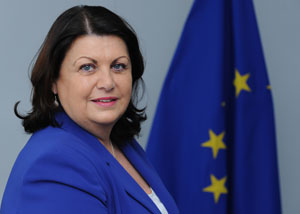
The first initiative of European and African countries to jointly fund collaborative research projects was agreed on 6th November during a visit by Research, Innovation and Science Commissioner Máire Geoghegan-Quinn to Cape Town.

The calls, to be launched in January with a budget of €11 million, will offer research funding in areas such as agriculture, health, climate change and energy, grouped under three headings: "Renewable Energy", "Interfacing Challenges" and "Idea driven research". The calls have been developed within the framework of the €2 million, three-year "ERA-Net for Africa" (ERAfrica) project.

ERAfrica was set up to facilitate networking of African and European funders of research and innovation and to work towards joint project calls. The agreement concerns ministries and public institutions from 15 countries: Austria, Belgium, Burkina Faso, Ivory Coast, Egypt, Finland, France, Germany, Kenya, the Netherlands, Norway, Portugal, South Africa, Switzerland and Turkey. Together they have agreed to fund research for at least € 11 million, with the five African states contributing nearly €4 million.

The project calls are expected to be published in mid-January 2013, with a deadline for application of around mid-April 2013. Signing of the contracts is foreseen from December 2013 to May 2014.

The financial commitment agreement will be signed on the margins of the annual EU-Africa Joint Experts Group science cooperation forum meeting.

Background
ERAfrica was set up as part of the 2007-10 Action Plan of the Joint Africa-EU Strategy (JAES). It is funded from the EU's seventh framework programme for research and technological development (FP7). In addition to ERAfrica, FP7 has provided nearly €137 million in funding for over 900 African participations in EU research projects or initiatives.

The agreement follows the official launch on Nov 2 of a new bilateral EU-South Africa science cooperation project, ESASTAP Plus, providing a forum for cooperation between research ministries and institutions from South Africa, Germany, France, Greece, Italy and Switzerland to support South Africa’s participation in the Framework Programmes, but also reciprocal European participation in South African national programmes, and to target coordination of Member States and Associated Countries' research policies and programmes vis-à-vis South Africa, encouraging the development of new joint initiatives for mutually beneficial cooperation.

Kamis, 25 Oktober 2012

African Rural and Agriculture Credit Association General Assembly

15th to 19th October 2012. Accra, Ghana. The 18th African Rural and Agriculture Credit Association (AFRACA) General Assembly and technical workshop was hosted by the AFRACA vice Chairperson; the Bank of Ghana.

The theme of the technical session was “Enhancing the Agriculture Value Chain through Innovation”. The following were the activities to guide the 2012 Technical workshop and the business session of 18th AFRACA General Assembly programme:
Deputy Governor of the Bank of Ghana, Millison Narh at the opening ceremony of AFRACA conference, raised concern about the continuous decline of the sub-Saharan international export.
He said “the value chain process which includes input supply, producers, processors and buyers can be sustained through innovation projects such as introduction and improved access to suitable agric technologies and credit facilities; availability of appropriate incentives for farmers and traders and integration of these new technologies and practices into their activities and investment plans.”
Millison Narh
He indicated that in order to further enhance the value chain system towards successful innovation, there should be a focus on establishing an agriculture commodity market, creating a warehousing research system, provision of storage devices to reduce or eliminate post harvest losses, and embracing the co-operatives concept which has emerged as the best tool to help rural small-scale producers to overcome many challenges that confront them.

He added that the provision of relevant training programmes for agric sector workers and a revision of the land tenure system to give access to arable lands for productive use would also contribute to enhancing the industry.

He also called on African governments and policy makers to make appropriate policy interventions which would entail infrastructure development and appropriate training opportunities for farmers, and make fiscal incentives available for financial institutions who are focusing on agric lending.

Dr. Bwalya Ng’andu, Zambia’s Deputy Governor in charge of Operations, encouraged AFRACA to compliment its training and policy programme initiatives with further research into the issue of inadequate access to finance and how avenues such as linkage banking may assist in fostering rural development.

Rabu, 24 Oktober 2012

Evaluating the Effectiveness of Results-based Approaches to Aid

16 October 2012. Public and political pressure on budget allocations, coupled with the genuine need to make aid more effective to tackle the global poverty crisis, have resulted in a renewed focus on results. Several donors are promoting the use of aid to reward the achievement of predetermined performance targets. Though this is a recent trend, in 2010, total disbursements for results-based approaches broke the $5 billion barrier.

Eurodad examined the following six major results-based initiatives and assessed their performance against four key internationally agreed aid effectiveness principles: ownership; accountability and mutual accountability; harmonisation; and alignment and use of country systems. We also examined whether they had a ‘broad’ scope or a ‘narrow’ one, in terms of: how specific the objectives are; the level of funding (from national to local); and the flexibility with which the recipient can use the money.
  • The European Commission’s Millennium Development Goals Contract (MDG-C).
  • The GAVI Alliance (GAVI) Health System Strengthening support and Immunization Services Support (due to their similarities both initiatives have been these two initiatives have been depicted together in the tables examining their alignment with aid effectiveness principles.).
  • The Millennium Challenge Corporation’s (MCC) Threshold and Country Programs.
  • The Global Fund to Fight AIDS, Tuberculosis and Malaria (GFATM).
  • The Global Partnership for Output-Based Aid (GPOBA).
The main findings of this research are:
  • In general, results-based approaches are not particularly good at supporting aid effectiveness principles, with the exception of the MDG-C. However, broader approaches do appear to be better aligned with aid effectiveness principles. 
  • Ownership tends to be higher when the responsibility for designing programmes falls on recipient governments. This does not mean that donor led approaches such as the MCC cannot achieve significant degrees of ownership, but results are likely to be less consistent, have higher costs and impose a significant burden on host governments and civil society. 
  • Results-based approaches tend to reinforce accountability to donors and in doing so, undermine mutual accountability. In general, the problem is less acute with country wide initiatives and it is most pressing when working through third party service providers. 
  • The level of harmonisation of results-based approaches is low because of their widespread use of parallel structures. Donor harmonisation seems to be higher the broader the approach, with the MDG-C being the best performer. 
  • Only two of the approaches examined in this report use country systems to a significant extent: MDG-C and GAVI. Even in these cases there are significant eligibility and public financial management criteria that influence and limit the type of country systems that recipient countries can implement.
In addition to these concerns, one of the most important findings is that there is little evidence or evaluation of the strengths, weaknesses and impacts of different results-based approaches. Therefore, it seems reasonable to use results-based approaches with a degree of caution.
Read the full report: Hitting the Target? Evaluating the Effectiveness of Results-based Approaches to Aid

Promoting Responsible Agricultural Investments in Africa

October 22, 2012. Washington, D.C. Increased interest in public and private investments in the African agricultural sector has raised concern over how such investments will benefit smallholder farmers.

This discussion explored how best to develop “responsible investments” that are profitable for international private investors as well as for local farmers, businesses and governments. As part of a series of conversations that the Partnership to Cut Hunger and Poverty in Africa has launched in the U.S. and Africa, the event helped define and identify appropriate models that promote responsible investments in Africa.

Go straight to the second panel @ 1h18 minutes
Moderator – Mima Nedelcovych, Partner, Schaffer Global Group
• Promoting Inclusive Agricultural Investments That Benefit Smallholder Farmers
– Katie Campbell, Senior Policy Analyst, ActionAid
• Forging Effective Public-Private Partnerships to Facilitate Responsible Agricultural
Investments
– Matthew Armah, COO, Millennium Development Authority, Ghana
• Making New Private Sector Investments Work for African Agriculture
– Njack Kane, CEO, Novel Commodities, Geneva
• Encouraging Responsible Private Sector Investments in the New Alliance for Food Security and Nutrition
– Paul Weisenfeld, Assistant to the Administrator, Bureau for Food Security, USAID
 

Jumat, 12 Oktober 2012

The ACP-EU Cooperation Programme in Science and Technology II (S&T II) Call for Proposals launched

08/10/2012. This second Call for Proposals under The ACP-EU Cooperation Programme in Science and Technology, builds upon the lessons learnt from the first Call for Proposals launched in 2008.

The global objectives of this Call for Proposals are:
  • To address the scientific and technological divide between ACP member states and the most industrialised countries.
  • To strengthen Science, Technology and Innovation (STI) in ACP countries to enable creation, update and use of scientific knowledge.
  • To enhance the use of STI as a key enabler for poverty reduction, growth and socio-economic development.
In line with the ACP Group of States' priorities and the EU Agenda for Change, the Programme prioritises Actions in the fields of Energy Access and Efficiency as well asAgriculture and Food Security. However, other sectors and/or interdisciplinary approaches are not excluded as long as the foreseen actions and activities are in line with the objectives of the Programme.

Deadline for submission
The deadline for the submission of applications is 7 February 2013.

Kamis, 04 Oktober 2012

Assessing the Quality of Aid for Agriculture

CGD Policy Paper21/08/2012. New international initiatives signal strong commitment to agriculture and food security in the face of growing demand and climate-change challenges. But aid to agriculture still represents just five percent of total official development assistance. With donor budgets under intense pressure, making aid effective is more important than ever, but we still know relatively little about the quality of aid in general and of agricultural aid in particular.

The Quality of Official Development Assistance (QuODA) project, a joint initiative of the Center for Global Development and the Brookings Institution, is one effort to address this knowledge gap for aid in general. This paper presents the results of applying the QuODA methodology to agriculture, explains the limitations of the approach, and compares donor performance with the original QuODA results.

The authors find donors rank similarly in both Ag QuODA and the original. They also find that quantitative assessments of aid at the sector level suffer from constraints of data quality and availability and encourage the continued improvement of sector-level aid data and the use of more and better independent impact evaluations to measure development effectiveness for agricultural aid projects.
 Download (PDF,1.39 MB) 

Senin, 01 Oktober 2012

Donor methods to prioritise investments in agricultural research and development


TOPIC
With increasing global demand for nutritious and safe food, it is widely recognized that agricultural research needs additional resources in order to achieve the necessary improvements in agricultural productivity.

Donors have to split their limited development resources between research and non-research activities.

But which criteria do donors use when they allocate their budgets?

This Platform synthesis paper presents a set of tools and methods that are presently used to prioritise the selection of research projects.

OBJECTIVES
The comparative analysis of various donor approaches can help promote collaboration and mutual learning. The paper provides:
· A summary of academic work
· Case studies of how priorities have been assessed
· Knowledge on how to articulate these processes into existing programming mechanisms

UPCOMING
Platform policy brief summarising the synthesis paper’s main strategies and recommendations for decision-makers

COMMENT
The authors welcome your comments on this publication so please feel free to contact them at any time, leave feedback on the website or use the Twitter hashtag #platformpaper.

Download | 1 MB PDF | Platform 2012


Senin, 27 Agustus 2012

Tanzania: Sh160bn fund planned for agriculture

23 August. Dar es Salaam. A $100 million (Sh160 billion) catalyst fund will be launched before the end of this year to help attract the private sector to participate in the implementation of the Agricultural Growth Corridor of Tanzania (Sagcot).

The fund will help prepare investment opportunities for local and international investors and it will also complement existing government and donor-backed financing initiatives in the agriculture sector.

The fund will also compliment other funding models including the Tanzania Agricultural Development Bank to be launched this year, the $25 million Danida backed-PASS facility, Agra/Stanbic Bank’s and Agra/NMB’s $25 million guarantee facility to support established and commercially viable agriculture business and the $5 million Africa Enterprise Challenge Fund window for Tanzanian agri-business.

According to the Sagcot blue print, the catalyst fund provides early ‘social venture capital’ to cover the start-up costs of commercially viable agri-businesses and other key investments.

The Confederation of Tanzania Industries chairman Felix Mosha urged farmers to get prepared to help in the transformation of Tanzania’s agriculture.

“After the catalyst fund is set regulations will be made clear on how to access the fund and what are the criteria for one to qualify for it,” said Felix Mosha.
Sagcot chairman (and SACAU board member) Mr Salum Shamte said the successful implementation of Sagcot will see an investment inflow of $2.1 billion from the private investment and $1.3 billion from the public sector by 2030. The result will be a tripling of agricultural production in about 350,000 hectares in Southern Tanzania. And at least 420,000 new employment opportunities will be created in the agricultural value chain and more than two million people lifted out of poverty. “We hope the outcomes of Sagcot by 2030 will lead to regional food security and annual revenue from farming of about $1.2 billion,” said Mr Shamte.

Already, there are investment opportunities to be undertaken in the five regions of Mbeya, Rukwa, Ruvuma, Morogoro and Iringa which form the special agricultural corridor of Tanzania. Investment will be in production of rice, sugar, banana, citrus, horticulture and pulses and keeping livestock. In Mbeya for example there will be the Mbozi seed farm of 3,000 hectare nucleus seed estate and irrigated outgrowers scheme for maize, soya, sunflower, sesame and pulses. In Iringa, there are seed potatoes at Mtanga farm for growing seeds and distribution on up to 100 hectare nucleus farm and throughout grower pragramme to provide improved seeds to farmers.

Kamis, 09 Agustus 2012

ARD funding opportunities


A G R I C U L T U R E


ASARECA calls for Concept Notes 
The Association for Strengthening Agricultural Research in Eastern and Central Africa (ASARECA) has the following announcements for:
Research on Land Grabs and Food Sovereignty in Africa
Council for the Development of Social Science Research in Africa (CODESRIA) invites proposals on the topic of the acquisition of fertile lands in Africa for outsourced food and fuel production, i.e., "land grabbing." Research working groups to address this topic are preferably multi-country, multi-disciplinary, inter-generational, and involving both men and women. The deadline for proposals is 31 August 2012.
Zoonotic Diseases in Sub-Saharan Africa
The U.S. Department of State and the African Biological Safety Association announce the Sub-Saharan Africa Biosafety and Biosecurity Grant Competition. The competition will provide financial assistance for biosafety/biosecurity upgrades at biological labs in Sub-Saharan Africa, with preference given to labs focusing on zoonotic diseases. Up to five recipients will receive grants of US$10 thousand each. The application deadline is 31 August 2012.
Awards for Agricultural Research and Science in Africa
Regional Universities Forum for Capacity Building in Agriculture (RUFORUM) announces the 2012 competition for the Impact Research and Science in Africa (IMPRESSA) Awards. The competition is open to agricultural researchers and scientists in the 29 RUFORUM member universities. Eligibility extends to individuals and teams. Nominations are due by 29 August 2012.
Call for Proposals "Open Science" 2012
The Agropolis Foundation is a French grant-making organization that supports inter-disciplinary research and higher education in agricultural sciences and sustainable development. Agropolis invites international partners to collaborate with scientists at Agropolis by means of the Foundation's fellowships and grants. The Foundation describes each type of award by purpose, eligibility criteria, level of financial support, and other details. Materials are available in French and English. The deadline for applications is 14 September 2012
The European Commission invites research proposals in the theme of Food, Agriculture and Fisheries, and Biotechnology. The program is open to applicants in the EU, Associated Countries, and International Cooperation Partner Countries (i.e., most developing countries). Following themes are relevant for Africa: KBBE.2013.2.3-02: Network for the transfer of knowledge on traditional foods to SMEs ; KBBE.2013.1.2-02: Legume breeding and management for sustainable agriculture as well as protein supply for food and feed ; KBBE.2013.1.2-04: Control of pests and pathogens affecting fruit crops ; KBBE.2013.1.2-05: Biological control agents in agriculture and forestry for effective pest and pathogen control ; KBBE.2013.1.3-02: Sustainable apiculture and conservation of honey bee genetic diversity. Details about the KBBE 2013 work program, eligibility criteria, etc., are included in the call announcement and its supporting documents. The closing date for proposals is 05 February 2013.


B I O D I V E R S I T Y 

Community Forest Management in Malawi
The EC will make grants to support the "Improved Forest Management for Sustainable Livelihoods Program (IFMSLP)," Phase II, a program of the government of Malawi. The program aims to improve the livelihoods of forest-dependent communities through participatory management of forests in forest reserves and on customary lands. Grants of €300 thousand to €500 thousand will be made to nonprofit organizations in the EU; EU candidate countries; countries of the European Economic Area; ACP countries (including Malawi) and Least-Developed Countries; and international organizations. Reference EuropeAid/133067/M/ACT/MW. The closing date for applications is 06 September 2012.
Fighting Desertification in Africa
L'Agence Inter-établissements de Recherche pour le Développement (AIRD) is partnering with the Pan-African Great Green Wall Agency (APGMV) and Brazil's National Council for Scientific and Technological Development (CNPq) to support tripartite research related to desertification in Africa. Themes are food and agriculture; management of natural resources; adaptation to climate change; and others. The geographical scope includes the countries of the African Great Green Wall: Burkina Faso, Chad, Djibouti, Eritrea, Ethiopia, Mali, Mauritania, Niger, Nigeria, Senegal, and Sudan. Proposals are expected to be tripartite to include participation from each of Africa, France, and Brazil. The closing date for proposals is 20 October 2012.
Africa Seed Grants  
Cleveland Metroparks Zoo has grants for wildlife conservation and research. The priority is for projects focusing on wildlife and habitat protection, human-wildlife conflict, sustainable environmental practices, capacity building, and conservation biology. There are no application restrictions by nationality. In both programs, the seed grants range from US$1,000 to US$3,500. The deadline for pre-proposals is 05 November 2012. Link
Round 2 of the CDKN Innovation Fund supports innovative thinking and action on climate-compatible development in the Africa region. CDKN invites innovative ("game changing") project proposals, learning materials, best-practice tool kits, policy briefs, and implementation strategies. Applicants are invited from African government institutions and other African partners. Round 2 will support two awards of up to £100 thousand each. Subsequently, CDKN may provide awards of up to £200 thousand each for implementation. The deadline for applications is 31 August 2012

Sustainable Livestock Production in Ethiopia
Colorado State University manages collaborative research on the relation between livestock and climate change (livestock-climate CRSP), with financial support from the U.S. Agency for International Development. The current call for proposals focuses on sustainable livestock production systems in the Borena Zone of Ethiopia. Eligibility extends to researchers at U.S. universities and their partner organizations in Ethiopia. Grants are up to US$500 thousand for projects of two to three years. The deadline for proposals is 20 August 2012. Note: The program also offers small grants to early-career professionals in East Africa who are engaged in applied research on livestock production in East Africa, with pre-proposals due 20 July 2012

ICTs for Addressing Water-Related Impacts of Climate Change
With funding by Canada's IDRC, the University of Nairobi announces research grants to use information and communication technologies (ICTs) for modeling water resources, weather forecasting, climate monitoring, community preparation for risks, and related topics stemming from climate change. The awards are open to citizens of developing countries in Africa, Asia, and Latin America who are graduate-level university students in these regions. The maximum size of support is CA$15,000 for PhD candidates, and CA$7,500 for Masters students. Applications (English, French, or Spanish) are due before 14 September 2012