Tampilkan postingan dengan label PAEPARD. Tampilkan semua postingan

Senin, 04 Maret 2013

PAEPARD Management Team Meeting (MTM)


26 February. CTA. Brussels. Pre-MTM meeting between FARA and Agrinatura (Work Package 7).
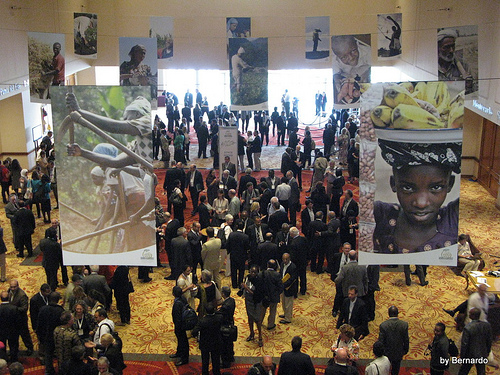
27-28 February 2013. Brussels. Royal Museum for Central Africa (RMCA). PAEPARD Management Team Meeting (MTM).

The objectives of the 7th MTM were to:
  • Validate the technical and financial reports for year 3 (17 December 2011-16 December 2012); 
  • Update the work plan 2013 and the budget and discuss on the 10% of the last instalment; 
  • Evaluate the Users Led Process implemented by the 5 partners (EAFF, PROPAC, ROPPA, FANRPAN, COLEACP). 
  • Discuss PAEPARD 3 and the progress of the Action Fiche. 
The following outputs were produced by the MTM:
  • A draft technical report that will be submitted to the Steering Committee (SC) and the EC; 
  • A draft of the financial report that will be submitted to the SC and later to the EC; 
  • A budget for year 4 (no cost extension) with figures; 
  • Update of the implementation of the users led process from each implementing partner.
Background to the Users Led Process
The Users Led Process was approved by the MTM in Accra on 10-11 July 2012. The research-user partners have selected their federating theme as follows:

  • EAFF: Post handling of Extensive Livestock value chains in Eastern Africa with Specific focus on Kenya and Uganda 
  • PROPAC: Environmental impact of the value chain inclusive of gardening crops in urban areas with specific focus in Congo Brazzaville, DRC and Cameroon 
  • ROPPA: Climate Change Adaptation Technologies on rice production in Benin, Burkina Faso and Mali 
  • FARNPAN/SACAU: Ground nut value chain in Zambia and Malawi 
  • COLEACP: Adding value to Mango non-food uses in West Africa (Burkina-Faso, Ivory-cost, Senegal).

Selasa, 29 Januari 2013

Etat d'avancement de la recherche guidée par les utilisateurs / Update on the users led research

Depuis la fin de 2011, les partenaires de PAEPARD ont changé la façon d’initier les partenariats en adoptant ce qu’ils ont qualifié de « Users Led Process » c'est-à-dire le processus guide par les utilisateurs (PGU) ou encore la recherche guidée par les utilisateurs (RGU), qui se décline en 6 étapes suivantes :

1- Définition du thème fédérateur par chaque Fédération des producteurs
2- Etude documentaire sur le thème
3- Formation des FIA nationaux
4- Séminaire multi-acteur sur la question de recherche développement
5- Développement d’une note conceptuelle
6- Atelier d’Ecriture

Ci-dessous est l'etat d'avancement de cette approche des organisations sous-regionales des producteurs (OPs) et du secteur prive (ColeACP).


PAEPARD: Atelier des Facilitateurs de l'Innovation Agricole
26-30 November 2012. Entebbe. Le but de cet atelier était de familiariser les participants avec leur rôle de facilitateurs du "Processus dirigé par les Utilisateurs " pour établir un partenariat multi-acteurs afro-européen au sein du projet PAEPARD.

PAEPARD: La plate forme régionale des FIA des ORPs
8 - 11 January 2013. Yaoundé, Cameroon. Pendant quatre jours de cet atelier de communication, le PAEPARD a réuni des représentants des quatre organisations régionales de producteurs  - ROPPA, EAFF, PROPAC et FANRPAN / SACAU et un représentant du secteur privé en collaboration avec le COLEACP.


EAST AFRICAN FARMER FORUM (EAFF)
Pastoralisme

Atelier multi-acteurs question recherches pour le développement sur l'élevage
10th - 12th Décembre 2012. EAFF avec ses partenaires du consortium dans le programme PAEPARD a organisé un atelier autour du thème fédérateur «chaîne de valeur étendue du bétail". Ce blog comprend une interview vidéo avec Dr Jean Ndikumana qui explique les objectifs de l'étude: EAFF - Chaînes de valeur du bétail en Afrique de l'Est avec un accent particulier sur le Kenya et l'Ouganda.

Appreciation du CIRAD du processus guidee par le utilisateurs du PAEPARD
11 January 2013. Yaoundé, Cameroon. During the PAEPARD communication workshop, Patrice Grimaud - Regional Director if CIRAD for Central Africa Yaounde, Cameroon - was interviewed about his participation to the PAEPARD workshop of 10th – 12th December 2012. Nairobi.

PLATEFORME RÉGIONALE PAYSANNE DE L’AFRIQUE CENTRALE (PROPAC)
La filiere maraichaire

Atelier de définition et de validation des questions de recherche relatives à la filière maraîchère en Afrique Centrale
23, 24 et 25 Janvier 2013. Brazzaville. Congo. Sylvie Mbog explique dans une interview video comment l'etude REVUE DOCUMENTAIRE SUR LA FILIERE MARAICHERE AU CAMEROUN, CONGO BRAZZAVILLE ET EN REPUBLIQUE DEMOCRATIQUE DU CONGO se veut surtout une étude documentaire qui contribue à une meilleure connaissance de la filière maraichère dans les pays concernés.

Visite de terrain PROPAC / atelier de Brazzaville
24 janvier 2013. Brazaville. Visite de terrain Marche Halle Agri Congo et Marche Total + 25 janvier 2013. Une deuxième visite de terrain a été effectuée dans la ceinture maraîchère de Mayanga auprès des producteurs maraîchers organisés et appuyés par AGRICONGO.

Temoignage du CNOP Congo Atelier de définition et de validation des questions de recherche
24 January 2013. Kikondila Hortense de la Confederation Nationale des Organisations des Producteurs (CNOP) du Congo explique quelles sont ses attentes envers l'atelier du PAEPARD

Comment fabriquer des bio-pesticides?
24 janvier 2013. OLOMBA, Experte horticole R/D, FAO Kinshasa a rendu compte de son experience de formation des animateurs agricoles sur les approches-champs-écoles-paysans.

RÉSEAU DES ORGANISATIONS PAYSANNES ET DES PRODUCTEURS AGRICOLES DE L’AFRIQUE DE L’OUEST  (ROPPA)
Technologies d'adaptation aux changements climatiques sur la production du riz

Rapport de la reunion des facilitateurs en innovation agricole
12 décembre 2012. Niamey (Niger). Première réunion de formation des facilitateurs d’Innovation Agricole (FIA) dans le cadre du projet PAEPARD. Organisé par le ROPPA, la rencontre a vu la participation des FIA du Mali, du Benin et Burkina Faso ; des représentants du secrétariat du ROPPA, d’AfricaRice et du Réseau de Recherches pour l’appui au développement en Afrique (REPAD). Interview video avec Andre Tiorro (ROPPA)

Technologies d'adaptation aux changements climatiques sur la production du riz au Niger en Guinée Conakry et au Burkina Faso
La réunion régionale ROPPA: Ouagadougou 16-20 April, 2013.

Food Agriculture Natural Resources Policy Network /Southern African Confederation of Agricultural Unions (FANRPAN/SACAU)
La chaîne de valeur de l'arachide en Zambie et au Malawi

Réunion  régionale : Pretoria April 2-6, 2013

Comité de Liaison Europe-Afrique-Caraïbes-Pacifique pour la promotion des exportations horticoles (ColeACP)
Sous-produits de la mangue, Sénégal, B. Faso, Côte-d'Ivoire

La réunion régionale du COLEACP est prévue du 11-14 Mars 2013 à Dakar


=============================================

PAEPARD partners shifted to a new user led process (ULP) or users led research (ULR) end of 2011 which is giving the lead to the “research users” partners (especially Farmer Organisations (FOs) but also the private sector) in the organization of brokerage activities in particular the organization of “brokerage workshops” around a federating theme that they have themselves chosen.

The users led research (ULR) comprises the following steps:
1- The Definition of the federating theme;
2- The Desk Review of the federating theme;
3- The National Consultations on the federating theme (if possible);
4- The Multi-Stakeholder Research Question Workshop;
5- The Concept Note by a Core Group of Experts;
6- The Proposal development and submission to potential donors

PAEPARD: Agricultural Innovation Facilitators’ Workshop
26-30 November 2012. Entebbe. The purpose of this workshop was to familiarise participants with their role as facilitators of the “User-led Process” for establishing balanced African-European a multi-stakeholder partnerships within the PAEPARD project.

PAEPARD: The regional platform of the AIF of the RFO
8 - 11 January 2013. Yaoundé, Cameroon. During four days this PAEPARD communication workshop brought together representatives of the four regional farmer organisations - ROPPA, EAFF, PROPAC and FANRPAN/SACAU and a private sector representative collaborating with ColeACP.

EAST AFRICAN FARMER FORUM (EAFF)
Pastoralism

 Extensive Livestock Research Multi-Stakeholder Research Question Development Workshop
10th – 12th December 2012. EAFF together with its consortium partners in the PAEPARD program organized a continental multi stakeholder research question development workshop around the federating theme “Extensive livestock value chain”. this blog post includes a video interview with Dr. Jean Ndikumana who explains the objectives of the study: EAFF - Post handling of Extensive Livestock value chains in Eastern Africa with Specific Focus on Kenya and Uganda.

Appreciation of CIRAD on the PAEPARD users led process
11 January 2013. Yaoundé, Cameroon. During the PAEPARD communication workshop, Patrice Grimaud - Regional Director if CIRAD for Central Africa Yaounde, Cameroon - was interviewed about his participation to the PAEPARD workshop of 10th – 12th December 2012. Nairobi.

PAEPARD users' led process: Eastern Africa Livestock Strategy
In May 2012, the Eastern Africa Farmers Federation (EAFF) contracted the Agency for Inter-regional Development (AFID) to carry out a consultancy study to develop a Livestock Strategy for Eastern Africa. Dr. Jean Ndikumana explains the objectives of the study: EAFF - Post handling of Extensive Livestock value chains in Eastern Africa with Specific Focus on Kenya and Uganda. He was interviewed during the EAC-Europe Food Security Thematic Policy Dialogue Workshop, 25th to 26th, October, 2012, Arusha, Tanzania.

PLATEFORME RÉGIONALE PAYSANNE DE L’AFRIQUE CENTRALE (PROPAC)
Vegetable sector

Workshop: definition and validation of research questions relating to the vegetable sector in Central Africa
23, 24 and 25 January 2013. Brazzaville. Congo. Sylvie Mbog explains in a video interview how the study LITERATURE REVIEW ON THE VEGETABLE SECTOR IN CAMEROON, CONGO BRAZZAVILLE AND DEMOCRATIC REPUBLIC OF CONGO is primarily a desk study that contributes to a better understanding of the vegetables and fruit market in the countries concerned.

PROPAC: Field visit PROPAC / Brazzaville workshop
24-25 January, 2013. Brazzaville. A first field trip was conducted at the Halle market and Total market + a second site visit was conducted in the Mayanga vegetable belt with vegetable growers organized and supported by Agricongo.

Testimony of CNOP Congo during the workshop on the definition and validation of research questions
24 January, 2013. Hortense Kikondila of the National Confederation of Farmers Organizations (CNOP) of Congo explains her expectations for the PAEPARD workshop

How to make bio-pesticides?
24 January, 2013. Eugenie OLOMBA, horticultural expert R/D Kinshasa FAO reported on her experience with training facilitators of farmer-field schools.

RÉSEAU DES ORGANISATIONS PAYSANNES ET DES PRODUCTEURS AGRICOLES DE L’AFRIQUE DE L’OUEST (ROPPA)
Climate change adaptation technologies on rice production

Rapport de la reunion des facilitateurs en innovation agricole
December 12, 2012. Niamey (Niger). First meeting of the Agricultural Innovation Facilitators(AIF) of ROPPA. Organized by ROPPA, the meeting was attended by the AIF of ​​Mali, Benin and Burkina Faso, representatives of the Secretariat of ROPPA, AfricaRice and the Research Network to support development in Africa (REPAD). This blog post includes a video Interview with Andre Tiorro (ROPPA)

Climate change adaptation technologies on rice production in Niger Guinea Conakry and Burkina Faso
The ROPPA regional meeting is scheduled as follows: Ouagadougou 16-20 April, 2013

Food Agriculture Natural Resources Policy Network/Southern African Confederation of Agricultural Unions  (FANRPAN/SACAU)
Ground nut value chain in Zambia and Malawi
The regional meeting  is scheduled as follows: Pretoria April 2-6, 2013

Comité de Liaison Europe-Afrique-Caraïbes-Pacifique pour la promotion des exportations horticoles (ColeACP)
Mango byproducts; Senegal, B. Faso, Ivory Coast
The regional meeting is scheduled for 11-14 March 2013 in Dakar

Senin, 10 Desember 2012

Extensive Livestock Research Multi-Stakeholder Research Question Development Workshop


10th – 12th December 2012. Nairobi. LINKING RESEARCH TO APPLICATION WITHIN THE EXTENSIVE LIVESTOCK VALUE CHAIN.

EAFF together with its consortium partners in the PAEPARD program is organizing a continental multi stakeholder research question development workshop around the federating theme “Extensive livestock value chain” to:
  1. Validate the federating theme of the Extensive value chain , the desk review and the document of strategy produced; 
  2. Identify and/or refine research questions for the development of the livestock that were identified during the study that was conducted. 
  3. Identify potential partnerships that can be formed to address gaps identified in the extensive livestock value chain 
  4. Identify the Terms of Reference for platform and core group to take up the research question that is proritized forward 
The participants for this workshop include PAEPARD partners, national, regional stakeholders working in Farmer organizations, private sector, government, consumer organizations, research institutions, Universities, and farmers all interested in the extensive livestock value chain within eastern Africa region.

Participants came from Kenya, Tanzania, Uganda, Burundi, Zambia, France and the UK and represented research, education, farmers organizations, non-government organizations, national governments, agricultural extension and advisory services, the private sector and regional economic communities. The discussions were guided by a new Eastern Africa Livestock strategy commissioned by EAFF, and carried out by the Agency for Inter-regional Development, as an input to its strategic plan for 2012-2020.

In his opening remarks at the workshop Mr Philip Macharia Kiriro, President of EAFF, explained that a key pillar of the plan is “…trade and agribusiness with a special focus on value chain development and economic services to EAFF members…”. He indicated that EAFF’s livestock focus will be on the extensive beef value chain and that regional collaboration is need to ensure both productivity gains and improved market access.

One of the main tasks of workshop participants was to validate EAFF’s livestock strategy and to prioritize proposed areas for intervention at three stages along the value chain; namely, production, processing and marketing.


The group looking at production identified the need to improve the availability and quality of feed and water and to prevent and control pests and diseases as the two most important research issues. Improving food safety and quality standards and developing and promoting value addition technologies emerged as the key research issues for processing.

Finally, enhancing product standards and policies for improved market access and improving access to, and utilization of, market information were the priorities for research related to marketing. A core group of seven persons has been given the responsibility to draft a concept note and to identify additional organizations which might contribute to a new research initiative. Potential opportunities for funding have been identified and further work is being done to promote the initiative and secure additional support.

The full report LINKING RESEARCH TO APPLICATION WITHIN THE EXTENSIVE LIVESTOCK VALUE CHAIN can be downloaded here


The report of the meeting in English can be downloaded here

The report of the meeting in French can be downloaded here

Background:
PAEPARD partners shifted to a new user led brokerage procedure which is giving the lead to the “research users” partners (especially FOs but also the private sector) in the organization of brokerage activities in particular the organization of “brokerage workshops” around a federating theme that they have themselves chosen.

With this in mind EAFF through collaborative approaches and consultation within Eastern Africa stakeholders identified a federating theme to focus on Extensive livestock value chains. In May 2012, the Eastern Africa Farmers Federation (EAFF) contracted the Agency for Inter-regional Development (AFID) to carry out a consultancy study to develop a Livestock Strategy for Eastern Africa. The focus of the strategy was given as “Extensive Livestock Systems” predominant in the dry areas of Eastern Africa. Major species involved were cattle, small ruminants (sheep and goat) and camels. Poultry and pig rearing in the target production systems which involve agro-pastoral and pastoral systems were also to be captured. The objective of this approach is to
  • a) Reinforce the existing dynamics at national/regional level, 
  • b) Improving existing partnerships between FO, research and others stakeholders (improvements in terms of partnerships design of diversity of stakeholders involved etc, and Deepen pending questions and potential solutions
Related PAEPARD blog post:
Video interview with Dr. Jean Ndikumana who explains the objectives of the study: EAFF - Post handling of Extensive Livestock value chains in Eastern Africa with Specific Focus on Kenya and Uganda. 

He was interviewed during the EAC-Europe Food Security Thematic Policy Dialogue Workshop, 25th to 26th, October, 2012, Arusha, Tanzania.


He responds to following questions:
  • How important is it to identify gaps in research which benefits pastoralism?
  • How difficult is it to identify research gaps?
  • Do farmers or pastoralists have the capacity to translate a problem into a research question?
  • Was such consultation difficult?
  • Which gaps did you identify?
  • What is the way forward?
  • Which is the most important recommendation?
  • You recommend a multi sectorial approach?
Related:
Monday 14 January 2013. News from Africa Africa: Agricultural Researchers Call for Scaling up of Extensive Livestock Production

Selasa, 27 November 2012

Agricultural Innovation Facilitators’ Workshop

26-30 November 2012. Entebbe. The purpose of this workshop was to familiarise participants with their role as facilitators of the “User-led Process” for establishing balanced African-European a multi-stakeholder partnerships within the PAEPARD project.

Expected workshop outputs:
  1. Participants understand the PAEPARD project background, objectives, processes; 
  2. Participants understand the “User-led Process” and its expected results; 
  3. Progress to date and lessons learned with the “User-led Process” in each sub-region (including desk reviews of “federating themes”) is reviewed; 
  4. The general action plan for the User Led Process is reviewed and adapted to the specific circumstances of each sub-region; 
  5. An draft, generic programme for the “Multi-stakeholder R&D question development workshops” is developed; 
  6. The role of the participants as “agricultural innovation facilitators” (AIFs) within the PAEPARD project, the “User Led Process” and the Multi-Stakeholder workshops is reviewed, revised, understood and agreed by both participants and PAEPARD managers; 
  7. Participants are familiar with the PAEPARD website, and how to use this to identify and promote communication between potential partners in ARD and obtain financing for ARD partnerships; 
  8. The input required, terms and conditions for engagement of AI facilitators within the PAEPARD project is defined and agreed 


Rabu, 31 Oktober 2012

PAEPARD @ GCARD II


October 30, 2012, Punta del Este, Uruguay
Breakout session C1.3 North-South and South-South Collaborative Actions – Speaker Brief - The Platform for African-European Partnership on Agricultural Development (PAEPARD).

The Forum for Agricultural Research in Africa (FARA) and the European Forum on Agricultural Research for Development (EFARD) through The European Alliance on Agricultural Knowledge for Development (AGRINATURA), joined forces in the implementation of the Platform for African-European Partnership on Agricultural Development (PAEPARD), established with funding from the European Union. Among the problems addressed by PAEPARD are:
  • insufficient capacities of African agricultural knowledge organisations, at regional and national levels, on multi-stakeholder partnership for innovation systems; 
  • lack of effective linkages between research, extension and rural development.


Blogpost by Nawsheen Hosenally, one of the GCARD2 Social Reporters.

From pre-conference meetings, to opening ceremony and plenary sessions, it was clear from the speakers and participants at the second Global Conference for Agricultural Research for Development (GCARD2), that partnership is the key if we want to improve livelihoods of smallholder farmers and increase food production by 70% to feed a population of 9 billion in 2050. But what are the partnership models that we have and what can we learn from them?

The conference session on North-South and South-South Collective Actions gave a good overview on how multi-stakeholder partnerships have been done in different regions of the world. Interestingly, partnership in Agricultural Research for Development has existed for a long time. Whether it is African-European partnerships, Latin America-Caribbean-Europe-Africa, or African Partnerships, the focus of these partnerships has been mainly on involving stakeholders who normally do not have a say in traditional research.

For example, in projects and initiatives like PAEPARD, CAADP-CGIAR Alliance and IRD/CIRAD collaborative platforms among others, it is not only scientists who are involved in research, but also other stakeholders along the agriculture value chain: farmers, researchers, extension officers, the private sector, academia, processors, exporters, input suppliers and others.

In doing so, each stakeholder contributes in formulating the research proposal that would benefit each one of them. But as simple as this sounds, it is not the case in reality!

From their presentations, the panelists highlighted that in multi-stakeholder partnerships, TRUST is very important, but is not easy to build as different stakeholders have their own objectives. Making all of them move towards a common goal is a challenge.

To overcome this, the innovation that was brought in the PAEPARD (Platform for African-European Partnership on Agricultural Research for Development) project was to introduce Agricultural Innovation Facilitators (brokers), who were independent from the multi-stakeholder consortium and facilitated the process of partnership. According to the panelist from PAEPARD, Mr Sarfatti, facilitators have had an important role in building multi-stakeholder partnerships in the different countries where the project has been funded and implemented.

However, during the discussions, two important points were raised: It was clear that smallholder farmers are involved in these initiatives, but how far are women and youth involved in these multi-stakeholder partnerships?

Regarding the inclusion of women, the representative from the IRD/CIRAD collaborative platforms shared with the audience that in their projects, a gender specialist/consultant was recruited and her role was to ensure that all projects that are selected for funding have women inclusion.

When it comes to youth involvement in these partnerships, it was confessed by the panellist from PAEPARD that to date, there has been no strategy to include the youth in the project, but since PAEPARD is moving to its 3rd phase, the suggestion that youths get into the picture can be considered as they can be facilitators or trainers in the project.

Taking the example from IRD/CIRAD collaborative platforms, whereby a gender specialist has been appointed to ensure that women are included in the projects, can there be a youth specialist to ensure youth inclusion in multi-stakeholder partnerships?

The point to take from the session was that multi-stakeholder partnerships are not as easy as they appear to be, but from the different initiatives taken in different regions we know that we can learn from each other, share our successes and failures so that there is no duplication. We can come up with a strategy that will encourage partnerships so that each stakeholder involved will have equal contribution and benefit from impactful research.

Research is important for food security, but now the time has come to innovate and involve more stakeholders in the process so that the outputs are useful to all of them!

Related:
Too much talk so far
October 30, 2012
Rodrigo de Oliveira Andrade
Latin America correspondent, SciDev.Net
On Monday, the session “North-South and South-South Collective Actions” promised to be a great opportunity to put into practice some of the tasks mentioned during GCARD2′s opening ceremony, since the session’s main goal was promoting inter-regional learning and capacities through mobilising and strengthening innovative networks to demonstrate and enhance their impacts on the Agricultural Research for Development (AR4D).

However, after the brief presentation of some collaborative research platforms, such as The Platform for African-European Partnership on Agricultural Development (PEAPARD) and also the Brazil-Africa and Brazil-Caribbean Innovation Marketplace, the institutionalist discourse predominated. Paulo Duarte, from Coordination of Technical Cooperation Brazilian Agricultural Research Corporation (EMBRAPA), for example, presented Brazil’s experience in implementing the Platform.

During his talk, Duarte said that this marketplace aims to benefit primarily smallholders with focus on agricultural innovation by the engagement of different actors involved in the generation of agricultural knowledge.

“The technologies developed by EMBRAPA were important for the development of Brazilian agriculture and there is interest from other countries to exchange knowledge with Brazil. The agriculture is vital for the economic and social development of Africa, Brazil and Latin America-Caribbean and EMBRAPA have projects in Africa to stimulating the ethanol producing and five other projects in different Latin American countries, such as Bolivia and Colombia,” he said.

So far, it the GCARD sessions appear to be more interested in sharing knowledge and their own institutional experiences.

Selasa, 02 Oktober 2012

Dislike of multidisciplinary work 'limits development'

Dr Nteranya Sanginga, Director-General at IITA, 

and Vice-Chancellor Lisa Sennerby Forsse, SLU, 
signed a five-year cooperation agreement. 
Photo: Mikael Propst, SLU.
1 October 2012. UPPSALA, SWEDEN. Jan Piotrowski for SciDev. Multi-stakeholder collaboration is vital if agricultural research is to promote development.

­The impact of multi-stakeholder projects vital for agricultural development are limited by the compartmentalisation of science and researchers' dislike of crossing disciplinary boundaries, an expert has warned.

Speaking at a group discussion at the Agricultural Research for Development: Innovations & Incentives conference in Uppsala, Sweden, last week (26–27 September), Francois Stepman, co-manager of the Platform for African European Partnership on Agricultural Research for Development (PAEPARD) questioned if the narrow focus of scientific research encouraged fruitful collaboration necessary for solving development problems.

Researchers are wary of extending their work beyond their immediate expertise, and compete against one another for funding, both factors that limit the productivity of projects spanning multiple scientific fields, he told SciDev.Net.

Moreover, such projects require researchers to work with multiple civil society stakeholders — such as non-governmental organisations, farm unions and the private sector — a complex role that many are unprepared for or unwilling to take on.

"It is nice to talk about multidisciplinary cooperation, but in practice it is very difficult to make it happen," says Stepman.

He added that the newfound capacity of civil society actors to implement development projects means it is now more important than ever that scientists work effectively with them.

Stepman's comments were particularly relevant, if controversial, in a meeting where multidisciplinary projects were frequently touted as vital for allowing agricultural research to promote development —not least by representatives of CGIAR, formerly known as the Consultative Group on International Agricultural Research, which used the conference to advertise the new strategy of its Livestock and Fish programme.

Rather than pursuing many avenues of disconnected research, the programme will focus on studying fewer issues in a more comprehensive manner, involving a wide range of stakeholders.

This new approach aims to maximise the real-world impact of research, according to Delia Grace, the Livestock and Fish programme manager at CGIAR, and a speaker at the conference.
Delia Grace of ILRI

Grace was optimistic of success, despite Stepman's comments. Whilst she acknowledged his views are true to "some extent", she said many scientists, particularly those in more applied fields such as engineering, do not fit this mould.

"There are loads of scientists with the capacity and willingness to come together in a coalition to solve agricultural and development problems", she said.

Nteranya Sanginga, director-general of the International Institute of Tropical Agriculture, agreed that getting agricultural researchers to work effectively within the development community was a significant hurdle to overcome.

But examples of successful multidisciplinary projects from his own institution are clear evidence that it is possible, he added.

Kamis, 06 September 2012

FANRPAN Annual High Level Regional Food Security Dialogue 2012


03 – 07 September 2012 . Dar Es Salaam, Tanzania. FANRPAN in collaboration with the Economic and Social Research Foundation (ESRF), the FANRPAN Tanzania Node Hosting Institution convened the FANRPAN Annual High Level Regional Food Security Policy Dialogue in   2012 at the White Sands Resort and Conference Centre. The theme for the policy dialogue is "From Policy to Practice: Advocating for the Active Engagement of Youth in Agriculture Value Chains."

The policy dialogue, with an attendance of over 200 participants provided an opportunity for FANR stakeholders such as, governments; policy research institutions; universities; farmers organisations; private sector and civil society to review the current status of youth engagement in agriculture value chains; share lessons and experiences; identify challenges and opportunities and come up with tangible resolutions. The policy dialogue also showcase dbest practices from Africa and beyond in line with FANRPAN’s five thematic thrusts:
  • Food Systems
  • Agriculture Productivity and Markets
  • Natural Resources and Environment
  • Social Protection and Livelihoods
  • Institutional Strengthening
On Day 2 and there were 4 learning events which were held in parallel:
  • SADC Seed Policy Harmonization
  • Comprehensive African Agriculture Development Programme (CAADP)
  • Research for Impact for Climate Smart Agriculture
  • PAEPARD one-on-one meetings
Day 2 Slide-Show:

Posted by Nawsheen Hosenally (PAEPARD-Mauritius/Breadfruit consortium)

Jumat, 31 Agustus 2012

African cooperation 'dropped from EU research calls'

European researchers may
now have less incentive to
seek collaborators in Africa
Shutterstock
31 August 2012. Paula Park for SciDev.Net. From 2013, African scientists may be more likely to be left out of lucrative collaborations with European Union (EU) researchers, according to some policy experts.

A mandate for EU research groups to include African partners in projects was dropped from the Seventh Framework Programme (FP7) 2013 calls for proposals for EU competitive research grant issued last month (9 July).

The calls cover 11 themes, including agriculture, water and energy, and are worth 8.1 billion Euros (US$10.2 billion).

In the FP7 grants for the period 2010–2012, researchers engaged in investigating a number of themes, including fisheries and biotechnology, were required to collaborate with at least one international group from Africa.

Some fear that in the absence of a specific mandate, EU researchers will be unwilling to collaborate with African peers. There are also concerns that the decision may affect calls for grants for Horizon 2020, the EU's 2014–2020 framework programme for research and innovation to replace the FP7, worth around US$100 billion.

François Stepman, European co-manager of the Platform for African-European Partnerships for Agricultural Research for Development (PAEPARD), told SciDev.Net that without requirements for African collaborations, many EU researchers will be reluctant to work with African scientists, believing it will not help their careers to do so.

"There's a decline [among EU researchers] in trying to include African researchers," Stepman said.

Young scientists keen on building careers are more likely to collaborate with US researchers, because this is more likely to lead to publications in international journals, he explained.

Stepman told SciDev.Net that EU scientists also worry African researchers can lack the administrative support available in developed countries, leading to challenges in "getting the reports in on time and in getting the finance".

"You have to do too much work to get them on board," he said.

The decline in partnerships will affect the ability of scientists to research subjects of mutual interest, including food security and price hikes, climate change, biofuels and genetically modified organisms, he added.

For African scientists, the fallout could be severe.

"Many African experts don't have access to research funding from their [own] countries," Kevin Chika Urama, executive director of the Africa Technology Policy Studies Network (ATPS) in Nairobi, Kenya, told SciDev.Net. "The EU research funding has been a pivotal avenue to partnership with EU researchers."

"A lot of African issues, such as the needs of the poor in rural areas, are under-researched," Urama added. "Some of these issues are not of interest [to European researchers]," he said, adding that a solution may be for the EU to set up a specific grant programme aimed at African researchers.

The move to drop the mandatory collaboration with Africa from 2013 calls for proposals reflects European political leaders' disquiet about the use of funds outside the EU generally, said Andrew Cherry, coordinator for the Network for the Coordination and Advancement of Sub-Saharan Africa-EU Science & Technology Cooperation (CAAST-Net).

However, Daan du Toit, minister counsellor for science and technology at the South African Mission to the EU said the move does not mean fruitful cooperation is not possible.

"All topics of this year's FP7 calls for proposals are open for African participation. African researchers have to identify, which ones are relevant for them, and ones where they can add value to the work of the European or international consortia — then participation will follow. In many of the topics in this year's calls African researchers are well placed to play an important part."

Michael Jennings, a European Commission spokesperson for research, innovation and science, told SciDev.Net there was a need "to better articulate science and technology capacity-building initiatives" to be supported with "collaborative research activities that can be selected and funded through FP7 and the upcoming Horizon 2020 programme".

Cherry told SciDev.Net that it remains to be seen how African researchers can participate in Horizon 2020.

Related article:
3 September. Nature. International Weekly Journal of Science

Jumat, 03 Agustus 2012

REPORT 2nd European Multi-Stakeholders Consultation

REPORT 2nd European Multi-Stakeholders Consultation on Agricultural Research for Development BRUSSELS (BELGIUM)

3-4 MAY 2012 July 2012, 35 pages 

The findings from the multi-stakeholder consultation will be used to guide the future orientation and activities of PAEPARD. In particular, the recommendations will help to shape the development of the new ‘user-led’ partnership development process. After a short Introduction, the report has two main sections. One is a synthesis of the main points arising from the plenary presentations and group work and includes recommendations for future directions for PAEPARD.

The other section includes a more detailed account of the presentations and discussions in both the plenary sessions and group work. The workshop programme, list of participants, participants’ evaluation of the workshop and selected background documents are included as annexes.

SYNTHESE EN FRANCAIS DU RAPPORT2nd European Multi-Stakeholders Consultation on Agricultural Research for Development BRUSSELS

4 MAY 2012 Juillet 2012, 4 pages 

Presque 50 participants venant d’Europe et d’Afrique ont participé à une consultation du 3 au 4 mai 2012 à Bruxelles. Il y avait un bon équilibre entre les parties prenantes des secteurs de recherche, éducation, société civile, le secteur privé et la Commission Européenne.

3 thèmes globaux ont été discutés et certaines recommandations ont été formulées ci-dessous.

  1. Modèles de partenariat et évaluation en termes d’impact, couts et durabilité. 
  2. Influence des mécanismes de financement sur des modèles de partenariats 
  3. Leçons pour les activités d'orientation PAEPARD 
  4. Conclusions et prochaines étapes

Rabu, 18 Juli 2012

Infoday FP7 Cooperation Theme 2: Food, Agriculture and Fisheries and Biotechnologies

16th July 2012. Info Day and Brokerage Event on Call FP7-KBBE-2013-7. This information day was for everyone interested in taking part in call 2013 of FP7 Cooperation Theme 2: Food, griculture and Fisheries and Biotechnologies.

The objective of the event was to bring together research stakeholders, from both the public and private sectors from the EU and Third Countries, together with Commission officers and provide information and ground for discussion and networking.

FARA under the Biocircle project gave the opportunity to two members of PAEPARD supported consortia to participate in this event:
  1. Dr I.Charles Okoli (Tropical Animal Health and Production Research Lab. Department of Animal Science and Technology, Federal University of Technology, Nigeria to discuss the collaboration on the research proposal Nigeria - Low cost and high quality livestock feed production knowledge delivery to Nigerian poultry industry (NIPOFERD)
  2. Dr. Samuel Adjei Nsiah Ghana - Improving food security and income for smallholder farmers through improved post harvest technology
The event included in the morning a general introduction with presentations of the main features and areas addressed by the 2013 call. (see programme)

During the afternoon session: parallel sessions were organised with group discussions by thematic areas:
  1. Parallel Session 1: Sustainable production and management of biological resources from land, forest and aquatic environment
  2. Parallel Session 2: Fork to farm: Food (including seafood), health and well being Consumers, nutrition, food processing, food quality and safety, environmental impact and total food chain, European research area 
  3. Parallel Session 3: Life sciences, biotechnology and bio-chemistry for sustainable non-food products and processes
The official Call was published on the 9th of July 2012.

Contrary to previous years none of the themes of the Work Programme 2013 - Food, Agriculture and Fisheries, and Biotechnology  is mentioning as mandatory the participation of an ICPC (International Cooperation Partner Country) from Africa. But African countries are free to join any consortium.


Contrary to previous years none of the themes of the Work Programme 2013 - Food, Agriculture and Fisheries, and Biotechnology (FAFB)  is mentioning as mandatory the participation of an ICPC (International Cooperation Partner Country) from Africa.

But African countries are free to join any consortium.

PAEPARD made an public intervention on this issue during the plenary of the FP7 Infoday. See the video sreaming of INFO DAY 2012 - FOOD AGRICULTURE AND FISHERIES AND BIOTECHNOLOGY - CALL 7It starts at 27 minutes. 


On Tuesday 17th of July, a meeting was organised for the national contact points: 7th Bio-NCP meeting for theme 2.

On Wednesday 18th of July, Biocircle organised its Third Country BIO-NCPs of the BIOCIRCLE 2 project. The objective of this training was to show options, ways and means to enhance the visibility of Third Country researchers within the European research areas.

A keynote presentation was made by Daan du Toit, Senior S&T Rep. of South Africa to EU on South Africa’s S&T partnership with the European Union: Visibility and Networking – key for success.

Two principles: 
  1. Answer calls & Find partners 
  2. Create enabling national environment for researchers to participate: 
Early identification of : 
  • FP7 topics relevant to SA priorities and strengths SA researchers best placed to respond 
  • Support SA links to leading European groups with best chances of success, bearing in mind: Lead in proposal preparation coming for Europe 
  • Highly competitive – excellence key criteria Networking and visibility essential

Jumat, 13 Juli 2012

PAEPARD Management Team Meeting

10 and 11 July 2012. During the European Multi-stakeholder Consultations organized in Brussels on 3-4 May 2012, partners held a side meeting to discuss on the Mid Term Review (MTR) report that recommended a one year no cost extension. Participants to the meeting agreed on Management Team Meeting (MTM) on the subject in Accra in July to work on the work plan and budget of the one year no cost extension.

The main objective of the Accra MTM was to work on year 4 (no cost extension): the justification of this (why do partners need the no cost extension?), plan of activities, budget (based on what each partners received, spent and the balance).

Other objectives included:

  • The end users led process progress: is it moving? Is it likely to be finished during the one year no-cost extension? 
  • The cases studies situation: where we are? 
  • The evaluation of the external facilitators after the completion of the Partnership Inception Workshop.

Selasa, 19 Juni 2012

PARTNERSHIP INCEPTION WORKSHOP Afri-Sol

11th – 13th June 2012. Imperial Botanical Beach Hotel, Entebbe, Uganda. The Afri-Sol network was created from the realization that a number of African solanaceous plants are increasingly playing an important role in meeting the nutritional and health needs of many households globally. 


Scientists also continue to look for novel traits from wild plants of the Solanaceae family that are native to the African continent. Current research activity in the rich source of diversity present within the African continent, however, does not match the potential value of these plants. There has been very little consolidated effort towards proper conservation, management, improvement and promotion of valuable Germplasm. Afri-Sol brings together a multidisciplinary team of stakeholders with the goal of unlocking the potential of African solanaceous species biodiversity for the improvement of nutrition, health and income. 


Dr Rene Klein Lankhorst who is the head of the EU- Solanaceae Management office made a presentation on the functioning of EU SOL project. The 3- year USD44 million project has been running since 2009 and mainly concentrated on developing solanaceae plants with a focus on nutrition, quality, disease tolerance and better yield. One of the successes of this project has been the production of the Golden potato.


Broadly, Afri-Sol aims to address existing knowledge gaps and challenges within the respective African regions.The participants concentrated their efforts on mapping out the way forward for Afri-Sol. The problems Afri-Sol would seek to address were defined as follow:


  •  Knowledge gaps in terms of health and nutritional value of solanaceae, consumer preferences and ornamental value.
  • Regional challenges in terms of coordination of research, access to Germplasm, markets, identification of stakeholders, research infrastructure, biotic and abiotic stresses of solanaceae.

From these identified problems, a goal for Afri-Sol was formulated and it is; “To Unlock African Solanaceous biodiversity for nutrition, health and income improvement”. The participants defined following specific objectives of Afri-Sol:
  1. Gathering of indigenous knowledge of African Solanaceae species (Uses, Propagation, Access to information)
  2. Assessment of genetic resources (existing collections, exploration, bio-prospecting, conservation, characterization and core collection, germplasm sharing, preliminary screening, gene mining, breeding)
  3. Basic biology (Cytogenetics, Biochemical and molecular tools, Ontology)
  4. Nutrition and health (Micro nutrients, Bio active analysis, Social economics studies, Novel bioactives, Human intervention studies)
  5. Seed systems (Indentify stakeholders in seed systems, Seed regulation, Seed quality & management, Seed markets, Seed storage)
  6. Value addition and Markets (Demand Analysis, Supply analysis, Product development, Post harvest, Industrial applications)
  7. Capacity building (Taxonomy, the “Omics” (Genomics, Proteomics, Metabolomics), Human intervention studies, Biochemistry, Infrastructure, Curriculum

    Senin, 04 Juni 2012

    Updates on PAEPARD Activities in Mauritius, April - May 2012

    Breadfruit Festival in Mauritius
    PAEPARD Facilitators sharing information on 
    the project activities in Mauritius
    The Ministry of Agro-Industry and Food Security, in collaboration with the Agricultural Research and Extension Unit (AREU) organised a breadfruit festival ("La Fete du Fruit a pain") from 25-27 April 2012 at the Farmers' Training School, Wooton. On this occasion, several activities were proposed to the public, which included a culinary competition, demonstrations on breadfruit propagation techniques, breadfruit processing and value-addition, public lectures on several key topics on breadfruits, and there was also an exhibition on breadfruit by some of the organisations involved in the breadfruit sector in Mauritius. In-line with this event, breadfruit village was also inaugurated at Pamplemousses (a region in the north of Mauritius) on 24th April 2012.Among the different exhibitions, there was an exhibit by the Food and Agricultural Research Council (FARC) and PAEPARD, whereby information on the PAEPARD Project in Mauritius were given to the public.

    More information on the Breadfruit Festival in Mauritius can be accessed on this link.

    Work session - 10th May 2012
    The objective of this work session was to prioritize research areas from the ones identified during the previous work session

    The prioritization process was explained to the participants by the facilitators:

    • From the 10 identified Research areas, the consortium needed to prioritize at most 5 research areas, according to their importance and complexity with respect to the local context. 
    • A prioritization questionnaire was designed and participants were required to rate the research areas accordingly 
    • The prioritization questionnaire and the list of research areas were provided to each participant 
    • Starting from the first research area to the last on the list, each one of them was rated according to the different criteria.
      By the end of the work session 5 Research areas were prioritised.Some pictures of the work session can be viewed in the following Slide Show:


      Work Session - 16th May 2012

      The picture is an example showing how the research questions
      were generated formulated for each of the 5 research areas
      The work session organized on 16th May 2012 was a follow-up to the work session held on 10th May 2012, whereby 5 research areas were prioritized.The objective of this work session was to formulate research questions that would be developed into concept notes.Participants were explained by the facilitators about how to formulate the research questions under each research area. For each of the research area, there was a central question, secondary questions, and tertiary questions. From all these questions that were generated, a research title was formulated for each research area. 


      By the end of the work session 5 Research titles were formulated under each Prioritized Research areas.In the next workshop that would be organized in June 2012, concept notes would be developed for each Research title.

      Presentation at the IAALD Africa Chapter Conference

      Nawsheen Hosenally during the presentation
      A paper on the wiki of the Mauritius Breadfruit Sector Consortium (supported by PAEPARD) was presented at the IAALD Africa Chapter Conference 

      held in Johannesburg, South Africa from 21-23 May 2012.

      Presentation: "The use of ICTs to facilitate collaboration in a Multi-Stakeholder Partnership: A case study of the Mauritius Breadfruit Sector Consortium" by N.Hosenally and K.Bheenick
      Click here to read full paper