Tampilkan postingan dengan label FAO. Tampilkan semua postingan

Selasa, 19 Februari 2013

AFRICAN SEED ENTERPRISES

©FAO and AfricaRice 2011. African Seed Enterprises (Van Mele et al.)

AFRICAN SEED ENTERPRISES describes an exceptionally wide range of experiences in nine countries. Each of the cases is substantially unique and presents a particular history and set of lessons.

Each of the cases is substantially unique and presents a particular history and set of lessons. The descriptions are accompanied by country profiles that allow the reader to appreciate the agricultural and policy environment that determines the trajectory of these enterprises.

Their experience to date offers an exceptionally rich source of data and insights for understanding seed systems and appreciating the diversity of strategies and resources that have been used to create new seed enterprises.

Pdf versions of all chapters can be downloaded below:

Related: Interview with J. Rakotoarisoana African Seed Trade Association. He was interviewed during the 12th Meeting of the GlobalHort Board of Directors (Brussels, 5 March 2013)

AFSTA’s mission is To promote trade in quality seed and technologies in Africa for the benefit of members and farmer
  • The objectives are:
  • To promote the use of improved quality seed,
  • To strengthen communication with African seed industries and with the world,
  • To facilitate establishment of national seed trade associations in Africa,
  • To provide information to members,
  • To interact with regional governments and NGO’s involved in seed activities in order to promote the interests of the seed industry,
  • To promote activities that lead to regulatory harmonization throughout Africa to facilitate movement of seed, and
  • To develop a statistical database on African seed production and trade.
He answers following questions: 
Why is support to horticulture urgent? What are the research priorities? The type of needed research is not limited to agricultural scientists? How important is public private partnership? Many initiatives are taken in the seed sector?

Senin, 18 Februari 2013

FIRST STATUS REPORT ON URBAN AND PERI-URBAN HORTICULTURE IN AFRICA

Growing greener cities in Africa. FIRST STATUS REPORT ON URBAN AND PERI-URBAN HORTICULTURE IN AFRICA.
© FAO 2012, 116 pages.

This report draws the attention of policymakers to urban and peri-urban horticulture, and how it can help to grow greener cities in Africa. Production of fruit and vegetables in and around urban areas
has a clear comparative advantage over rural and other sources in supplying urban residents with fresh, nutritious – but highly perishable – produce all year round. It generates local employment, reduces food
transport costs and pollution, creates urban green belts, and recycles urban waste as a productive resource.

Drawing on surveys and case studies from 31 countries, the report describes the current state of urban and peri-urban horticulture across the African continent. Its major finding is that the commercial
production of fruit and vegetables provides livelihoods for thousands of urban Africans and food for millions more. But market gardening has grown with little official recognition, regulation or support. In some cities, it is becoming unsustainable: to maximize returns, market gardeners are using ever larger quantities of pesticide and polluted water.

Developing sustainable market gardens to serve African cities requires, first, that policymakers recognize the sector’s current contribution to the urban food supply and to urban livelihoods. hen, they will need to zone and protect land and water for market gardens, and encourage growers to adopt eco-friendly “Save and Grow” farming practices that produce more, while reducing food contamination risks and protecting the environment. All stakeholders will need to cooperate in building an efficient
urban fruit and vegetable supply system, one that provides fresh produce at a price all residents can afford.

The 12th Meeting of the GlobalHort Board of Directors gave PAEPARD the opportunity to interview the chair of the editorial board of this publication: NeBambi Lutaladio, Senior officer and Team Leader, Crop Diversification for Improved livelihoods, Plant Production and Protection Division  Agriculture and Consumer Protection Department.

He was also instrumental in the participation of FAO in the Atelier de définition et de validation des questions de recherche relatives à la filière maraîchère en Afrique Centrale23, 24 et 25 Janvier 2013. Brazzaville. Congo.

In a first interview NeBambi Lutaladio explains why this publication has not used a scientific language and on the other hand how it can help re-orient research.

Transcript: Why did you avoid a scientific language?
To make sure policy makers are involved we have to use the same language. The first thing they may say when we talk about urban horticulture is: “It’s illegal”. Those who are involved in agriculture cannot do this in town: they have to go back to their village. Our role is to ask ourselves: how can we accompany those people.  How can we help city councils to understand the importance to support them? Therefore we need to produce a document which addresses policy makers. To demonstrate the contribution of peri and urban horticulture in nutritional and food security; to increase the income of persons who are into poverty; the possibility to improve their livelihood; to contribute to city sanitation like recycling of waste, using and purifying waste water for horticulture. It is to help policy makers to bring horticulture into the pacification of their city.   

Could such a document also re-orient research?
Yes because besides themes which addresses policy making and the management of natural resources, there are themes which are linked to better agricultural practices. In the management of resources we tackle more than land ownership issues but also territorial and agricultural management. How can we better manage soils to avoid erosion, to improve soil health and fertility, to use less chemical products, to use more organic compost, how to reduce the use of pesticides to avoid polluting the soil and water, how to recycle and collect used or rain water. Another research theme is to increase agricultural practice to improve yield and while preserving the natural resources. To improve the quality of the products means to avoid contamination by pesticide residues.  

Another type of research is socio-economic research: the professionalization of the producers. To help them create association for expressing themselves and self-management like: how to manage a credit, how to organize the collection of the horticultural products, the reimbursement of credits, the access to the inputs, and access to  market thought nice markets (products which are not so often found in super markets but for which there is a market). This will allow those groups to create a capital and to reinvest.


In a second interview NeBambi Lutaladio explains how urban horticulture can help mitigate climate change in Africa.


In a third video interview NeBambi Lutaladio expresses his appreciation of the Users-led-process approach of PAEPARD which has led PROPAC to identify Urban horticulture as a federating theme for Cameroon, DRC and the Republic of Congo around which research oriented multi stakeholder consortia can be created.

Jumat, 15 Februari 2013

Fifth General Meeting of the Coalition for African Rice Development (CARD)

5-6 February 2012. Dakar. The Fifth General Meeting of the Coalition for African Rice Development (CARD) was held  to review progress in a 10 year initiative to double Sub-Sahara Africa’s rice production.

The conference reviewed the progress and challenges of the rice sector development in Sub-Sahara Africa during the past five years and discussed the key activities of the next five years.

Background:
The CARD initiative was launched during the 2008 Fourth Tokyo International Conference on African Development (TICAD IV) jointly by the Japan International Cooperation Agency (JICA) and the Alliance for a Green Revolution in Africa (AGRA) to help strengthen overall African agricultural development.

Other CARD members are the Japan International Research Center for Agricultural Sciences (JIRCAS), the Forum for Agriculture Research in Africa (FARA), the Africa Rice center, the New Partnership for Africa's Development (NEPAD), the International Fund for Agricultural Development (IFAD), the World Bank, the African Development Bank (AfDB), the International Rice Research Institute (IRRI) and the UN’s Food and Agricultural Organization (FAO).

 The initiative aims to double Sub-Sahara Africa’s rice production to 28 million tons by 2018, through coordination of all the stakeholders including governments, donors, NGOs and private enterprises.

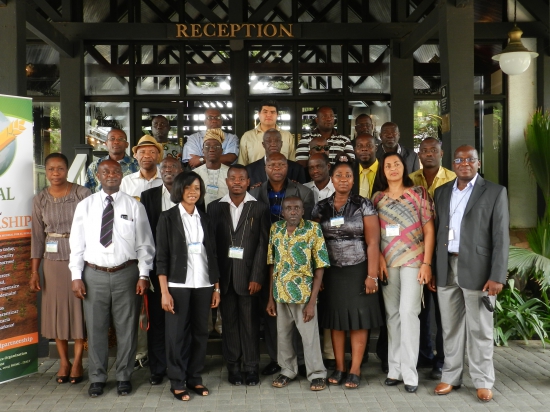
Global Soil Partnership in Western and Central Africa: Towards an African Soil Partnership

4 - 6 February 2013. Accra, Ghana. The Global Soil Partnership (GSP) was launched in September 2011 to raise awareness among decision makers on the vital role of soil resources for achieving food security, adapting to and mitigating climate change and guaranteeing the provision of other environmental services.

At the core of the GSP is the establishment of Regional Soil Partnerships to contextualize the needs and priorities of soil actions to be implemented in each region. This workshop launched the West and Central African consultation among national soil institutions and regional partners.

 GSP_Workshop_Agenda.pdf

Launch of GSP in Western and Central Africa
The Terms of Reference of the GSP were approved in December 2012. The Partnership aims to improve governance of the planet's limited soil resources in order to guarantee healthy and productive soils for a food secure world, as well as support other essential ecosystem services. The five pillars of action of the GSP include:

  1.  the promotion of sustainable management of soil resources; 
  2. the encouragement of investment, technical cooperation, policy, education awareness and extension in soils; 
  3. the promotion of targeted soil research and development focused on identified gaps and priorities; 
  4. the enhancement of the quantity and quality of soil data and information; 
  5. and lastly, the harmonization of methods, measurements and indicators for sustainable soil management, with national validation accounting for the differences of production systems and ecosystems. 


Jumat, 01 Februari 2013

Think, Eat, Save: FAO, UNEP and partners launch global campaign on food waste

22 January 2012, Geneva/Rome - Simple actions by consumers and food retailers can dramatically cut the 1.3 billion tonnes of food lost or wasted each year and help shape a sustainable future, according to a new global campaign to cut food waste launched today by the Food and Agriculture Organization (FAO), the UN Environment Programme (UNEP), and partners.

The Think.Eat.Save. Reduce Your Foodprint campaign is in support of the SAVE FOOD Initiative to reduce food loss and waste along the entire chain of food production and consumption - run by the FAO and trade fair organizer Messe Düsseldorf - and the UN Secretary General's Zero Hunger Initiatives. The new campaign specifically targets food wasted by consumers, retailers and the hospitality industry.

The campaign harnesses the expertise of organizations such as WRAP (Waste and Resources Action Programme), Feeding the 5,000 and other partners, including national governments, who have considerable experience targeting and changing wasteful practices.


Think.Eat.Save. aims to accelerate action and provide a global vision and information-sharingportal for the many and diverse initiatives currently underway around the world.

Kamis, 20 Desember 2012

Draft on Investing in smallholder agriculture for food and nutrition security


20/010/2012. The Knowledge network on Food Security and Nutrition is launching a new consultation on behalf of the High Level Panel of Experts (HLPE) of the Committee on World Food Security (CFS), aimed at gathering inputs on the Version 0 draft (V0 draft) of the report on Investing in smallholder agriculture for food and nutrition security.

This consultation from 20 December 2012 until 18 January 2013 follows the earlier one aimed at defining the scope of the study. The HLPE holds open online consultations to gather informed inputs and to widen the circles from which evidence is made available, including experiences from the ground.

The invitation is also available in French and Spanish and comments are welcome in these languages.

=============================================

Le Groupe d'experts de haut niveau sur la sécurité alimentaire et la nutrition (HLPE) sollicite des vues et contributions sur une version zéro (V0) du rapport. La version V0 présentée a été élaborée par l'équipe de projet du HLPE, sous la direction et la supervision du Comité Directeur, ainsi que sur la base des commentaires reçus dans le cadre de la consultation virtuelle sur la portée de l’étude.

Le HLPE utilisera cette consultation virtuelle pour affiner le rapport qui sera ensuite soumis à révision par des experts externes, avant élaboration de la version finale par l'équipe du projet sous la direction et supervision du Comité directeur.

La version zéro (V0) projet actuel est en cours d'élaboration et devrait se présenter comme une présentation globale, tout en restant succinct et accessible, où seront mis en relief les thèmes et les domaines prioritaires à la lumière des actions que devront mener les différentes parties prenantes du CSA.

Vos contributions peuvent être envoyées en anglais, français et espagnol mais le projet V0 est uniquement disponible en anglais.

Kamis, 06 Desember 2012

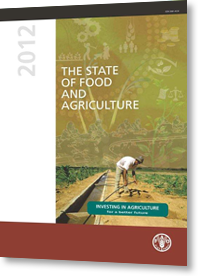
The State of Food and Agriculture 2012

6 December 2012, Rome Investing in agriculture for a better future
Investing in agriculture is essential for reducing hunger and promoting sustainable agricultural production. Those parts of the world where agricultural capital per worker and public investments in agriculture have stagnated are the epicentres of poverty and hunger today. Demand growth over the coming decades will place increasing pressure on the natural resource base. Eradicating hunger sustainably will require a significant increase in agricultural investments, but also an improvement in their effectiveness.

Farmers are the largest investors in developing country agriculture and must be central to any strategy for increasing investment in the sector, but if they are to invest more in agriculture they need a favourable climate for agricultural investment based on economic incentives and an enabling environment. 

Governments also have a special responsibility to help smallholders overcome the constraints they face in expanding their productive assets and to ensure that large-scale investments in agriculture are socially beneficial and environmentally sustainable. Government investment in agriculture is a crucial component of providing an enabling environment for private investments in the sector. Governments need to channel scarce public funds towards the provision of essential public goods with high economic and social returns.

Read the executive summary
Download the full publication
See the press release

Selasa, 27 November 2012

Involving local farmers is key to success of foreign investment

13 Novembre 2012, Rome - International investments that give local farmers an active role and leave them in control of their land have the most positive effects on local economies and social development, according to a new FAO report published today.

The report, Trends and Impacts of Foreign Investment in Developing Country Agriculture, emphasizes that investment projects that combine the strengths of the investor (capital, management and marketing expertise, and technology) with those of local farmers (labour, land, local knowledge) are most successful.

Business models that leave farmers in control of their land give them an incentive to invest in land improvements and also favor sustainable development. The publication offers a number of case studies on the impact of foreign investment in Africa and Asia, including large-scale land deals often referred to as land grabbing.

"While a number of studies document the negative impacts of large-scale land acquisition in developing countries, there is much less evidence of its benefits to the host country, especially in the short-term and at local level," says the report. "For investments involving large-scale land acquisition in countries where land rights are unclear and insecure, the disadvantages often outweigh the few benefits to the local community," it notes.

The report advises that "acquisition of already-utilized land to establish new large farms should be avoided and other forms of investment should be considered."

Selasa, 13 November 2012

FAO Film Documents Seed Diversity and Climate Adaptation in Ethiopia

November 2012: The Food and Agriculture Organization of the UN (FAO) has released a short film that documents the ways Ethiopian smallholder farmers recognize and use seed diversity in their local farming practices to build resilience into their fields.

FAO's documentary, titled "Seeds of Diversity," gathers information on the kinds of seeds that farmers prefer and helps to create a greater understanding on the importance of preserving genetic diversity in seeds.

Jumat, 09 November 2012

ICT and producer organizations - online forum 12 to 23 November

ICT and producer organizations - online forum 12 to 23 November
From 12/11/2012 to 23/11/2012 
Location: Online
Producer organizations play an important role in tackling the systemic causes of poverty, because they give farmers—men and women—a legitimate voice in shaping pro-poor rural policies.  Producer organizations can function more efficiently by using information communication technologies (ICT) to attract and retain a wider membership, generate more funds, and provide better services to their members. Documented benefits of ICT include improved connections to members, better accounting and administration, and stronger collective voice (From ICT in Agriculture Sourcebook module 8).
As the United Nation's International Year of the Cooperative comes to a close, join the e-Agriculture community and our subject matter experts in a discussion on the key issues that make ICT important for producer organizations, and the challenges that limit their full potential.
 
 Subject matter experts:
  • Marie-Hélène Collion
  • Alexander Flor, University of the Philippines Open University
  • Riikka Rajalahti, World Bank
  • Pierre Rondot, CIRAD
  • John Rouse
This online forum will discuss the role ICT plays in producer organizations, from improved efficiency to networking to transfer of technical knowledge. Aware that organizations face limited resources, the discussion will look at priority areas for investing in ICT.  They will look for examples of whether ICT empowers or marginalizes women and smallholders in producer organizations, and the group will discuss the role of the public sector in supporting producer organizations’ uptake of ICT.

Rabu, 31 Oktober 2012

Sharing Agricultural Practices to Enhance Food and Nutrition Security in the Horn of Africa

23-25 October. Addis Ababa.   AgriKnowledge ShareFair at the International Livestock Research Centre (ILRI) campus inrganized by FAO Subregional Office for Eastern Africa and the Intergovernmental Authority on Development (IGAD). The International Fund for Agricultural Development (IFAD), the World Food Programme (WFP), the United Nations Children’s Fund (Unicef) and the Eastern African Grain Council (EAGC).

The AgriKnowledge ShareFair brought together the multiple expertise and networks of international organizations from the region namely: Burundi, Djibouti, Ethiopia, Kenya, Rwanda, Somalia, South Sudan, Sudan and Uganda. Senior officials from Comité permanent Inter-Etats de Lutte contra la Sécheresse dans le Sahel (CiLIS) and the affected countries in the Sahel will also be participating at the fair.

Dr. Castro Camarada, FAO Coordinator for Eastern Africa explains why sharing information on good agricultural practices is vital to enhancing food and nutrition security in the region.


Rabu, 24 Oktober 2012

Advocacy Toolkit on ARD

The CIARD partners announced the new Advocacy Toolkit on “Opening Agricultural Knowledge for All”, which is offered to organizations and individuals in support of their efforts to raise awareness, advocate, and influence others. 

The Toolkit is aimed at researchers, scientists, managers, and information/communication professionals with an interest in opening up agricultural knowledge. The Toolkit is published in wiki format, with the intention that it will be enhanced and developed by CIARD partners and stakeholders. 

There are pages on designing approaches, selecting targets, building a case methods and tools, using evidence to support advocacy, and some case studies. 

This Toolkit was prepared with input from various CIARD partners, and particularly the CGIAR, FAO, GFAR, and the regional research forums in Asia/Pacific (APAARI), and Latin America and the Caribbean (FORAGRO/IICA), and the Near East (AARINENA).


Selasa, 07 Agustus 2012

OECD-FAO Agricultural Outlook report

OECD-FAO Agricultural Outlook 2012 | OECD Free preview | Powered by Keepeek Digital Asset Management Solution  

Increased productivity and a more sustainable food system will improve global food security

While markets appear to have entered calmer conditions after record highs last year, food commodity prices are anticipated to remain on a higher plateau over the next decade, underpinned by firm demand but a slowing growth in global production.

» Watch the press conference
» Read a summary of the report in a choice of languages
» Read the complete report online 

The importance of agricultural science and technology in meeting the world's burgeoning demands on food, feed and fuel have been highlighted in a major international report.

The latest OECD-FAO Agricultural Outlook report, released earlier this week, concludes that agricultural production must increase by 60% over the next 40 years to meet the rising global demand for food. This equates to an extra 1 billion tonnes of cereals and 200 million tonnes of meat per year by 2050 compared with 2005/07 levels.

Additional production will also be required to provide feedstock for an expanding biofuel market set to consume an estimated 16% of oilseed output, 14% of cereals and 34% of sugar cane by 2021. But with less than 5% more arable land available to bring into production, and 25% of existing farmland already degraded, the OECD-FAO report concludes that increasing crop productivity on existing farmland will be essential to contain food price rises and reduce food insecurity.

Selasa, 31 Juli 2012

World Congress of Rural Sociology

29 July - 4 August 2012. FAO Director-General José Graziano da Silva challenged academics to get involved in essential and politically important research into rural poverty and the food and agriculture business as it pertains to small-scale producers, in a speech in Lisbon to the World Congress of Rural Sociology.

"One of the great challenges we have today is to use academic knowledge to understand and improve the life of rural populations throughout the world," said Graziano da Silva. "To do so, we need to look at the reality outside of university walls."

After detailing what FAO sees as the most pressing issues in the fight against hunger and rural underdevelopment - from food insecurity, nutrient deficiencies and unsafe food to unequal competition between small-scale and large food producers - the FAO chief, a former academic and author himself, called for academics to play their part.
  1. He singled out large-scale investments in agriculture or "land-grabbing" as a politically important area where universities could conduct research into principles for responsible agricultural investments. Such research could feed into the work of the Committee on World Food Security, the leading global forum for discussions on food security issues, he said. 
  2. How to integrate small-scale farmers into the agricultural and food chains should be another area of academic concern, he said, adding that "there is a growing concentration in the agricultural and food chain, and this has an impact on small-scale farmers." 
  3. Academics should look into the issue of governance of the food and agriculture sector, both at global and local levels, and how to achieve a fair distribution of benefits, he said. "If we want more people eating healthy diets, based on fresh foods, we will need to reduce transportation and storage costs, but also food waste and loss," he said. Graziano da Silva said rural labor markets and working conditions were often extremely poor, labor legislation poorly enforced and access to social protection limited. 

"All these issues need better conceptual clarification and practical proposals from academics and policy makers," he concluded. (source Academia Has Role in Fight Against Hunger, Says FAODirector-General

Senin, 11 Juni 2012

World Farmers Organization General Assembly

June 6 – 9, 2012. Rome. World Farmers Organization General Assembly. The objective of the GA was to provide an opportunity to discuss WFO‘s statutory issues; as well as offer the possibility to farmers associations to discuss and share experiences in agriculture related key issues (trade, food security, climate change, education and awareness raising programs); sharing experiences on outreach activities, special programs, services, products; collecting best practices and case studies; stimulate cooperation and partnership among WFO’s members and agriculture related organizations; build Interactive platform for sharing experiences and cooperation network.

Presentations from Africa: 

  • What is the enabling environment needed for thriving Producer Organizations and Cooperatives, Mr. Jervis Zimba, President, ZNFU, Lusaka 
  • Practical role and challenges of Farmer Organizations in developing Countries, Mr. Nduati Kariuki Chairman, Kenya National Federation of Agricultural Producers (KENFAP), Nairobi 
  • Ensuring food security in sub-Saharan Africa, a way through, Dr. Martin Eweg, AFAAS board, South Africa 

PAEPARD related:
Agriculture Research for Development: GFAR, GCARD and Farmers’ Organizations, Mr. Thomas Price, Senior Officer, Agricultural Innovation and Society, FAO, Rome

Rabu, 06 Juni 2012

E-mail conference on "Ensuring the full participation of family farmers in agricultural innovation systems

4 June to 1 July 2012. FAO hosted a moderated e-mail conference  on "Ensuring the full participation of family farmers in agricultural innovation systems: Key issues and case studies".

The UN General Assembly has declared 2014 to be the International Year of Family Farming and has invited FAO to facilitate implementation of the International Year, in collaboration with its partners. Among its initiatives for the International Year, FAO is planning to publish a major study on family farming and Agricultural innovation systems (AIS) in 2014 in the State of Food and Agriculture series, which is FAO’s major annual flagship publication.

Agricultural innovation systems are systems of individuals, organizations and enterprises that bring new products, processes and forms of organization into social and economic use to achieve food security, economic development and sustainable natural resource management. AIS include a multitude of potential actors, such as producer organizations, research organizations, extension and advisory services, universities and educational bodies, governments and civil society organizations, co-coordinating bodies, individual farmers and farm laborers, and the private sector (including traders, processors, supermarkets etc.).

The e-mail conference is open to everyone, is free and will be moderated.

The Background Document to this FAO e-mail conference is available here.

Meeting the needs of smallholder farming families also provides the central theme of the GCARD RoadMap, which sets out the systematic changes required to transform and strengthen innovation systems to better meet the needs of resource-poor smallholders around the world.  Results from the FAO e-mail consultation will help inform discussion in The Second Global Conference on Agricultural Research for Development (GCARD 2): “Foresight and partnership for innovation and impact on small-holder livelihoods” on practical actions underway and that are required to implement these systematic changes. The GCARD 2 will be organized in Punta del Este, Uruguay, 29 October – 1 November 2012, more information is available on the GFAR website.  The Pre-Registrationfor the GCARD 2012 Conference is now open.

Outcomes from the email consultation and the GCARD Conference will inform preparation of the major FAO study in 2014, as well as help to build cooperation around key forward-looking agendas and facilitate planning of joint actions among all AIS stakeholders to deliver large scale development outcomes.

PAEPARD contribution:
Moderated conference on agricultural innovation systems a selection of the most significant contributions, relevant for PAEPARD.


·         In order to identify a pool of brokers on the African continent we launched a call for agricultural innovation facilitators (AIF) 1 year ago. We were at that time not aware that ASARECA was in the process of the creation of a pool of well-skilled platform facilitators for innovation platforms under their Farmer Empowerment for Innovation in Smallholder Agriculture (FEISA) project.
o   203 applicants submitted their CV to PAEPARD.
o   The screening of the CVs was based on the geographical origin (country) and the profile of the applicant (research, farmer organisation (FO), private sector, nongovernmental organisation (NGO), ministry, consultant or other).
o   Not surprisingly 160 were male applicants and 43 female.
o   86 applicants had a [agricultural) research profile, 36 applicants worked for an ngo,  21 for a farmer organization, 17 consultants, 16 from a Ministry, 14 private, 6 extensionists, 4 other.
o   But the career path revealed that the  basic training of the majority of all profiles originated in agricultural research.
o   A past training (in Montpellier or in Wageningen) with the International Centre for development oriented Research in Agriculture (ICRA) was a strong reference for the selection.

We are currently performing an evaluation of the brokers' facilitation in 10 ARD consortia from the consortium's coordinator perspective and the AIFs' perspective. And we realize that a technically sound agronomist with facilitation training is a rare gem. In the agricultural research community, we only managed to identify few good experts in group dynamics, adult training, moderation, knowledge management, etc.

We also realized that because (so far) the dominant PAEPARD partnership model has been the AIF (broker) functioning in a project context, this had some important limitations in terms of innovation. The stress is too much on project innovation instead of system wide innovation by involving several societal actors, including farmers, supply and processing industry, civic advocacy organization, and policy makers. The reason why we opted first for the project partnership model is obvious: we wanted to link the brokering to something tangible: the submission of a research proposal to a funding opportunity, as a milestone of the consortium facilitation (a process of minimum one year).

The requirement for the facilitator to be able to play an independent role within the consortium was essential. Preferably, the facilitator should not be a member of the lead institution (the applicant), to ensure a balance of influence on the consortium. The AIF needed nevertheless to be a person [all] the consortium members felt comfortable with. We wanted the choice of an AIF to be done through a consultation between the consortium and the PAEPARD-trained AIF.  But in one case the AIF with an ngo profile found it difficult to impose her authority towards the researchers involved in the consortium, and in another case AIFs with a research profile failed in their facilitation - not having "the spirit and training for facilitation and brokerage".

Conclusion: testing theoretical concepts into practice, but also to translate practical dilemmas into systemic lessons is a major challenge. [Platform for African - European Partnership in ARD]


Rabu, 25 Januari 2012

Commodity associations: a tool for supply chain development?

Commodity associations: a tool for supply chain development?
Les associations interprofessionnelles sont-elles un outil de développement des filières?
by
Andrew W. Shepherd
Rural Infrastructure and Agro-Industries Division (now value chain expert at CTA Wageningen)
Jean-Joseph Cadilhon
Regional Office for Asia and the Pacific
and
Eva Gálvez
Rural Infrastructure and Agro-Industries Division
FOOD AND AGRICULTURE ORGANIZATION OF THE UNITED NATIONS Rome, 2009, 53 pages

Commodity associations are organizations that bring together a wide spectrum of interest groups related to a particular commodity or sector (such as horticulture) in a particular country, whether the commodity is for export, for the domestic market or for both. Such associations can draw membership from individual farmers or their associations, from crop buyers, processors, distributors and exporters, as well as from suppliers of support services. Sometimes government agencies are also members.

Drawing on a literature review and case studies of relevant associations in Africa, Asia and Latin America, the paper explores the role of commodity associations in improving supply chain performance. There have been significant donor efforts to promote commodity associations recently, although some have encountered problems. Thus donor organizations may find the paper to be of use.

Selasa, 18 Oktober 2011

FAO and IFPRI reports for the World Food Day 08/10

The State of Food Insecurity in theWorld 2011, FAO, October 2011
This year’s report focuses on the costs of food price volatility, as well as the dangers and opportunities presented by high food prices. Climate change and an increased frequency of weather shocks, increased linkages between energy and agricultural markets due to growing demand for biofuels, and increased financialization of food and agricultural commodities all suggest that price volatility is here to stay.

See also: UN says Food Prices to Remain High, Financial Times, October 10
The jump in prices for grain and other staples led to riots during the 2007-08 food crisis and more recently central banks in Asia have tightened monetary policy to combat food inflation.


The International Food Price Research Institute (IFPRI) has released a report titled "2011 Global Hunger Index: The challenge of hunger: Taming price spikes and excessive food prices volatility."


The report underscores that, though global hunger has declined since 1990, it remains at a serious level, with the highest hunger scores in Sub-Saharan Africa and Asia. The report describes progress in Angola, Bangladesh, Ethiopia, Mozambique, Nicaragua, Niger and Viet Nam.
See also [IFPRI Press Release] It notes the negative impacts of rising and volatile prices attributing the price changes to increasing use of food crops for biofuels, extreme weather and climate change, and increased volume of trading in commodity futures markets. In particular, it underlines that concentrated export markets leaves food importing countries dependent on just a few countries. The report suggests addressing price spikes and volatility by revising biofuel policies, regulating financial activity on food markets, and adapting to and mitigating climate change.