Tampilkan postingan dengan label PPP. Tampilkan semua postingan

Jumat, 26 Oktober 2012

Matooke Agribusiness Incubator

Biogas from peels burning
The Afri Banana Products Limited, formerly Incubation and Diversification of Banana Products for Agribusiness (IDBPA), aims to upscale innovations and improve entrepreneurial skills in banana production- to – marketing value chains with emphasis on capacity building for increased production, development of SME’s, training in entrepreneurship and agribusiness at B.Sc. and M.Sc. levels, linking of research innovations to agribusiness, and marketing of banana and its value added products including disease-free seedlongs, fresh peeled and vacuum sealed bananas, vinegar, banana wine, enriched animal feeds, biogas, charcoal briquettes, biodegradable bags and textile fibre materials.

Hereunder follows an interview with Dr. Byarugaba Bazirake, director of Afribanana Products Ltd. He was interviewed by PAEPARD during the EAC-Europe Food Security Thematic Policy Dialogue organised by CAAST-net.
Dr. Byarugaba Bazirake responds to following questions:
  • What motivated you to researh matoke and find a solution for the enormous amount of banana garbage?
  • How did you manage to extend the shelve life of matoke?
  • How important is extending the shelve life of matoke for Ugandans living abroad?
  • How do you bring the diverse chain actors together?
  • Where did you get the idea of a value chain approach around the matoke / banana plantain?

GOOD HARVEST FROM MULCHED
(STALKS & PEELS) PLANTATION
Bananas(matooke) constitute a very important staple crop in Uganda, and are being grown by 75% of the country’s farmers on 40% of the total arable land.

The triploid, Musa acuminata East African highland cultivar (AAA-EA genotype) locally known as matooke predominates banana production in Uganda and provides major food for over 7 million people including two thirds of the urban population. Bananas are so important in Uganda so much so that in some parts of the country the word “matooke” means both “banana” and “food” and the crop contributes about 35% of total food consumption expenditure. 

The Uganda’s per capita consumption of bananas ranges between 220kg and 460 kg per year according This banana per capita consumption is the highest in the world.
The demand and supply of matooke in urban areas has come with associated problems of: 

  • Discoloration due to enzymatic reactions and oxidation after peel inefficient transportation (40% waste) with undesired bulk garbage accumulation (over 500 ton/day) in Kampala. 
  • Costs high ($7/ton ) to dispose garbage (KCC). 
  • Perishability-short post-harvest shelf-life. 
  • Soil nutrients depletion from banana plantation due to: Poor agrarian management systems Transportation of waste which would serve as manure to urban areas
Banana by-product utilization. Production of:
  • Biogas 
  • Vinegar 
  • Enriched animal feeds 
  • Charcoal briquettes 
  • Fiber-biodegradable (textile,bags) 
  • Manure,mulch,etc.
Matooke Bulk Marketing problems: They include: 
  • Poor (road network) infrastructure 
  • High fuel prices for transporting trucks 
  • Weak reconditioned trucks 
  • Lack of organised markets 
  • Quick spoilage of raw food materials 
  • Lack of value-addition technologies
Innovation Objectives
The technological approach objectives were to:
  1. inactivate enzymes responsible for browning (oxidation) of peeled matooke. 
  2. preserve and prolong shelf life of the peeled matooke as a food stuff. 
  3. reduce transportation load that is very bulky
HAND-MACHINE PEELING TECH
Materials
  • Sodium metabisulphite was purchased from “Desbro” (food grade chemical dealers) in Industrial area,Kampala, 
  •  vacuum sealer (Micromark, UK) was obtained from Midway Technologies,Kampala. 
  • The jaws hand peeler type (ED MARK, Malaysia) machines were purchased from Lugogo at the International Trade Fair,2007 and 
  • the transparent non-permeable vacuum sealable plastic packaging materials were procured from Shoprite, Kampala.
 Research Methods

TREATMENT(ANTIMICROBIAL & DICOLORATION)
  • The research work was done at the Uganda Industrial Research Institute(UIRI), Kampala. 
  • In the experimental study, the matooke were sorted, weighed and peeled using jaws hand peelers . 
  • They were washed in treated tap water and grouped into two categories. Category 1 was immersed in sodium metabisulphite –distilled water solution (1000 ppm) for 30 seconds to inactivate enzymes responsible for browning and serve as antimicrobial agent, drained in a stainless steel metal-mesh with reciprocated agitation for 5 minutes, vacuum sealed and labeled. Category 2 was just drained (untreated) and not vacuum sealed . 
  • The products were stored at chilling temperatures (100C)and set for further observations.
Results:
Matooke shipped to the US targeting
10,000 Ugandans consumers.
Dr. Byarugaba Bazirake stands second left.
  • Approximately 60% of the matooke was obtained after peeling .They were stored under chilled conditions. 
  • The vacuum sealed matooke remained fresh as desired by the consumers for 10 days. 
  • The untreated matooke (control) turned brown after a few minutes and had moulds grown on them on the fourth day of storage(shelf-life). 
  • The banana waste was returned to rural areas profitable utilization as manure, livestock feeds, fuel (biogas) source and for inoculation of starter cultures useful in vinegar production.
  • matooke can be processed & preserved into a food stuff that is convenient to prepare with prolonged shelf life (10 days). 
  • Bananas can be transported from rural areas to the user ends at reduced logistical expenses by prior peeling to eliminate averagely 40% of waste.
  • Waste products can be used as manure to fertilize and replenish matooke plantations besides supplementary usage like biogas production and formulation of animal feeds. 
  • Rural based industries should be set up to process and solve the logistical problems involved in bulky post harvested food handling in Africa.
Further Background:
Dr. Byarugaba Bazirake is a lecturer of food technology and biotechnology at Kyambogo University and works with Prof. Wilson Byarugaba of Kampala International University Western Campus.  The project was given part of Uganda Investment Authoritys land in Mbarara Industrial Park and has been able to put up a factory which opened on March 15 this year. The site was selected because of its proximity to the matooke-producing areas of western Uganda. Twenty-five people are currently employed in the factory.
  • Bazirake says he came up with the idea after UNESCO sponsored his research in 2001. 
  • In 2006, President Yoweri Museveni contributed $2,000, which was used to purchase hand peelers. In the same year, he won the first Presidential Scientific Award at an exhibition in Munyonyo. It was then that he wrote a proposal to UNCST, which was approved in 2008.
  • They also got financial support from the Ministry of Finance in the financial year 2008/2009.
  • FREVASEMA is one of the projects funded by the Government under the presidential support to scientists through Uganda National Council for Science and Technology.

The Afri Banana Products Limited, aims to upscale innovations and improve entrepreneurial skills, through training and mentoring, identification and/or development of viable research innovations and linkage to agribusiness, information generation and dissemination, community mobilization and market linkages, provision of business services to Incubatee SMEs, setting up a consortium comprising membership from Universities, Research Institutions, Private Sector Companies and Government Support Agencies.

The consortium is led by Kyambogo University with the following as members; Mbarara University of Science and Technology, Excel Hort Consult Ltd, FREVASEMA, Uganda Industrial Research Institute, Kenya Agricultural Research Institute, Uganda Carbon Bureau and Adaptive Seed Company.

Read more on UniBRAIN ABP


Vacuum sealed banana - Uganda's latest export

Vacuum-sealed cooking banana ready for sale or export - George Bazirake
Vacuum-sealed cooking banana ready for sale or export
© George Bazirake
Cooking banana, known in Uganda as matooke, has a relatively short shelf life - too short for fresh bananas to be easily exported and sold in Europe. But in a new initiative, a Ugandan company has begun to export peeled, vacuum-packed matooke, which can last for up to a month. This is an exciting way of adding value to a crop which occupies nearly 40 per cent of Uganda's arable land. Wambi Michael talks to banana experts, an exporter and a consumer about the new innovation.
Interview by:
Country:
Uganda
Duration:
4'26"
Date published:
January 2010


Related:
Bananas could replace potatoes in warming world
Philip Thornton
Climate change could lead to bananas becoming a critical source of food for millions of people, a new study has claimed.

The study, Impacts of climate change on the agricultural and aquatic systems and natural resources within the CGIAR’s mandate, should help decision-makers at all levels prepare better for future food production on our warming planet.

Read the policy brief by CCAFS that outlines the challenges required in feeding the estimated 9–10 billion people who will live in this world by 2050. In the brief, the need for a complete recalibration of what crops we grow and animals we raise around the world is detailed, as climate change will bring challenges in weather, water use, and increased pests and diseases of crops and animals alike.
Researchers from the CGIAR agricultural partnership said that the fruit might replace potatoes in some developing countries, the BBC reported. The authors of the report also said that cassava and the little known cowpea plant could play increasingly important roles in agriculture, as temperatures rise and people will have to adapt to new and varied menus as traditional crops struggle.

Responding to a request from the United Nations' committee on world food security, a team of experts in the field looked at the projected effects of climate change on 22 of the world's most important agricultural commodities. They predict that the production of world's three biggest crops in terms of calories provided - maize, rice and wheat - will decrease in many developing countries.

Kamis, 11 Oktober 2012

First Meeting of Agricultural Chief Scientists (MACS) of G20 countries


24th to 27th September 2012. Guadalajara. Mexico. This meeting wa convened by the Mexican government as part of their role heading the Group of Twenty (G-20) this year.

The objectives of the first MACS were to:

  • inform stakeholders of existing global resources, programs and collaborative efforts for agricultural research that can help address food security challenges; 
  • identify, strengthen and compliment research priority areas for collective action in coherence with existing initiatives to sustainably intensify agricultural production, in order to meet increased and changing demand for healthy, safe and nutritious food whilst mitigating and adapting to climate change; 
  • identify avenues to better coordinate resources and existing initiatives in support of these priorities; 
  • establish baselines and track progress toward collective commitments and priorities; and 
  • Dr. Catherine Woteki, USDA Chief Scientist 
    and Under Secretary for Research, 
    Education, and Economics
  • facilitate new partnerships on collaborative research in agriculture and food security
Prof. Jones (FARA) and Dr.Catherine Woteki (U.S. Department of Agriculture’s (USDA) delivered the key scene-setting presentations on establishing global agricultural research and development (AR&D) priorities. 

The meeting deliberated on establishing MACS Global Research Collaboration Platforms (GRCPs) to promote global collective action involving national agricultural research for development strategies and capacities of the G20 countries. Four initial GRCPs were presented, including: 
  1. Access to scholarly publications and other technical documentation; 
  2. Access to germplasm collections and related information, as per international treaties to which countries are members, and in accordance with national legislation; 
  3. Access to genetic and genomic data, and establishment of public databases for agricultural research and development projects; and 
  4. Improving agricultural innovation (extension service and technology transfer) and agricultural statistics systems (information communication technology and market data).

The Tropical Agriculture Platform (TAP), a G20 commitment in 2011, was formally launched by FAO. This platform aims to achieve greater coherence of capacity development and knowledge sharing for agriculture innovation to improve production and productivity in the tropics, with a particular focus on smallholders, under a multilateral and multi-sectorial approach.

The meeting reviewed the status and progress of Global Research Initiatives endorsed by the G20 and ongoing collaborative mechanisms including the CGIAR Research Programmes (CRPs) on Wheat, Maize, Rice and Livestock and Fish, as well as the Global Research Alliance on Agricultural Greenhouse Gases. The Global Access to Technology for Development Foundation, the Syngenta Foundation for Sustainable Agriculture, and the Bill and Melinda Gates Foundation presented programs for Public-Private Partnerships, across the entire value chain of agricultural products, as mechanisms to accelerate global agricultural innovation. 

The next meeting will be scheduled by the next President of the G20 (Russia).

Related blog post:
23/06/2012. G20 Mexico 2012 launched an innovative Fund to Boost Food Security and Farmer Livelihoods


Rabu, 04 Juli 2012

Innovation: the production of bissap in Sénégal in powder form targeting the urban markets and the diaspora

With - among others - a support program of the Senegalese state - Le Fonds National de Recherches Agricoles et Agroalimentaires du Sénégal (FNRAA), to increase the cultivated areas and the number of actors, H. sabdariffa (bisap) occupies an important place in the marketing of agricultural products in Senegal.

The export of dried calyx of H. sabdariffa to Europe and the United States at prices between (1,000 and 2,500) $US·t–1 is increasing year by year.

Hereunder is a video with Dr Ababacar Sadikh NDOYE, Directeur général Institut de Technologie Alimentaire - ITA, about the export of bisap in powder and packaged in 25 grams bags. The producers are represented by women groups, an NGO has given training on how to improve production and conservation techniques, the researchers come from the Institut de Technologie Alimentaire, and a private compagny Valdafrique and Sodobio have taken up the purchase of an industrial atonomiseur (to produce hibiscus in powder form).
 
He was inteviewed by PAEPARD during the second CAAST-Net Stakeholders' Conference on Africa-Europe S&T Cooperation, Dakar, 24-25/04/2012.

Transcript:
Bisap has become a national commodity in traditional festivities and ceremonies. The Senegalese authorities have recoginzed the importance of the bisap value chain in its policy of agricultural diversification. When did the multi stakeholderexperience started? It started in the nineties with research leading to a bisap concentrate. A local company realised it could make a beverage in tetrepack out of it. We developed a partnerhship in 2001 with the company which now sells the tetrapack in the warehouses. We also had a partnership with the University of Gembloux, the University of Dakar and my institute ITA. We developed drying technologies in 1996 and in particular the Diaspora found it bulky to transport bisap leaves. We started thus to research bisap in powder form. We have managed to develop a formula for a stable atomisation and  keeping its red color. We adopted this for other commodities and wanted to improve it. The evaluator of the Walloon (Belgian) funding recommended to create a pool of the 3 institutes involved in drying. The company "Developpement des biosense" was thus created in 2007 under the leadership of ITA. The private cie Oasis got interested and while our market was increasing we managed to sell to Japan, got the interest from Nestle and Sodobio. We could not remain at a pilot stadium when the entreprise ValAfrique asked for "atomisation"tests around acacia gum. In due course they have purchased an high quantity atomisation equipment. We concluded a partnership with them to extend the use of this equipment to other products like bisap. What we initially sold to Japan can no more be compared to the present product of Valafrique. Looking backwards there was no difference between a sack of seeds and our powder beverage! 

The challenge to collaborate with the private sector:


Transcript:
The advantage was that with Valdafrique we have colleagues who understand research very well because some are scientists themselves, like pharmacists. They understood that in innovation you have to invest today to harvest in 2 or 3 year time. We also had an easy dialogue: they understood well the pathway of research. In our mutual agreement they support us and we will not stop with bisap. In the pipeline are vinegar of mint, also destined for export. 

The collaboration with the producers (farmer organisations):


Transcript:
Our concern towards the producers is traceability. We try to explain to our producers that the agro industry has a number of requirements. The source of purchase has to be reliable. Valdafrique has ontracted for example a number of women groups to produce acacia gum. We have a close collaboration with an ngo which is so far the only one which exported bio bisap. 

The collaboration with the European partner:


Transcript:
The role of the European partner (Prof Philippe Thonart of Gembloux) was essential. He has opened our eyes towards innovation. I'm full admiration when I go to the scientific parc of Liege and see all the accumulated scientific results and how he was able to translate them into products by creating spin-offs. And this has convinced me with my team that we could also reach our goals. His authority has also increased our bargaining power. The Belgian partner was mainly interested in bisap as color dye? Initially yes, but later on came also fermentation research issues.


Related:
La production du bissap (Hibiscus sabdariffa L.) au Sénégal (PDF, 14 pages)

Introduced in the XIXth century, Bissap (Hibiscus sabdariffa) is grown throughout the territory of Senegal, particularly in the Kaolack, Djourbel, Thies, Saint-Louis and Louga regions. In these areas, cultivated surfaces vary between (0.25 and 5) ha and are managed for the most part by women who are grouping together more and more in associations or economic interest groups. It is grown in the winter period in a cycle of (120 to 165) days, depending on traditional practises, and usually without fertilizer.

The harvest and post-harvest treatments are carried out manually, while drying is carried out in the sun and often directly on the floor. The main processing activities of the H. sabdariffa calyx are crushing, and the production of drink and concentrate, jam and instant powder. The manufacture of beverages, the main method of transformation, carried out under the direction of women's groups, has remained virtually artisanal. Markets.


Related PAEPARD blog post:
Second Stakeholders' Conference "Steps to Innovation"

Kamis, 24 Mei 2012

Private Sector Perspectives for Strengthening Agribusiness Value Chains in Africa: Case Studies from Ethiopia, Ghana, Kenya and Mali

May 2012. Private Sector Perspectives for Strengthening Agribusiness Value Chains in Africa: Case Studies from Ethiopia, Ghana, Kenya and Mali. Partnership Report by Mima Nedelcovych and David Shiferaw.

Value chains have been accepted as an effective way of focusing on measures to improve the scale and impact of private sector investments, which include the investments made by smallholder farmers themselves as well as those made by larger-scale domestic or foreign agribusiness investors. Development partners have adopted value chain approaches when designing interventions and project implementation to coordinate their support to specific sectors and commodities. Particularly due to the emphasis on targeted value chains by the US Government’s Feed the Future Initiative, a better understanding of the linkages being made (or missed) along a value chain will be essential to realizing the returns that they promise.

This report is a summary of observations made in four country studies: Mali, Ghana, Kenya and Ethiopia. The findings suggest that African governments have significant opportunities to take actions that would directly stimulate private investments in agriculture. The private investors interviewed believed that, with greater government support in creating an enabling environment and less direct government intervention in value chains, critical barriers to their businesses would be reduced or eliminated. Observations specific to the four countries and four agricultural commodity value chains are summarized below and call for practical reforms that promote the growth of successful agribusinesses and more productive farming in Africa.

Kamis, 29 Maret 2012

Attract and promote private investment in agriculture


19 - 20 March 2012. Kigali. Second meeting of the Grow Africa “First Wave” Initiative. The meeting brought together high ranking officials from the Agriculture Ministries of the seven participating countries. Included in this group were three Agriculture Ministers from Burkina Faso, Tanzania and Kenya. Diplomatic representatives from the G8 Countries in Kigali, Development Partners and representatives from the AU, NEPAD and World Economic Forum were also in attendance.

The purpose of the meeting was to encourage the World Economic Forum and G8 Summit to support “First Wave” countries as they prepare their investment blueprints. The meeting also served as preparation for the upcoming Grow Africa Forum meeting in Addis Ababa on 8-9 May 2012 and for an initiative at the G8 Summit on 18-19 May which will focus on food security and agricultural investment.

Background:
Initiated at the 2011 World Economic Forum (WEF) on Africa, and convened jointly by WEF, the African Union Commission and the NEPAD Agency, the Grow Africa Forum has included seven countries as part of its ‘first wave’. Rwanda was invited by the WEF and the AU to participate in the Grow Africa Forum, a multi-country platform to attract and promote private investment in agriculture. The first meeting of the Grow Africa Forum was held in Dar Es Salaam from 7-8 November 2011 and included representatives from “First Wave” countries, alongside private investors and major donors. The “First Wave” countries include Burkina Faso, Tanzania, Mozambique, Ghana, Kenya, Ethiopia and Rwanda.

Related:
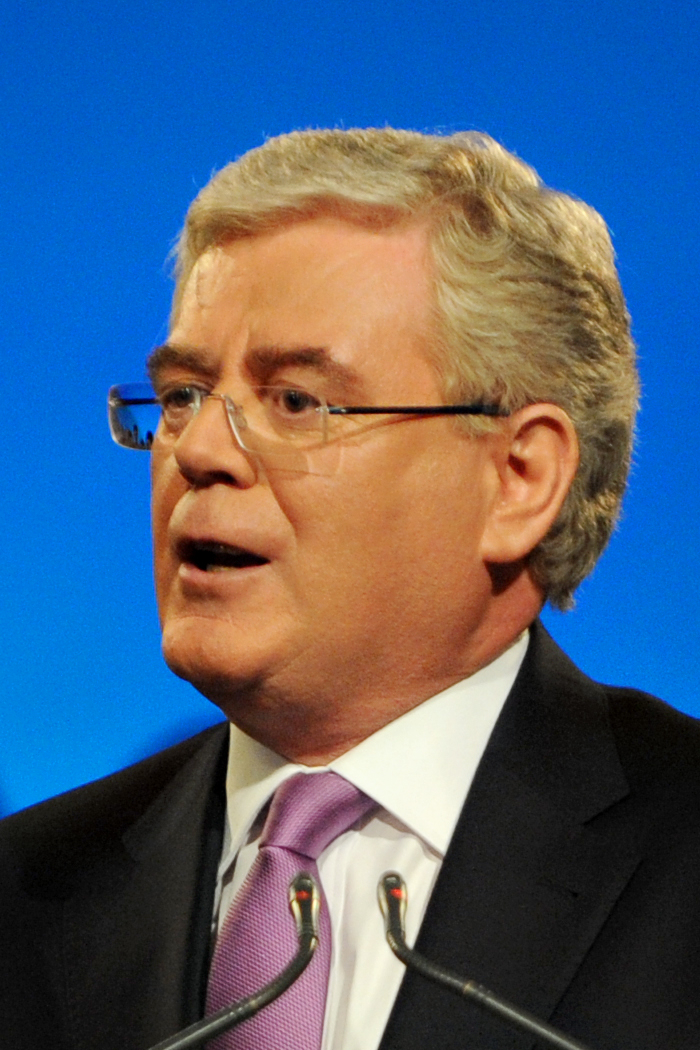
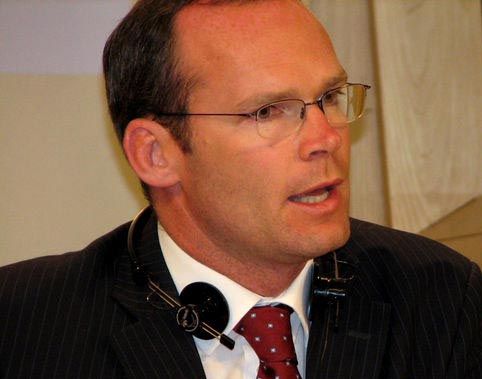
22 March 2012. Ireland's Tánaiste and Minister for Foreign Affairs and Trade, Eamon Gilmore (left) said that the Irish agri-food industry has a key role to play in developing the farming sector in African countries. Speaking at the launch of the €2 million “Africa Agri-food development fund”, Mr Gilmore said the partnership between the department of foreign affairs and the department of agriculture is a new way of working on aid. “Irish companies are well placed to play a role in meeting Africa’s increasing food needs. Our agri-food industries have the skills and the vision to both trade and invest in Africa,” he said. Mr Gilmore said the collaboration builds on work begun by the government’s Africa Strategy, and would expand on the role already being played by Ireland in countries like Mozambique. “It is in the context of the Africa Strategy, and it is the start of an initiative which will advance our aid programme and open up opportunities for trade and investment in Africa by the agri-food sector,” he said. Also at the launch, Minister for Agriculture Simon Coveney (right) said the partnership will allow Irish firms to use experience gained in the shift from subsistence farming to an export industry in collaboration with African partners.

Senin, 24 Oktober 2011

Facilitating pro-poor business


Facilitating pro-poor business

Why advice goes further when it’s backed by investment

M. J. Boomsma
Anna Laven
Bart de Steenhuijsen Piters eds.
In development cooperation there is a trend that the private sector is seen as an integral part of the solution to reduce poverty. As a result pro-poor businesses emerge, involving actors such as private businesses, the public sector, farmer organizations and NGOs. There are some challenges in bringing these different actors together in a social enterprise.

Generally, there is a need for a facilitator to align interests, bridge cultural differences, fill in gaps in skills, and deal with power differences, wrong expectations and prejudice.

The five cases in this bulletin (ginger in Sierra Leone, tuna in Ghana, organic cocoa on the Dominican Republic, biodiesel in Mali and a trade house in Mali) illustrate that each type of facilitating role has its advantages and disadvantages, and that there are many factors a good facilitator needs to take into account when bringing together the public and private sector and civil society to form a pro-poor business.