Tampilkan postingan dengan label EC. Tampilkan semua postingan

Rabu, 06 Maret 2013

6th Forum for the Future of Agriculture (FFA 2013)

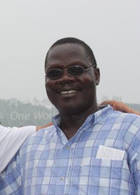
Bob Zoellick, former president of the World Bank
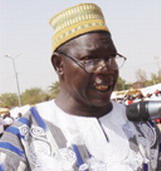
Akin Adesina, Minister of Agriculture, Nigeria
5th March 2013. Brussels. 6th Forum for the Future of Agriculture. Following last year's successful event which saw over 1200 participants join distinguished speakers and interesting debates and discussions, the sixth edition turned the spotlight on Meeting the Food & Environmental Challenge and focused on Africa. Last year the focus was on Brazil.

Themes included Africa's new ways for food production and economic development, reform of the Common Agriculture Policy hanging in the balance, protection of the consumer, and the challenges around resource extraction, efficiency, and waste.

Discussions were moderated by BBC's Stephen Sackur, and Matthew Dempsey from the "Irish Farmers Journal".

Paolo De Castro, Chair Agriculture and Rural
Development Committee, European Parlement
International decision makers including President Barroso of the European Commission, and Bob Zoellick, former president of the World Bank, headlined the event. The debates seeked to uncover how best to boldly reconcile crop production with ecological preservation.

As world population hits the seven billion mark on its way to 9 billion by 2050, and Africa approaches critical mass in its capacity to become an agricultural powerhouse, FFA panellists examined what these issues and others mean for the future of EU agriculture and the balance to be struck between production, ecology and EU consumer well-being.

Speaking to the FFA, committee chairman Paolo De Castro, an Italian Socialist MEP, said the committee vote had yielded a confusing result and some of it would need to be changed in the plenary. This included a provision that would allow farmers to receive ‘double payments' – from both CAP direct payments and rural development funds, something not allowed under the rules of th World Trade Organization.

“We made some mistakes,” he said. “So in the next plenary we will adjust some problems.”

After changes made by the Lisbon treaty, this will be the first time the Parliament has exercised co-decision powers over the CAP, which remains one of the most unpopular EU policies with the public. Environmental campaigners have said that, without the greening element proposed by the Commission, the new CAP for the budgetary period 2014-20 will not be publicly acceptable.

But De Castro denied that watering down of the greening measures meant the CAP would lack legitimacy with the European public.

The CAP reform would have legitimacy, he argued, because of the increasing worldwide demand for food, the growing concern for food security, and the recognition that Europe's potential for agriculture had to be increased.

Selasa, 12 Februari 2013

Intra-ACP academic mobility scheme

11/02/2013. The third Call for Proposals under the Intra-ACP academic mobility scheme was launched, with a deadline of 10 June 2013.

The intra-ACP academic mobility scheme promotes cooperation between higher education institutions (HEIs) and supports mobility in Africa, the Caribbean and the Pacific (ACP) regions. 

The programme aims to increase access to quality education that will encourage and enable ACP students to undertake postgraduate studies, and to promote student retention in the region along with mobility of staff (academic and administrative), while increasing the competitiveness and attractiveness of the institutions themselves.

Senin, 04 Februari 2013

Announcement:6th Forum for the Future of Agriculture (FFA 2013)

5th March 2013. Brussels. 6th Forum for the Future of Agriculture. Following last year's successful event which saw over 1200 participants join distinguished speakers and interesting debates and discussions, the sixth edition turns the spotlight on Meeting the Food & Environmental Challenge and will focus on Africa. Last year the focus was on Brazil.

Themes will include Africa's new ways for food production and economic development, reform of the Common Agriculture Policy hanging in the balance, protection of the consumer, and the challenges around resource extraction, efficiency, and waste. 

Discussions will be moderated by BBC's Stephen Sackur, and Matthew Dempsey from "Irish Farmers Journal". 

International decision makers including as President Barroso of the European Commission, and Bob Zoellick, former president of the World Bank, headline the event. The debates seek to uncover how best to boldly reconcile crop production with ecological preservation.

As world population hits the seven billion mark on its way to 9 billion by 2050, and Africa approaches critical mass in its capacity to become an agricultural powerhouse, FFA panellists will examine what these issues and others mean for the future of EU agriculture and the balance to be struck between production, ecology and EU consumer well-being.
.

Selasa, 29 Januari 2013

EAC Seeks Harmonized Food Safety Measures

22-25 January. Arusha. Tanzania. Regional workshop on the harmonisation of food safety measures in Africa – organised by the East African Community (EAC).

The workshop aimed at strengthening harmonization of the food hygiene management through "Better Training for Safer Food (BTSF) in Africa". The objective is to facilitate the harmonization of food safety measures in Africa, through the application, region-by-region, of Reference Framework and Guidelines for Harmonization of the Management of the Food Hygiene, enhancing intra and inter-regional trade and integration in Africa.

The workshop was organized by the EAC in partnership with the European Union. The European Union, under the EU Africa Strategy, plans to establish a 1 billion euros Pan African programme geared towards providing financial assistance to bulk of farmers in Africa so as to enhance food security. The European Commission's Directorate General Health and Consumers (DG SANCO) jointly with the l'Union Economique et MonĂ©taire Ouest Africaine (UEMOA) organized last year a similar regional workshop on the harmonization of the management of the food hygiene in West Africa, from 4 to 8 June 2012 in Abidjan, Ivory Coast.

Moustapha Magumu, first secretary of agriculture with the delegation of the European Union to the African Union, confirmed that a proposal is under discussion in EU parliament, which after approval, will also be discussed by the EU council of ministers.
“Once approved, the funds will be factored in the EU Africa Strategy of 2014-2020 to address various issues in the agriculture sector. The long term strategy is over and above any bilateral agreement EU will sign with respective countries.” 
Magumu urged African nations to pursue sound and workable measures to enhance food security and food safety in order to feed the surging population. He observed that Africa has huge potential in agriculture as it provides substantial input to the national economies and provides an avenue for dealing with poverty, insecurity, unemployment, and development.

EAC deputy secretary general in charge of productive and social sectors Jesca Eriyo lauded EAC for implementing its food policy security action plan of 2011-2015.
“Efforts are being pursued to ensure food safety measures have been put in place to guarantee consumer confidence as well maximise farmers’ earnings,” she added.

Selasa, 15 Januari 2013

EU Food Facility Final Evaluation Report

The EU Food Facility programme came to an end in 2011. The action was implemented in 49 countries through 179 contracts and agreements covering 232 projects executed through International Organisations, Regional Organisations, International and National NGOs and beneficiary Governments. All funds allocated to the Food facility have been committed. 

The monitoring and evaluation system adopted to follow the implementation was particularly careful and comprehensive: 176 projects have been monitored using the Results-Oriented Monitoring (ROM); all project progress and completion reports have been assessed by the Commission staff at Headquarters and EU Delegations; independent evaluations have been undertaken at project level, at implementing partner level and at global level. 

The present report is the evaluation of the Food Facility instrument, carried out in 2011 and 2012 following the Evaluation Methodology of the Commission. It concludes that the Commission has been efficient and effective in implementing the Food Facility, the interventions were relevant and projects had a clearly positive effect on beneficiaries. However a longer implementation period and a narrowed geographical scope would have allowed a greater impact.

Kamis, 18 Oktober 2012

EU Development Days: Panel on Promoting Biofuels, Creating Scarcity?

On 16-17 October, the European Commission is hosting EU Development Days, a two-day forum on international affairs and development cooperation that will see Heads of State, Nobel Prize laureates, business leaders, and development professionals meet to discuss some of the global issue that are at risk of slipping down the international agenda in the wake of the economic crisis.

17 October. Panel on Promoting Biofuels, Creating Scarcity? This Panel was organised by ActionAid International, International Alliance of Catholic Development Agencies - CIDSE, European NGO Confederation for Relief and Development - Concord, Cyrpus ISland-wide NGO Development Platform - CYINDEP, EuropAfrica, Oxfam International.

Panelists
  • Jasmin Battista, Personal Assistant to Commissioner Oettinger, Directorate-General for Energy, European Commission 
  • Phil Bloomer, Director, Campaigns and Policy, Oxfam Great Britain Belinda Calaguas, Head of Campaigns and Advocacy, ActionAid International 
  • Roman Herre, Policy Coordinator on EU Agrofuels policy, Food First Information and Action Network - FIAN 
  • Johan Kuylenstierna, Executive Director, Stockholm Environment Institute 
  • Rehmawati Retno Winami, Programme Director, Sawit Watch Indonesia 
  • Stina Soewarta, Member of Cabinet, Directorate-GEneral for Development and Cooperation - EuropeAid, European Commission 
  • Rob Vierhout, Secretary General, ePure 
Aid and rights groups have welcomed the European Commission's plan to limit the use of biofuels made from land crops, but urged the EU to go further to help stop farmers in developing countries being forced from their fields.

Belinda Calaguas, Head of Campaigns and Advocacy at ActionAid International, welcomed the Commission's turnaround, and the acknowledgement that there is a catastrophic link between the use of certain biofuels and land-grabbing, price hikes and hunger.

The European Commission has proposed to halve the quantity of food-based biofuels used to meet the EU's 10 % renewable energy target. The move, which could take two years to come into force, is aimed at stimulating the use of second and third generation biofuels from materials like straw, algae or waste. Such fuel sources emit less greenhouse gases than fossil fuels and do not interfere with global food production.

Indonesia is one of the countries most affected by palm oil production. Palm oil producers obtain operating permits from local administrations rather than the central government. The Programme Director at Sawit Watch Indonesia, Rahmawati Retno Winarni, said that farming communities there face jail or violence if they protest against being evicted from their land. She said the EU has the power to influence events on the ground, particularly if the Union's policy includes free and fair community consent in the handover of land.

Phil Bloomer, Director, Campaigns and Policy, Oxfam Great Britain, said that at least 200 million hectares of land has changed hands, much of it without proper compensation, and that the major driver for this has been biofuels.

According to 2010 data, biofuels make up about 4.7 % of the EU's energy mix, with food-based fuels accounting for just over 4 %. The Commission plans to phase out subsidies for these first generation fuels by 2020, to focus on second and third generation biofuels.

Jasmin Battista, Personal Assistant to EU Energy Commissioner GĂ¼nther Oettinger, said the best way forward is to establish a clear framework for making biofuels sustainable. Those which provide few benefits over fossil fuels should be discarded, while attention should also be given to high prices and price volatility. People must also reconsider how they produce and consume food, she said.

Robert Vierhout, the Secretary General of ePURE - the European renewable ethanol industry group - said that there was no connection between biofuels and high food prices. He also said that Europe does not import any ethanol from Africa for fuel use, only for beverages and industrial purposes.

Senin, 01 Oktober 2012

FaRMAf - Innovative new project to improve food security in Africa


26 et 27 septembre. Ouagadougou. Le projet FARMAF financĂ© par l'UE, qui porte sur la gestion des risques agricoles en Afrique, a Ă©tĂ© lancĂ©. Le projet vise Ă  amĂ©liorer la sĂ©curitĂ© alimentaire et les moyens de subsistance des producteurs agricoles familiaux en Afrique, en renforçant leur accès aux outils de gestion des risques agricoles.

L'atelier de lancement a mis en évidence le fait que la capacité des agriculteurs à anticiper, éviter et répondre aux chocs naturels et économiques était cruciale pour la réduction de la pauvreté et de la sécurité alimentaire en milieu rural. Toutefois, les agriculteurs africains, et les producteurs familiaux en particulier, manquent souvent d'accès à des outils et sont donc directement confrontés aux risques pré- et post- récoltes. Le projet FARMAF vise à renforcer l'accès des producteurs agricoles familiaux à ces outils. Ce faisant, FARMAF contribue à améliorer de façon durable les moyens de subsistance des agriculteurs en Afrique.

Au cours de l'atelier de lancement du projet FARMAF, les expériences du Burkina Faso, de la Tanzanie et de la Zambie ont été présentées et discutées, ce qui a permis de mettre en lumière le fonctionnement de différents outils (assurance, systèmes d'information sur le marché, warrantage et action collective).

Des suggestions ont Ă©tĂ© faites sur la façon dont ceux-ci peuvent Ăªtre amĂ©liorĂ©s et renforcĂ©s grĂ¢ce Ă  la participation des organisations rĂ©gionales de producteurs agricoles (PAFO, ROPPA, EAFF, SACAU et PROPAC), et des organisations nationales de producteurs agricoles (MWIWATA, CPF et ZNFU) et Ă  la collaboration des instituts de recherche Agrinatura (CIRAD, NRI et WUR).
Selon le reprĂ©sentant de la Plateforme continentale des organisations paysannes (PAFO), Kolyang PalĂ©bĂ©lĂ©, ce projet vise « Ă  amĂ©liorer l’accès des producteurs agricoles aux outils de gestion des risques de manière efficace contribuant ainsi Ă  l’amĂ©lioration de la sĂ©curitĂ© alimentaire familiale et des revenus des mĂ©nages ruraux les plus pauvres ». Comme outils de gestion, il s’agit principalement des systèmes d’assurance agricole, de warrantage et d’informations de marchĂ©, a indiquĂ© M. PalĂ©bĂ©lĂ©.
De son avis, ces outils ont Ă©tĂ© dĂ©veloppĂ©s avec succès dans certains pays africains car ayant permis aux producteurs d’accĂ©der Ă  des mĂ©canismes de crĂ©dit en milieu rural, Ă  des systèmes de commercialisation plus efficace et d’obtenir des prix rĂ©munĂ©rateurs.
FinancĂ© par l’union europĂ©enne, la FARMAF est mis en Å“uvre pour compenser les pertes liĂ©es aux conditions climatiques, a ajoutĂ© le prĂ©sident de la ConfĂ©dĂ©ration paysanne du Faso (CPF), Bassiaka Dao. Pour rĂ©aliser ses objectifs, le projet cherche Ă  accroĂ®tre l’Ă©ventail d’outils et d’instrument durables que les petits exploitants des pays africains peuvent utiliser pour gĂ©rer les risques agricoles.
Ceci devra réduire leur exposition aux chocs baissiers, améliorer leur accès au crédit et leurs capacités à investir dans une technologie améliorant le rendement et à mieux gérer la commercialisation des produits de la ferme, a précisé le représentant de Agrinatura, Paolo Sarfatti.
Lire l'article : La FARMAF, un projet de gestion des risques agricoles en Afrique - Burkinapmepmi.com - le portail des PME / PMI au Burkina Faso

Jumat, 29 Juni 2012

EC Contributes 5 Million Euros to Help Farmers Maintain Crop Diversity

21 JUNE 2012. FAO Press Release. The European Commission is contributing more than €5 million (6.5 million dollars) towards the Benefit-sharing Fund of the International Treaty on Plant Genetic Resources for Food and Agriculture, FAO announced at a high-level ministerial meeting on the plant treaty at the Rio+20 United Nations Conference on Sustainable Development.

The Benefit-sharing Fund helps farmers in developing countries manage crop diversity for food security and climate change adaptation. This is the single largest contribution made to the Benefit-sharing Fund since it was established in 2008. It will help to increase the capacity of smallholder farmers to manage traditional crops like potato, rice, cassava, wheat and sorghum.


 "One of the Benefit-sharing Fund's unique features is the transparent process that governs the allocation of funds. After a wide announcement of each call, all the project proposals received for funding are evaluated according to established scientific criteria by international experts in order to fund the best projects," said Shakeel Bhatti, Secretary of the International Treaty

The contribution from the European Commission will make possible a range of activities, including:
  • On-farm evaluation, selection and management of local and introduced seed varieties;
  • Conservation of local and threatened varieties in national or international genebanks or the development of local and community genebanks; 
  • Documentation and sharing of local and indigenous knowledge that brings value to local crops and varieties; 
  • The transfer of technologies for conservation and sustainable use of plant genetic resources to farmers and selected institutions in developing countries; 
  • Establishment of links between farmers and communities elsewhere to promote the sharing of genetic material and information about that material, which will help farmers to respond to climate change.

So far, two rounds of calls and approvals have taken place. Altogether 30 projects have received funding.

Relevant links and documents:
The benefit-sharing fund
Approval of the first round of projects under the Benefit Sharing fund
Approval of the second round of projects under the Benefit Sharing fund

Jumat, 15 Juni 2012

RIO+20 and Sustainable Agriculture

11 June 2012. In the run-up to RIO+20, the U.N. Conference on Sustainable Development (UNCSD), CGIAR, the global agricultural research partnership, issued a call to action. In this seven-point plan, CGIAR outlines how agricultural research for development can contribute to a more sustainable, food-secure future.

The conference recognizes the need for agricultural research for development: The Zero Draft of the conference's outcome document calls on "all states to prioritize sustainable intensification of food production through increased investment in local food production, improved access to local and global agri-food markets, and reduced waste throughout the supply chain, with special attention to women, smallholders, youth, and indigenous farmers.
The preparations for Rio+20 have highlighted seven areas that need priority attention. CGIAR's main focus, "food security and sustainable agriculture," is one of those seven areas.

Bruce Campbell Ph.D. Director, CGIAR Research Progamme on Climate Change, Agriculture and Food Security, interviewed  Dr. Frank Rijsberman, the newly appointed CEO of the CGIAR Consortium, to find out how agriculture and the environment are now "best friends."Community-designed programs"... focusing on small holder farmers?
Yes, contrary to the focus of the big agro-business, CGIAR concentrates on supporting and strengthening local production groups and small holders. Marginalized food producers, particularly women, need to be included more in the bid for sustainable development. They should be empowered to increase their production and marketing of a wide diversity of adapted and nutritious crops, many of which have been long-neglected by agricultural research. This empowerment can be achieved through a combination of basic agronomic research, strengthened land and water rights, increased access to markets, finance and insurance. While CGIAR concentrates on local research, we enhance local capacity -- where possible -- through community-based farmer organizations.
SIDE EVENTS AT RIO+20 

More than 500 on-site side events organized by Governments, Major Groups, Organizations from the UN system and other International Organizations will take place in RioCentro during Prepcom III (13-15 June), the Sustainable Development Dialogue Days (16-19 June) and the Summit (20-22 June).

Following side events target [African] agriculture and environment:


Senin, 07 Mei 2012

Third ERAfrica Briefing Session for Programme Owners about the ERA.Net ERAfrica

4 -5 May 2012. South African Representation. Brussels. This Briefing Session informed about the progress in the elaboration of the Joint Call and casted a look on the next steps towards the funding of collaborative European-African projects.

ERAfrica facilitates networking of African and European funders of research and innovation working together to jointly finance research and innovation partnerships between the two continents.

The network presently consists of ministries and public funding institutions from countries such as Austria, Belgium, Egypt, Finland, France, Germany, Kenya, Portugal, South Africa, Spain, Switzerland and Turkey. A wave of new partners, from for example Uganda, CĂ´te d’Ivoire, Norway and Burkina Faso, are currently considering to commit funding for the ERAfrica activities.

With regard to the thematic focus, the funders have agreed to target their funding at three priority areas:

  1. Renewable energy: research and innovation for renewable electricity generation, fuel production, heating and cooling. These activities will address Africa and Europe’s shared societal, industrial and environmental interests to develop sustainable economies. 
  2. ”Interfacing Challenges”: research to better understand and address the interfaces between different societal challenges such as assuring food security, fighting pandemic disease, managing climate change, promoting inclusive information societies, etc. Activities will be aligned with the global “Rio+20” sustainable development agenda. 
  3. “Idea driven”: curiosity driven, cutting-edge collaborative research and innovation, irrespective of the theme chosen. Novelty and impact matters.

Kamis, 29 Maret 2012

Grants Provided on research and science about Post-harvest and Agriculture

March 28, 2012. ADDIS ABABA, Ethiopia. The African Union signed nine grant contracts with African and European universities, scientific think tanks and research institutes with the endorsement of the European Union.

These grant contracts are part of the ACP (Africa, Caribbean and Pacific) Research for Sustainable Development Programme - Africa component (€14.7m) with the objective of strengthening international economic competitiveness of ACP countries.

During the signing ceremony Prof. Jean Pierre Onvehoun Ezin, Commissioner of the Human Resources, Science and Technology, AUC said “Science and Technology in Africa within the last decade have been tremendous evolution, so more that the African Union Commission is championing the scientific awards at national, regional and continental levels....”

"The signature today is very encouraging for all of us who believe that innovation is key for maintaining high growth rates in today's and tomorrow's increasingly competitive world", said Gary QUINCE, EU Ambassador to the African Union.

These projects on applied sciences are designed to respond to improve the living conditions of African population. More specifically, it aims to create networking among African scientific community and to build bridges with European partners while performing joint researches by the transfer of knowledge and know-how through a 'learning by doing' approach.

Today's signature ceremony of grant contracts is the result of the "First Call for Proposal" of an amount of 7 million Euros which are limited to some strategic priority actions: Post-harvest and Agriculture, renewable and Sustainable Energy, water and sanitation.

The African Union Commission, through its Department of Human Resources, Science and Technology, is the Delegated Regional Authority for the Africa Component of the programme.

The Second Call for Proposal has been launched on 16 January 2012 with the aim to engage 7 million Euro on new grant contracts by the end of the current year.


  1. (a) The European Commission invests in Research in Africa, not onlythrough the African Research Grant, but also through the 72M€Africa Call of the 7th R&D Framework Programme. To this figureone should add the number of African research laboratories thatparticipate in the global FP7 calls, which is higher than any othercontinent, but very much concentrated in the North of Africa and inSouth Africa.
  2. The 40M€ Nyerere programme that facilitates exchanges betweenAfrican universities for students at masters and doctoral level.
  3. The 13 M€ (?) Africa Connect project that provides connection fromthe National Research Networks to the European High SpeedResearch Network GEANT2.
  4. The 23M€ EDULINK-II Programme which fosters capacitybuilding and regional integration in the field of higher educationand where the call was launched last week.
  5. A package of 500.000$ for continental science prizes and bestfemale science prizes.
  6. And last but not least the EC support to the Pan-AfricanUniversity.

Sabtu, 24 Maret 2012

Growth with Resilience: Opportunities in African Agriculture


22 March 2012. Brussels, European Commission Directorate General for Development and Cooperation - DG DEVCO. The Informal stakeholder consultation about Improving the quality and effectiveness of development cooperation with African agricultural knowledge organisation, provided the opportunity to launch the new report of the Montpellier Panel: Growth with resilience – opportunities for African Agriculture in 2012.

The Montpellier Panel is a panel of ten experts from the fields of agriculture, sustainable development, trade, policy, and global development chaired by Sir Gordon Conway of Imperial College London. The Panel is working together to make recommendations to enable better European government support of national and regional agricultural development and food security priorities in Sub-Saharan Africa.

Growth with Resilience: Opportunities in African Agriculture Download the report here 


Media coverage