Selasa, 20 November 2012

Eight African Countries to Benefit from Grant to Improve Sustainable Farming Methods

Michigan State University researchers will use a $7.8 million grant from the Bill & Melinda Gates Foundation to help eight African nations improve their sustainable farming methods.

The grant, from the Gates Foundation Global Development Program, will be used to help guide policymaking efforts to intensify farming methods that meet agricultural needs while improving environmental quality in Kenya, Malawi, Mali, Nigeria, Burkina Faso, Zambia, Ethiopia and Tanzania.

Programs like this are paramount to Africa, as demonstrated by more than $2.5 billion in annual spending by African governments on agricultural intensification, said Thomas Jayne, project co-director and MSU agricultural, food and resource economics faculty member.
“All of the partners have made a long-term commitment to help this region’s programs reach their full potential,” he said. “MSU has longstanding expertise in this field, and our commitment to institution building was a major reason as to why the Gates Foundation put its trust in MSU for this grant.”
The team will focus on three key crops – maize, sorghum and rice – and seek to improve seed development, fertilization and crop rotation to increase yields in a sustainable manner.

Senin, 19 November 2012

ARD funding opportunities


A G R I C U L T U R E

The calls, to be launched in January with a budget of €11 million, will offer research funding in areas such as agriculture, health, climate change and energy, grouped under three headings: "Renewable Energy", "Interfacing Challenges" and "Idea driven research". The calls have been developed within the framework of the €2 million, three-year "ERA-Net for Africa" (ERAfrica) project. ERAfrica was set up to facilitate networking of African and European funders of research and innovation and to work towards joint project calls. The agreement concerns ministries and public institutions from 15 countries: Austria, Belgium, Burkina Faso, Ivory Coast, Egypt, Finland, France, Germany, Kenya, the Netherlands, Norway, Portugal, South Africa, Switzerland and Turkey. Together they have agreed to fund research for at least € 11 million, with the five African states contributing nearly €4 million.

The project calls are expected to be published in mid-January 2013, with a deadline for application of around mid-April 2013. Signing of the contracts is foreseen from December 2013 to May 2014.

ACP-EU Cooperation Program in Science and Technology, 2nd Call for Proposals
The EU announces S&T II as its second call for proposals to strengthen science, technology, and innovation in developing countries. Priority thematic areas are energy access and efficiency, as well as agriculture and food security. Grants will range from €300 thousand to €1 million (exceptionally to €3 million) for activities in capacity building, awareness raising, science promotion, and other support for S&T. The program is open to organizations in the developing countries defined by the EDF and DCI funding categories (i.e., most developing countries) -- and to international organizations. A proposal requires three or more partners, at least two of which must be located in ACP (African, Caribbean, and Pacific) member states. The application deadline is 07 February 2013

Africa- Brazil Agricultural Innovation Marketplace.
The next call for pre-proposals is planned to be launched on 02 January 2013The new Marketplace website will be available for registrations starting 01 Dec 2012. You are encouraged to visit and register yourself on the new website after 01 Dec. By registering, you will receive updated information on the initiative and will be able to find partners and submit proposals during the call.

Agricultural Research for Food Security
USAID-Washington announces funding for agricultural research in support of the Feed the Future initiative. USAID will support six research programs with grants ranging from US$500 thousand to US$3 million per year -- not including additional funding anticipated from USAID's field programs (i.e., missions). The program is restricted to eligible U.S. colleges and universities. Funding Opportunity RFA-OAA-12-000036. The closing date is 21 December 2012. Link

Research on Zoonoses and Emerging Livestock Systems
The UK's Biotechnology and Biological Sciences Research Council (BBSRC) collaborates with the UK's other research councils, and with the UK's Department for International Development, for research that will lead to reduced transmission of diseases between livestock and people in developing countries. Applications should be submitted by research partners in the UK and developing countries. BBSRC posts details of the program, as well as an online tool to help find collaboration opportunities. The closing date for applications is 10 January 2013.

Food Security in Madagascar
The European Commission (EC) supports agricultural development in five regions of southern Madagascar through the FRDA (i.e., regional funds for agricultural development). The EC's funding will contribute to and strengthen the FRDA's management of funding and technical assistance. Eligibility for grants extends to nonprofit NGOs in the EU and its candidate countries; the European Economic Area; and the ACP countries (including Madagascar) and other developing countries. Reference EuropeAid/133260/M/ACT/MG. The application deadline is 29 January 2013. Link

Food Security in Burkina Faso
The EC announced two calls for proposals to improve food security in Burkina Faso (EuropeAid/133611/C/ACT/BF, and EuropeAid/133612/C/ACT/BF). Objectives (among others) include support for agricultural production, vegetable growing, and raising small ruminants and poultry. The programs are open to nonprofit NGOs in the EU countries, ACP countries (including Burkina Faso), and OECD/DAC countries -- consult eligibility details in each call. Grants range from €400 thousand to €1 million, varying in each call, and subject to co-financing requirements. The application deadlines are 14 December 2012 for Call 133612, and 17 December for Call 133611. Link 133611 Link133612

Food Security in Burundi
The EC calls for projects in Burundi to increase food security. The aim is to strengthen agricultural producers, and to reinforce value chains in nutrition. Eligibility extends to non-profit organizations in EU member states and candidate countries, OECD countries, developing countries (including Burundi), and international organizations. Proposals need to include partner organizations in Burundi. Grant size is €3.5 million to €5.4 million, subject to co-financing requirements. Reference EuropeAid/132679/M/ACT/BI. The application deadline is 14 December 2012. Link

Agricultural Development in Sierra Leone
The EC's Delegation in Sierra Leone is making grants through "Agriculture 4 Development" to strengthen the country's production and export of cocoa, coffee, and cashews. The themes are improved production; quality control; improved processing; and marketing. The program is open to nonprofit organizations in the EU and the ACP (Africa, Caribbean, and Pacific) countries, working in collaboration with partners in Sierra Leone. Reference EuropeAid/133547/M/ACT/SL. The deadline for proposals is 18 January 2013.

Innocentive -- Storage Container to Protect Seed and Grain
Innocentive is a platform to promote open innovation and crowd sourcing for solutions to important problems. It currently posts a challenge that calls for designs or materials for a storage bag, container, or vessel that protects seeds and grains against rodent infestations. Requirements include durability over several seasons, low cost, and feasibility for use in developing countries. The winning proposal will receive US$20 thousand. Proposals need to be submitted by 21 November 2012.

Grants to Strengthen Farming Communities 2013
The Monsanto Fund makes grants in support of agricultural communities around the world. Grants of US$25 thousand and more are available to tax-exempt charitable organizations for activities and projects that address farmers' education and training; food security; community water and sanitation; and other local needs. Monsanto's international grants are administered at the country level; interested persons should contact the Fund's national liaison. The next application period is 01 January 2013 through 28 February 2013. Link Fund Link Locations

B I O D I V E R S I T Y 

Forest Law Enforcement, Governance and Trade Program
The EU-FAO FLEGT Program 2012-2016 announces its first call for proposals. The program makes grants to organizations in developing countries that have signed a Voluntary Partnership Agreement (VPA) with the European Union, as well as to organizations in selected non-VPA countries. The first call for proposals is for government institutions, civil society organizations, and organizations/federations in the private sectors of non-VPA countries (listed on the website). Grants are up to €100 thousand for actions that support any of the seven themes of the FLEGT program. The deadline for applications (English, French, Spanish) is 12 December 2012. 


C L I M A T E  C H A N G E

Darwin Plus
UK Department for Environment, Food and Rural Affairs (Defra) is collaborating with the UK's Department for International Development (DFID) and its Foreign and Commonwealth Office (FCO) to launch Darwin Plus. This is a new program to fund projects in environment and climate change in the UK's overseas territories. The program is open to governments, NGOs, research institutions, private organizations, and others in all of the UK's overseas territories for projects of two years. The application deadline is 01 April 2013

International Climate Initiative 2013
Germany's BMU (Federal Ministry for the Environment, Nature Conservation, and Nuclear Safety) funds the International Climate Initiative (ICI) to support projects on climate change mitigation and adaptation, and biodiversity projects that have climate relevance. Most projects are led by German and international organizations with partners in developing and emerging countries. Grants are generally over €200 thousand, and sometimes much larger, for projects that are usually two to four years. The closing date for project outlines is 09 January 2013.

The CCAPS fellowships aim to support the next generation of researchers and thought leaders on the topic of climate change and political stability in Africa. CCAPS offers up to three pre-doctoral fellowships in residence at the University of Texas at Austin (Robert S. Strauss Center for International Security and Law) for an academic year, with preference for individuals who have made substantial progress towards the completion of their dissertations. CCAPS encourages applications from women, minorities, and citizens of all countries. The fellowship includes a nine-month stipend of US$24 thousand, and one round-trip airline ticket. The application deadline is 15 February 2013.

D I A S P O R A 

The Common Ground initiative 
This is a £20 million fund supporting African development through UK based small and Diaspora organisations. This initiative is managed by Comic Relief and co-funded by the Department for International Development.

AWARDS, GRANTS, PRIZES 

The Australia Awards program will support 20 eligible candidates in Africa for PhD studies in agricultural research at Australian universities, commencing in 2014. The program is open to nationals from the following countries: Benin, Burkina Faso, Burundi, Cameroon, Chad, Egypt, Ethiopia, Gambia, Ghana, Kenya, Liberia, Malawi, Mali, Mozambique, Niger, Nigeria, Rwanda, Senegal, Sierra Leone, Tanzania, Uganda, and Zambia. The closing date for applications is 31 March 2013.

Grants for Guest Researchers from Africa 2013
The Nordic Africa Institute provides funding to social science researchers from Sub-Saharan Africa for short-term collaborative assignments at the NAI in Uppsala, Sweden. Research areas include one on agrarian change, property, and resources. NAI provides travel, subsistence, an installation allowance, and in-kind support for stays of up to 90 days. The deadline for applications is 01 April 2013

The Fiat Panis Foundation (Germany) makes awards for university thesis and dissertation research in themes of agriculture and natural resources, with a focus on food security in developing countries. The Justus von Liebig Award for World Food is €25 thousand; the Hans Hartwig Ruthenberg Graduate Award is €7.5 thousand. The deadline for both awards is 30 April 2013.

Research Training Fellowships for Scientists in Developing Countries
The Government of India, Department of Science & Technology (DST) announces 20 fellowships for scientists and researchers from developing countries for collaboration with Indian research partners. Thematic areas include agricultural sciences, biological sciences, and several others. The fellowships program is coordinated through the Center for Science and Technology of the Non-Aligned and Other Developing Countries (NAM S&T Center). Fellowships are for six months. Applicants should be below 40 years of age, who possess at least a Master’s Degree in the relevant natural sciences. The closing date for applications is 07 December 2012

Ideas to Contribute to Agriculture and Rural Development in Africa
Through its program Africa Rural Connect, the National Peace Corps Association (U.S.) sponsors a competition of ideas to advance grassroots agriculture and rural development in Sub-Saharan Africa. The "Second Chance" competition allows individuals to take ideas already submitted in previous rounds of the competition and re-mix them by adding new elements. Themes in Africa Rural Connect are water resources, agribusiness, post-harvest losses/storage, transportation and infrastructure, and communication methods. Cash prizes range from US$250 to US$2,000 thousand for the best re-mixes and original ideas. The contest ends 30 November 2012.

Student Video Contest
The "World at 7 Billion" invites short video public service announcements that illustrate the connection between world population at seven billion and one of the following: Food Security; Global Status of Women/Girls; or Wildlife Habitat. The contest is open to high school students (or equivalent) worldwide. Cash prizes will be awarded for videos in each of the three topic areas. The deadline for submissions is 21 February 2013.

In collaboration with the Rockefeller Foundation and the Green Belt Movement, the Kenya Community Development Foundation (KCDF) invites applicants for the Wangari Maathai Scholarship for tertiary education. The scholarship will be awarded to a young woman aged 18 to 25 years on the basis of her passion and personal commitment to environmental conservation. Eligibility extends to Kenyan citizens residing in Kenya. The application deadline is 30 November 2012.

25 Postdoctoral Research Fellowships in any field of research.
By investing in international recruitment of eminent researchers and students, international exchanges and increased collaborations, Stockholm University intends to stimulate the academic environment and strengthen the position of the University in the international market.
Deadline for applications: December 17, 2012.

Joint funding of European-African research projects agreed


The Commissioner was on a week long visit to 
South Africa to mark the 15 th anniversary of 
the European Union's first science and technology 
agreement with South Africa.
6th November. Cape Town. Joint funding of European-African research projects agreed

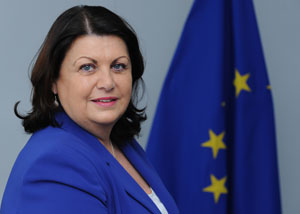
The first initiative of European and African countries to jointly fund collaborative research projects was agreed on 6th November during a visit by Research, Innovation and Science Commissioner Máire Geoghegan-Quinn to Cape Town.

The calls, to be launched in January with a budget of €11 million, will offer research funding in areas such as agriculture, health, climate change and energy, grouped under three headings: "Renewable Energy", "Interfacing Challenges" and "Idea driven research". The calls have been developed within the framework of the €2 million, three-year "ERA-Net for Africa" (ERAfrica) project.

ERAfrica was set up to facilitate networking of African and European funders of research and innovation and to work towards joint project calls. The agreement concerns ministries and public institutions from 15 countries: Austria, Belgium, Burkina Faso, Ivory Coast, Egypt, Finland, France, Germany, Kenya, the Netherlands, Norway, Portugal, South Africa, Switzerland and Turkey. Together they have agreed to fund research for at least € 11 million, with the five African states contributing nearly €4 million.

The project calls are expected to be published in mid-January 2013, with a deadline for application of around mid-April 2013. Signing of the contracts is foreseen from December 2013 to May 2014.

The financial commitment agreement will be signed on the margins of the annual EU-Africa Joint Experts Group science cooperation forum meeting.

Background
ERAfrica was set up as part of the 2007-10 Action Plan of the Joint Africa-EU Strategy (JAES). It is funded from the EU's seventh framework programme for research and technological development (FP7). In addition to ERAfrica, FP7 has provided nearly €137 million in funding for over 900 African participations in EU research projects or initiatives.

The agreement follows the official launch on Nov 2 of a new bilateral EU-South Africa science cooperation project, ESASTAP Plus, providing a forum for cooperation between research ministries and institutions from South Africa, Germany, France, Greece, Italy and Switzerland to support South Africa’s participation in the Framework Programmes, but also reciprocal European participation in South African national programmes, and to target coordination of Member States and Associated Countries' research policies and programmes vis-à-vis South Africa, encouraging the development of new joint initiatives for mutually beneficial cooperation.

Africa's role in solving the global food crisis

Graça Machel, Founder and President, 
Foundation for Community Development 
talking about achieving food and nutrition security
15 - 16 November 2012. Johannesburg. THE Economist hosted a conference in with an ambitious goal: Feeding the World: Africa's Role in Solving the Global Food Crisis

Feeding 9 billion people is an ambitious goal and as befits a conference of this nature, a mixed bag of stakeholders have gathered from around the world.

The tough nut to crack floated to the surface early on - getting public-private partnerships (PPP) to work.

Graça Machel, renowned for her work as Mozambique's minister of education and culture in decades past, opened the conference with a frank, sleeves rolled-up approach to the topic.

Her message resonated through a folk saying in her mother tongue: "Your neighbour's granary will never fill your stomach."

This anti-dependency stance is a breath of fresh air in an entitlement-filled smog generated by the "we demand" squad. Machel's focus on dignified work differentiated her message from the cacophony of calls for job creation. Drawing a line between a job and work, she emphasised that a job solves the short-term problem while work - specifically entrepreneurial work - is more likely to lead to dignified labour.

This addition of the dignity factor is a welcome entrant to the employment conversation. It spotlights the need for agriculturally-focused entrepreneurship startup kits, namely access to capital, land, skills, consumables and markets. On the heels of Machel's message, Global Alliance for Improved Nutritional Gain (GAIN) chairperson, Jay Naidoo of Cosatu fame, emphasised the need for coordination between the various stakeholders - specifically woman farmers - to facilitate successful smallhold farming.

Naidoo highlighted the message being transmitted from his work at GAIN, from women at the base of the pyramid. He emphasised that these women are clear on what they need and want: land, seeds, fertilizer, implements - and business skills to manage these inputs.

The only surprise here was the acknowledgement that business skills are needed, which reinforces the opinion that a less parochial view can be taken on these women, a message subsequently drummed in by Sheila Sisulu of the World Food Programme.

U.S.-Africa Agribusiness Investment Forum

November 12-14, 2012. Addis Ababa, Ethiopia. U.S.-Africa Agribusiness Investment Forum: Private Sector Opportunities in Support of Inclusive Agricultural Growth. The Corporate Council on Africa hosted the 2012 U.S.-Africa Agribusiness Investment Forum in Ethiopia to introduce the U.S.-Africa Business Center (USABC) and its role in facilitating U.S.-African trade and highlight other initiatives designed to boost agricultural growth, trade and investment.

Attended by a number of industry members drawn from the USA, Canada, Nigeria, Uganda, South Africa, Tanzania, Kenya Swaziland, Zimbabwe and Burkina Faso as well as Ethiopia, the conference brought together U.S. and African businesses, investors and financiers, policy makers, representatives of the public sector, capital market experts and service providers. They were able to discuss various cross-cutting issues, including finance, risk mitigation, value-chain development, and industry best practices and trends. The forum was also intended to introduce the U.S.-Africa Business Center and its role in facilitating U.S.-African trade as well as highlight other initiatives designed to boost agricultural growth, trade and investment.
One of the speakers at the Workshop 4: Fork: Opportunities at the End of the Value Chain was Lucy Muchoki, Chief Executive Officer, Pan African Agribusiness and Agro Industry Consortium.

Mark Carrato, Foreign Service- Private Enterprise at USAID  noted the ineffectiveness of the donor support approach and praised the growing focus on public-private partnership as a significant step forward.

Workshop 7 addressed The Role of Regional Economic Communities in Facilitating Agricultural Trade and Investment. The EAC is developing a partnership with the United States that is being designed to increase investment and trade, and private sector participation will be critical to its success.

Related:
25-28 November 2012 - Dakar, Senegal. FARA and UniBRAIN host a side event at the AgriBusiness Forum 2012: 6 UniBRAIN incubees to present their projects!

UniBRAIN is an initiative of the Forum of Agricultural Research in Africa (FARA) and the government of Denmark whose objective is to enable universities, business and agricultural research institutions to commercialise agricultural technologies and produce graduates with entrepreneurial and business skills.
"Africa is blessed with the world’s youngest population but if the youth are not gainfully employed they will become frustrated, angry and dangerous. This must be avoided by creating jobs and for that it is necessary to have job-creators, in other words successful entrepreneurs and business men and women", explains Ralph von Kaufmann, FARA's Facility Coordinator. 
Read Ralph von Kaufmann's full interview here:

Math on Mondays - skip counting

Sorry I didn't post last monday, but with the Remembrance Day holiday weekend, life was a bit crazy around here.
 
But back - This week I'd like to discuss Skip Counting.
A good foundation in Skip Counting is very  important.
It helps with adding doubles, telling time, counting money, and of course, multiplication.
 
 
So we sing skip counting songs every day during my Calendar routine. 
The calendar helper points with a pointer to a large Hundreds Chart, as we sing along.
I have some skip counting songs, but I don't have the name of the CD on hand.  I'll post it up in a few days, once I find the case.
 

Anyway, so after a few months of learning these songs.  We sing two of them every morning.  Then I let the children work by themselves counting manipulatives that I have.  Now I have already posted about my junk jobs which are collections of buttons, beads, coins, keys, lids etc.etc. 

 
Well I also have a bunch of Work Jobs that I made when I started teaching. 
What are Work Jobs??? 
 
 
It's one of the original hands-on math programs.  The Author, Mary Baratta-Lorton
wrote the program Math Their Way, which I believe to be the grand-old-lady of hands on math programs.    I used Math Their Way for years as a Kindergarten teacher.  Work Jobs expands on it, and Work Jobs II expands it even more.
 
 
Click on the photo above to check out the amazon listing. 
I strongly recommend checking if you can find this book at the library, or molding away in the back of your school bookroom, because the ideas in it are fabulous.
 Check back for my post on how I put my own Work Jobs together.
I use them for everything.  Addition, Subtraction, Skip Counting, Estimating, patterning...
  
 
Here we have playdough "cookies" from my Work Jobs. This child is skip counting by 2's.  To start the unit, though, I ask the kids to group the counters by the number they are using so that they can visually see what's going on - it's just a bit time consuming.

 
Birthday candles - this child is starting to group by 10's, but they just can't help sorting them by colour first can they?

 
This child is grouping by 10's as well.
I give each child 5 minutes at a Work Job (I actually call them Math Boxes in my classroom), and then they rotate around their table to the next one.  There are six children at each table, so 6 rotations lets them experience all the Math Boxes at their table.  I do this A LOT.  Because I want to increase their exposure to the manipulaties, so that they can stop playing with them.  The more exposure to the manipulatives, the less they get distracted during a lesson, and the more learning occurrs.  That's my theory at least.
 
Thanks a lot for stopping by today.

Minggu, 18 November 2012

Currently for November

A little late, but I actually did remember to hook up with Farley's Currently.  I have to chuckle, because I wrote that WANTING comment above a little tongue in cheek and found out that Farley wants one to.  Well, she called it a Personal Assistant, but let's call a spade, a spade.  I need a wife.
Anyway, I hope all you Americans out there have a fabulous Thanksgiving next weekend.